
When you are choosing a toy for your child, the material may not be the first thing you think about. You might look at the price, the colours, the age recommendation, or whether your child is likely to enjoy it. But after a few months of buying, cleaning, storing, and occasionally replacing toys, material starts to matter.
This post contains affiliate links. As an Amazon Associate, I earn from qualifying purchases at no extra cost to you.
Wooden toys are often associated with natural materials and long-lasting design. Plastic toys, on the other hand, are available in countless shapes, sizes, and price ranges. Neither option is automatically the right choice for every family.
The more useful question is not simply whether wood is better than plastic. It is how a particular toy is made, how it will be used, how easy it is to maintain, and what happens when your child no longer needs it.
In this guide, we will look at the practical differences between wooden and plastic toys, including safety, cleaning, durability, cost, and environmental impact. The aim is to help parents make informed choices rather than feel they need to replace every plastic toy in the house.
Wooden Toys vs. Plastic Toys: What Is the Real Difference?
The main difference is the material, but that does not tell the whole story.
Wooden toys are commonly made from solid wood, plywood, or engineered wood products. Some have painted surfaces, protective coatings, glued joints, or small metal and plastic components.
Plastic toys can be made from different polymers, including polypropylene, polyethylene, ABS, and other materials. Some are simple solid toys, while others contain moving parts, batteries, electronic components, or several different materials.
This means that two toys made from the same material can have very different levels of quality.
A well-made plastic toy may last for years, while a poorly finished wooden toy can crack, splinter or become difficult to clean. Material alone does not predict durability; inspect the individual toy’s construction, finish, moving parts and care instructions.
1. Toy Safety: Look Beyond the Material
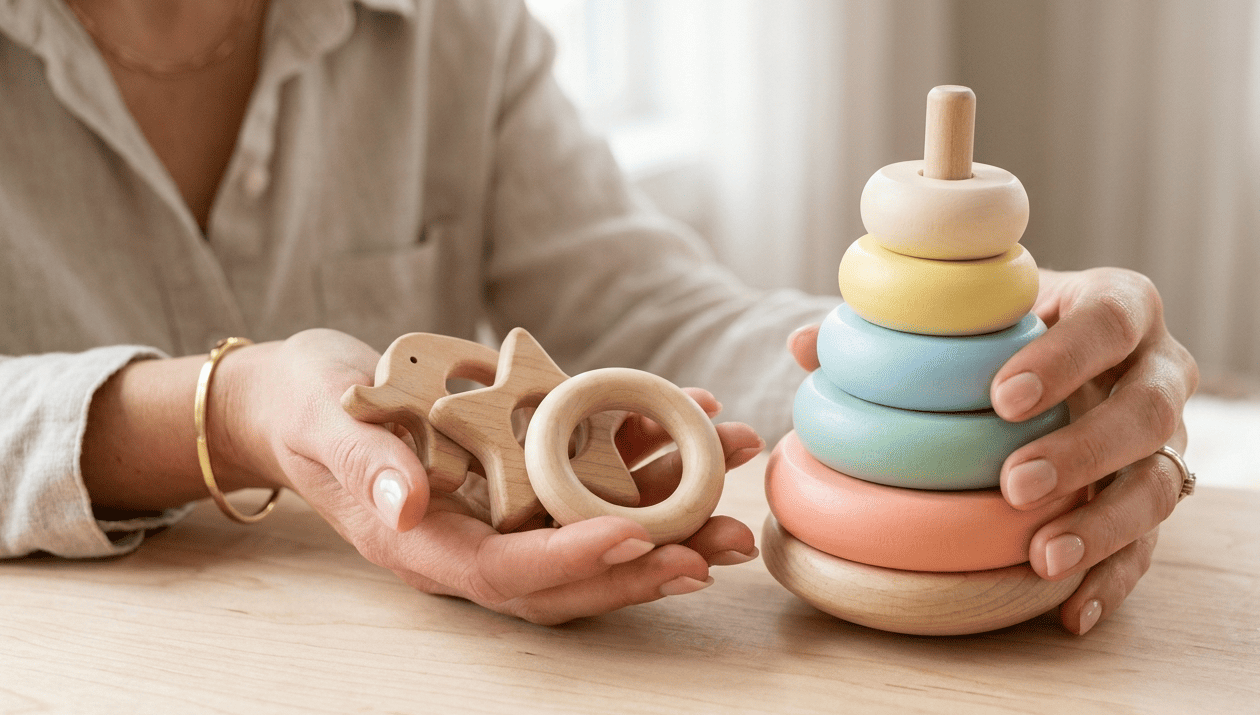
Safety is one of the first things parents should consider, particularly when buying toys for babies and toddlers who still explore objects with their mouths.
It is tempting to assume that a wooden toy is automatically safer because it comes from a natural material. That is not necessarily true.
A wooden toy may have:
- Paint or coloured surface coatings
- Varnish or other protective finishes
- Adhesives used in its construction
- Small detachable decorations
- Rough edges or splinters if damaged
Plastic toys also deserve a careful inspection. Parents should check for cracked surfaces, loose components, sharp edges, and small parts that could become detached.
Instead of choosing a toy based only on the material, look for clear manufacturer information, suitable age guidance, and evidence that the product meets the relevant toy safety requirements in the market where it is sold.
For example, parents shopping for toys sold in the United States can look for information about applicable CPSC toy safety requirements. In Europe, EN 71 is a commonly used toy safety standard.
A few practical checks can help:
- Read the age recommendation before buying.
- Check that the toy has no loose or detachable parts.
- Inspect painted surfaces for peeling or damage.
- Avoid toys with sharp edges or exposed splinters.
- Check battery compartments on electronic toys.
- Stop using a toy if it becomes cracked or damaged.
A useful reminder: Natural does not automatically mean safe, and plastic does not automatically mean unsafe. The quality and condition of the finished toy matter.
2. Cleaning and Everyday Maintenance
This is an area where the difference between wooden and plastic toys becomes especially noticeable.
Plastic toys are often easier to wipe down. Many solid plastic toys can be cleaned with mild soap and water, provided the manufacturer’s instructions allow it. Some can also be washed more thoroughly, although electronic components and battery compartments need special care.
Wood requires a little more attention.
Because wood can absorb moisture, soaking a wooden toy or leaving it wet for long periods may cause damage. Depending on its finish, excessive moisture can lead to swelling, rough surfaces, or changes in appearance.
For everyday care:
For wooden toys
- Wipe the surface with a slightly damp cloth when appropriate.
- Follow the manufacturer’s cleaning instructions.
- Dry the toy thoroughly before storing it.
- Avoid soaking or submerging it unless the manufacturer specifically says it is safe.
- Check painted areas and joints regularly.
For plastic toys
- Check whether the toy can be washed or wiped only.
- Clean areas where food, saliva, or dirt can collect.
- Pay attention to small openings and moving parts.
- Keep water away from batteries and electronic components.
- Allow washable toys to dry completely before storage.
There is no single cleaning method suitable for every toy. A wooden rattle, a plastic bath toy, and an electronic activity toy all need different care.
For parents with busy routines, ease of cleaning may be a more important consideration than appearance.
3. Durability: What Happens After Months of Play?
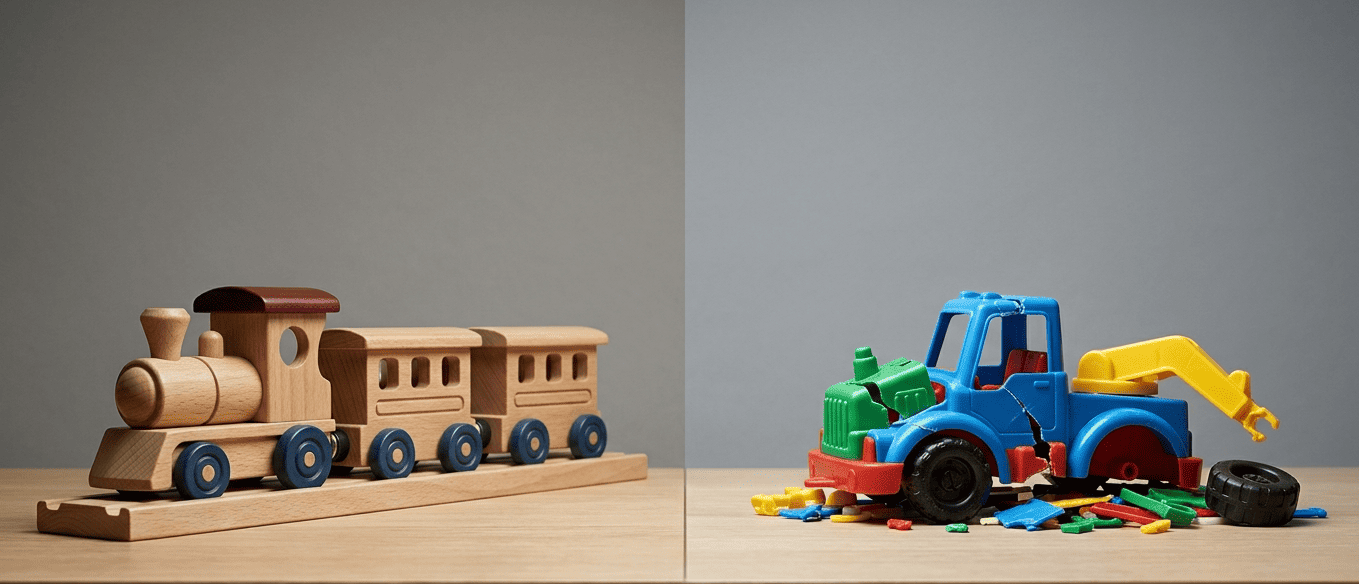
A toy’s durability depends on more than its material. Its design, construction, finish, and the way a child uses it all make a difference.
Wooden toys can be a good choice for families who prefer simple products with fewer moving parts. A solid wooden vehicle or a well-made set of blocks may remain usable for a long time if it is cared for properly.
However, wooden toys are not indestructible. They can crack, chip, split, or develop rough edges. Painted surfaces may also wear with repeated use.
Plastic toys vary just as much. Some inexpensive products may become brittle or crack, while well-designed plastic toys can withstand regular use and are often easier to clean.
A 2025 study published in Sustainability examined toy use and the environmental impact of wooden and plastic toy cars. The researchers estimated average ownership periods of 7.29 years for wooden toys and 6.17 years for plastic toys in their survey. These figures suggest a difference, but they should not be treated as a guarantee that every wooden toy will outlast every plastic one.
The study also found that environmental results varied across different impact categories. This is an important reason to avoid making blanket claims about either material.
When buying a toy, check:
- Whether the construction feels sturdy
- Whether joints and moving parts are secure
- Whether replacement parts are available
- Whether the manufacturer provides care instructions
- Whether the toy can be passed on safely when your child outgrows it
A toy that can be repaired or reused may offer better value than one that needs replacing after a short period.
4. Environmental Impact: Is Wood Always the Greener Choice?
Wooden toys are often marketed as eco-friendly, but the environmental impact of a product involves more than the material you can see.
Where the wood comes from, how it is processed, what finishes are used, how far the toy travels, and how it is packaged all matter.
For wooden toys, parents can look for information about responsibly sourced timber. FSC certification, for example, is one way to check whether a product’s wood comes from a certified supply chain. However, a certification claim should be checked rather than assumed from a product’s appearance.
Plastic toys have their own environmental challenges. Some are difficult to recycle because they combine several materials, contain electronic parts, or are made from plastics that local recycling services do not accept.
However, a durable plastic toy that is used by several children may be a more sensible purchase than a wooden product that is poorly made, rarely used, or quickly discarded.
The 2025 research on wooden and plastic toy cars is particularly interesting because it did not find that wood performed better in every environmental category. The results depended on the type of impact being measured and the materials and manufacturing processes involved.
This leads to a more practical way of thinking about sustainable toy shopping:
- Choose products that are likely to be used regularly.
- Avoid buying toys that serve almost identical purposes.
- Consider second-hand toys when they are in good condition and safe.
- Pass on suitable toys to another family when your child outgrows them.
- Look for responsible sourcing and clear material information.
- Consider packaging and unnecessary accessories too.
The most sustainable toy is not necessarily the one made from the most natural-looking material. It is often the one that is well made, used for a long time, and kept out of the waste stream for as long as possible.
5. Cost: Are Wooden Toys Worth Paying More For?
Wooden toys can sometimes cost more than similar plastic products. This may be due to the type of timber, manufacturing method, design, finishing, and brand.
But a higher price does not automatically mean better quality.
Before paying extra, consider how often the toy is likely to be used and whether it offers something different from toys your child already owns.
For example, a simple wooden toy car may be worth buying if your child enjoys using it regularly and it is made well. A more expensive wooden product may not be good value if it is difficult to clean, poorly finished, or quickly ignored.
Plastic toys can also offer good value. They are available at many price points and can be practical for activities where easy cleaning or lightweight construction is useful.
Rather than comparing prices alone, think about the cost of using the toy over time.
Ask yourself:
- Will my child use it regularly?
- Is it suitable for the child’s age?
- Is it easy to maintain?
- Can it be used by siblings later?
- Is the price reasonable for its construction and expected lifespan?
This simple check can help prevent unnecessary purchases, regardless of the material.
6. When Wooden Toys May Be a Good Choice
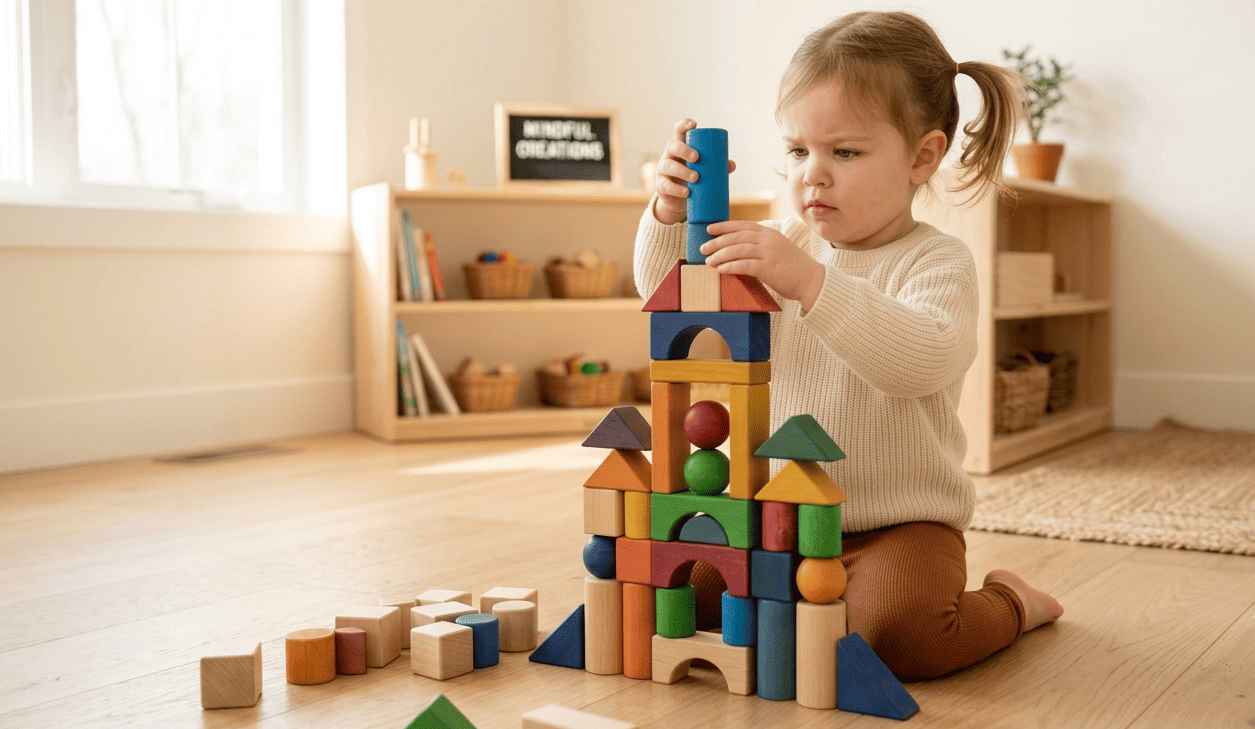
Wooden toys can be a sensible option when you want a product with a simple design and a sturdy construction.
They may be worth considering for:
- Solid wooden vehicles
- Large, well-finished play pieces
- Simple pretend-play accessories
- Wooden puzzles with appropriately sized pieces
- Toys that can be repaired or passed on
Before buying, inspect the finish and construction. Look for smooth edges, secure parts, and clear information about the materials and coatings used.
If the toy is intended for a baby or toddler who mouths objects, check that the manufacturer specifically identifies it as suitable for that age group.
7. When Plastic Toys May Be the More Practical Choice
There are also situations where plastic is a perfectly reasonable choice.
For example, plastic may be more practical for:
- Bath toys designed for water use
- Lightweight toys that are easy to carry
- Products that need frequent surface cleaning
- Toys with moving parts designed for repeated use
- Toys that need to be stored outdoors, if specifically made for that purpose
The important point is to choose a product designed for its intended use.
A plastic toy should still be checked for cracks, loose parts, and suitable age guidance. If it contains electronic components, follow the manufacturer’s cleaning and storage instructions.
Parents do not need to feel guilty about owning plastic toys. Replacing every existing toy simply because it is plastic can create unnecessary expense and waste.
8. A Simple Checklist Before Buying Any Toy
Whether you prefer wooden or plastic toys, these questions can help you make a more informed choice.
| What to check | Why it matters |
|---|---|
| Age recommendation | Helps you choose a toy suitable for your child’s stage |
| Material information | Shows what the product is actually made from |
| Surface and finish | Helps identify rough, peeling, or damaged areas |
| Small components | Reduces risks from detachable parts |
| Cleaning instructions | Makes regular care easier |
| Construction quality | Helps you judge whether the toy is likely to last |
| Repair or replacement options | May extend the useful life of the product |
| Packaging | Helps you avoid unnecessary extra materials |
If product information is unclear, consider choosing another option from a manufacturer that provides better details.
9. You Do Not Have to Choose Only One Material
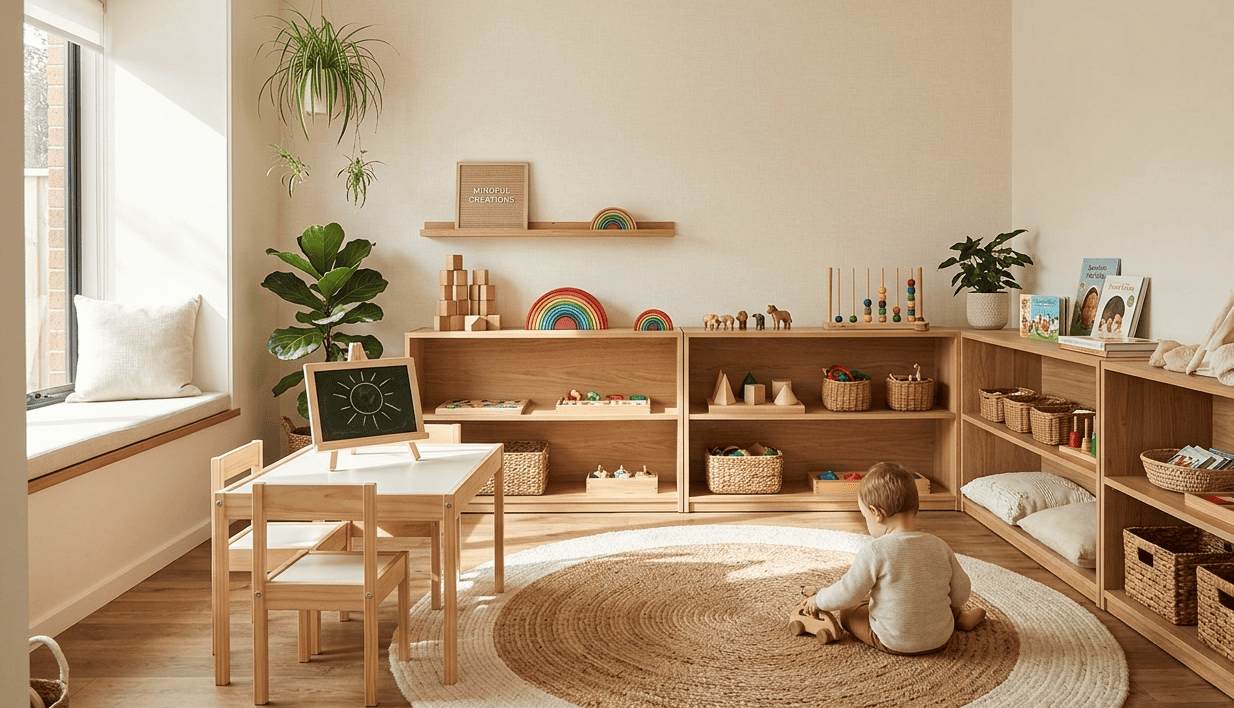
A playroom does not need to follow a strict wooden-toy or plastic-toy rule.
Many families find that a mixture works well. A wooden toy may suit one activity, while a washable plastic toy may be more convenient for another.
The aim is not to create a perfectly coordinated playroom. It is to choose useful, safe, well-made products and avoid buying more than your family needs.
You can also make use of toys you already own. If a plastic toy is in good condition, age-appropriate, and still enjoyed by your child, there is no need to replace it just to make the playroom look more natural.
When it is time to buy something new, compare the actual products rather than relying on labels such as “eco-friendly,” “natural,” or “premium.”
Final Thoughts: Choose the Toy, Not Just the Material
The discussion around wooden toys vs. plastic toys does not have to end with one material being declared the winner.
Wooden toys can offer simple construction and the possibility of long-term use. Plastic toys can be lightweight, easy to clean, and practical for certain activities. Both can be useful, and both can be poorly made.
For parents, the best decision usually comes down to the individual toy: its safety information, construction, cleaning requirements, price, and expected useful life.
Instead of replacing every plastic toy in your home, take a closer look at what your child already uses. Keep toys that are safe and in good condition, pass on suitable items when they are no longer needed, and choose future purchases carefully.
A practical next step is to compare individual toys by age guidance, construction and the way a child can use them. You may also find our guide to Montessori-inspired toys for 1-year-olds helpful when choosing simple, hands-on play options.
A thoughtful toy collection is not about owning only wooden products. It is about buying less unnecessarily, choosing well, and making sure the toys you bring home are genuinely suitable for your family.
Frequently Asked Questions
Are wooden toys safer than plastic toys?
Not automatically. Wooden toys can have paints, coatings, adhesives, and small parts, while plastic toys can also vary in quality. Check the manufacturer’s safety information, age recommendation, and the condition of the toy.
Are all plastic toys harmful to children?
No. Plastic is used in many toys designed for children. The important considerations are whether the product meets relevant safety requirements, is suitable for the child’s age, and remains in good condition.
Do wooden toys last longer than plastic toys?
Some wooden toys can remain usable for many years, but durability depends on construction and care. High-quality plastic toys can also last a long time. Look at the individual product rather than assuming one material always lasts longer.
Are wooden toys better for the environment?
Not in every situation. Environmental impact depends on sourcing, manufacturing, packaging, transportation, useful lifespan, and disposal. Responsible sourcing and long-term use are important considerations.
How should I clean wooden toys?
Follow the manufacturer’s instructions. Many wooden toys can be wiped with a slightly damp cloth and dried thoroughly. Avoid soaking them unless the manufacturer specifically allows it.
Should I replace my child’s plastic toys with wooden ones?
No. If existing plastic toys are safe, age-appropriate, and in good condition, there is usually no reason to replace them simply because they are plastic. Consider the material when making future purchases.
What should I look for when buying eco-friendly wooden toys?
Look for clear information about wood sourcing, finishes, coatings, age suitability, and product safety. If a manufacturer makes a certification claim, check that the claim can be verified.
Sources
1. Environmental Impact Assessment of Toys – 2025 Research Study Read the research
2. A Life Cycle Assessment of the Environmental Impact of Children’s Toys Read the research
3. CPSC – Toy Safety CPSC Toy Safety Information
4. FSC – Responsible Forest Management Forest Stewardship Council
Examples of Wooden and Plastic Toys to Compare
Here are a few examples to compare. Product details, age guidance, materials and availability can change, so check the current Amazon listing and the manufacturer’s instructions before buying.
- Melissa & Doug Wooden Building Blocks (100-Piece Set) — a wooden block set listed for children aged 2 and up.
- Amazon Basics Wooden Shape Sorter and Rainbow Stacker — a mixed-material shape sorter and stacking toy listed for ages 12 months and up.
- Fisher-Price Baby’s First Blocks — a plastic sorting and stacking set listed for babies aged 6 months and up.