
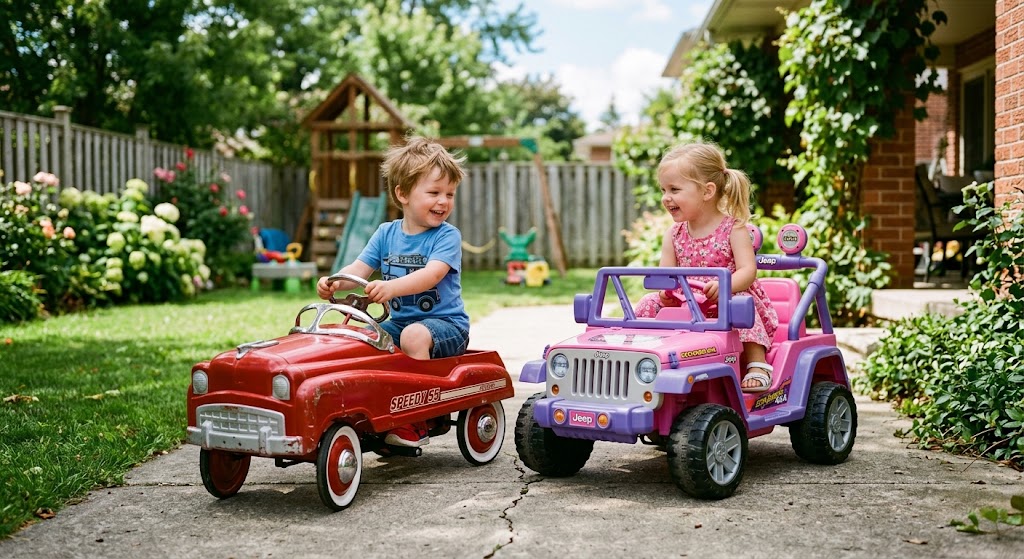
When choosing the ideal outdoor toy for your child, comparing pedal cars vs electric ride-on cars is one of the most important decisions you will face as a parent. Both options bring tremendous joy to driveway play, but they suit completely different energy levels, developmental stages, and physical goals.
Deciding between mechanical pedal power and battery-operated excitement requires looking closely at how your child loves to move. Let us break down everything you need to know to pick the perfect ride for your active toddler.
In This Article
Pedal Cars vs Electric Ride-On Cars: The Core Differences
At first glance, both toy styles look like mini vehicles built for backyard adventures. However, the mechanism powering each vehicle completely changes the play experience.
- Pedal Cars: Powered entirely by human effort. Your child relies on leg muscles, foot coordination, and physical stamina to turn the pedals and move forward.
- Electric Ride-On Cars: Driven by 6V, 12V, or 24V rechargeable batteries. Kids simply push a foot pedal or press a button to accelerate, relying on motor power rather than physical exertion.
Understanding these basic mechanics helps frame which toy matches your toddler’s current physical capabilities.
Physical Health and Motor Skill Development
If your primary goal is burning off boundless toddler energy, mechanical vehicles hold a distinct advantage.
Building Muscle and Gross Motor Skills
Pedaling requires complex leg movement, core engagement, and continuous rhythmic physical effort. When evaluating pedal cars vs electric ride-on cars from a health perspective, pedal-powered models function as a fantastic workout disguised as play. They strengthen leg muscles, improve joint stability, and build endurance.
Coordination and Spatial Awareness
Steering while pedaling challenges a toddler’s coordination. A child must simultaneously coordinate steering wheel control, pedal speed, and visual direction. Guidance from the American Academy of Pediatrics highlights that active physical play helps toddlers refine balance, muscle control, and overall spatial coordination.
Electric models still support hand-eye coordination through steering, but they require zero leg exertion. They are great for spatial awareness, but they will not tire out a high-energy child before naptime in the way physical pedaling does.

The Fun Factor: Speed, Features, and Imaginative Play
While physical benefits are vital, your toddler cares most about one thing: having fun!
The Thrill of Battery Power
There is no denying the magical sensation a young child feels when stepping on a gas pedal and feeling an engine move forward. Electric vehicles often feature incredible add-ons:
- Realistic horn sounds and engine revs
- MP3 auxiliary jacks or Bluetooth music connection
- Working LED headlights and taillights
- Opening doors and working trunk space
These interactive elements spark imaginative play, turning a simple driveway into a realistic driving adventure.
The Freedom of Self-Paced Play
Pedal toys offer a different type of excitement. Children hold total control over their speed. They can accelerate instantly into a sprint or stop on a dime without waiting for a motor to spin down or a battery to recharge. There are no dead batteries to interrupt play sessions, meaning the fun lasts as long as your child’s energy holds out.

Safety Considerations in Pedal Cars vs Electric Ride-On Cars
Safety is always top of mind when evaluating pedal cars vs electric ride-on cars for toddlers under four years old.
Speed Control and Over-Exertion
Pedal cars rarely reach dangerous speeds because a toddler can only pedal so fast. If a child gets tired, the car simply comes to a natural stop. However, active toddlers can sometimes overexert themselves or grow frustrated if their legs get tired far from home on a walk.
Remote Override Systems
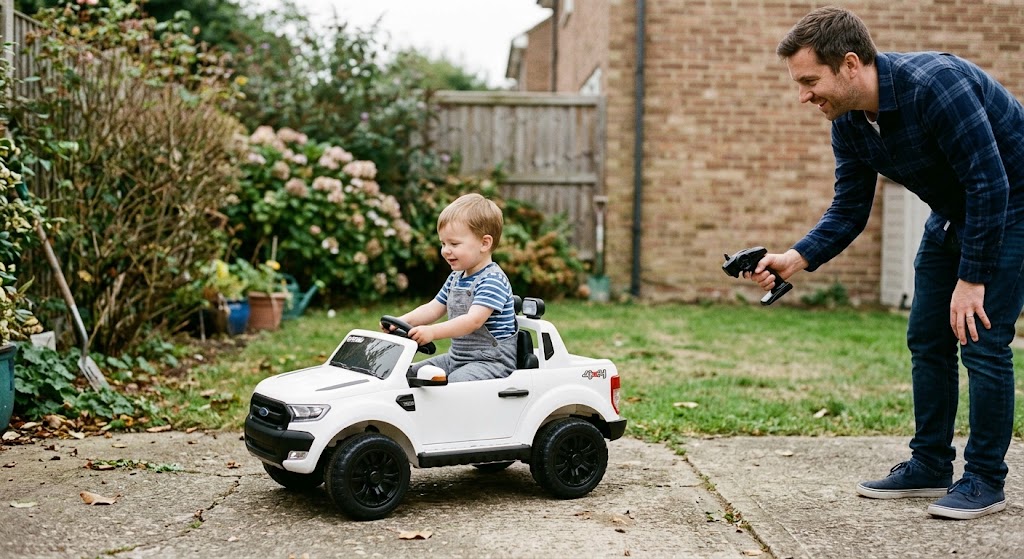
Electric ride-on toys travel at set speeds (usually 2 mph to 5 mph). To ensure safety, most high-quality electric models include a 2.4G wireless parental remote control. This feature lets you take over steering or press an emergency stop button if your child drives toward a slope or garden bed.
According to child safety standards supported by organizations like UNICEF, direct adult supervision and functional safety restraints—such as seatbelts—are essential whenever toddlers operate motorized or high-speed mobile toys outdoors.
Maintenance, Battery Life, and Durability
The long-term practical side of owning these toys often influences parents just as much as the child’s preference.
Maintenance Demands
- Pedal Cars: Virtually maintenance-free. Aside from wiping off mud or occasionally oiling a pedal chain, these mechanical frames are built to last for generations without needing replacement parts.
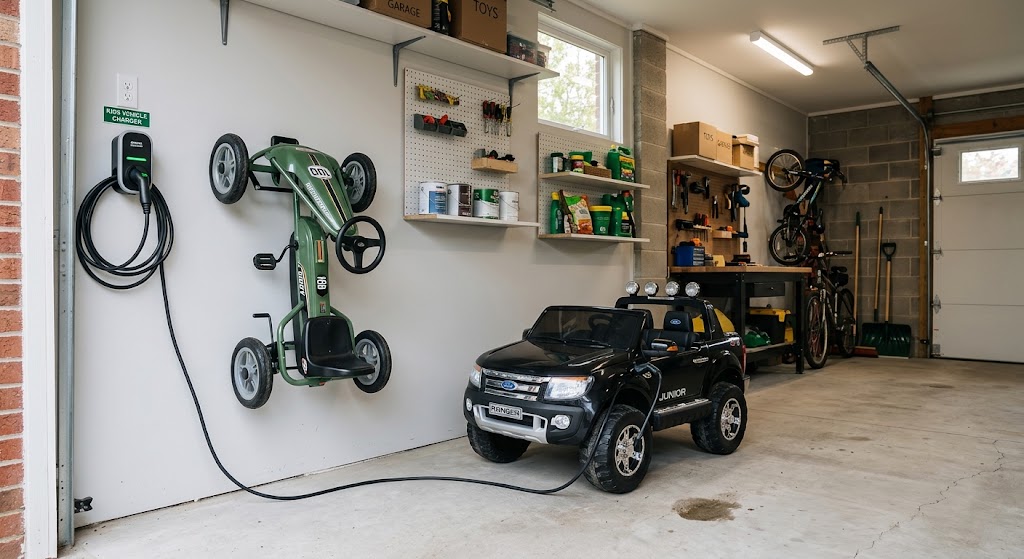
- Electric Cars: Require consistent battery care. You must charge the battery for 8 to 12 hours after every use, avoid storing batteries in freezing conditions, and eventually replace the battery every few years as it loses capacity.
Terrain Flexibility
Electric cars—especially 12V and 24V models—handle thick grass, gravel pathways, and minor driveway inclines far better than pedal toys. Toddlers often struggle to push pedal cars over thick lawn grass or unpaved dirt, which can turn play into a frustrating chore.
Direct Comparison: At a Glance
| Feature | Pedal Cars | Electric Ride-On Cars |
| Primary Power Source | Physical leg pedaling | Rechargeable battery motor |
| Physical Effort Required | High (Great physical workout) | Low (Passive seating position) |
| Parental Control | Manual physical intervention | Wireless remote control override |
| Terrain Versatility | Best on flat, paved ground | Handles grass, dirt, and gravel well |
| Maintenance Need | Very low | Regular battery charging & care |
| Interactive Features | Basic mechanical steering | Lights, sound effects, music ports |
Which Option Suits Your Active Toddler Best?
Choosing the ideal option comes down to matching the vehicle to your toddler’s personality, your local terrain, and your play space.
Choose a Pedal Car if:
- Your toddler has high physical energy and loves active movement.
- You have flat, smooth paved areas like a long driveway or quiet neighborhood sidewalk.
- You prefer low-maintenance toys that never require charging cables or battery replacements.
- You want to focus heavily on gross motor development and leg strength.
Choose an Electric Ride-On Car if:
- You want a toy that easily glides over bumpy backyard grass and rough outdoor dirt.
- Your child loves lights, dashboard buttons, sound effects, and realistic driving roleplay.
- You value having a parental remote control to steer your younger toddler safely.
- You want an exciting shared toy that accommodates effortless cruising.
Both vehicle styles offer incredible outdoor enjoyment for growing toddlers. By weighing physical exercise against interactive features and terrain needs, you will easily pick the best ride for your family’s outdoor adventures.
Read our detailed review on the [top features and battery life of 12V electric cars] for outdoor play.