
Disclosure: This post contains Amazon affiliate links. As an Amazon Associate I earn from qualifying purchases at no extra cost to you.
A two-seat ride-on can seem like an easy solution when siblings both want a turn. But the label “two-seater” does not tell you whether both children will fit comfortably, whether each has a suitable restraint or whether the vehicle can carry their combined weight. The most useful checks are seat space, individual passenger limits, the driving controls and the manufacturer’s rules for carrying a passenger.
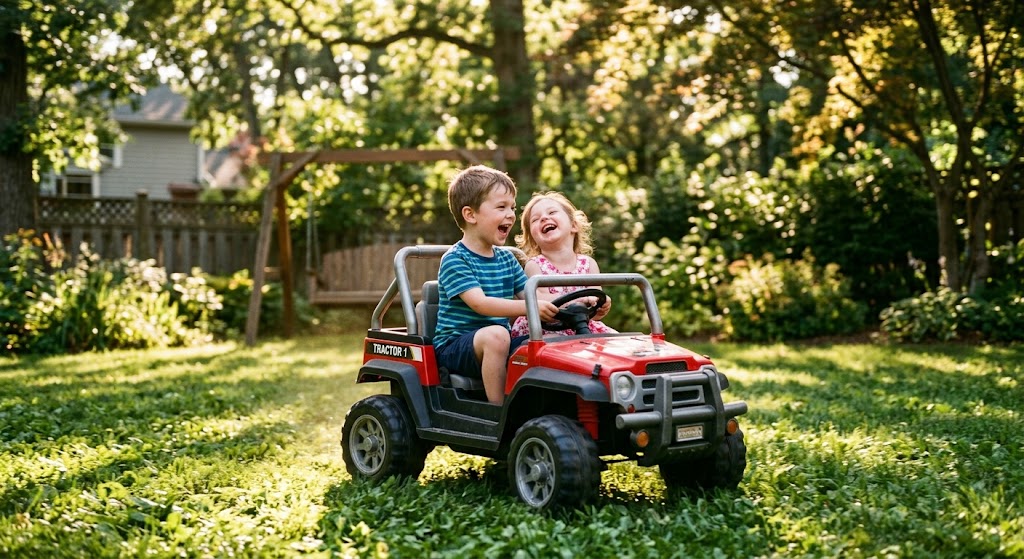
Start with the combined weight limit
Check the maximum load stated by the manufacturer and compare it with the children’s combined weight—not just the weight of the older child. Leave room for growth only within the stated limit; never exceed it. Also check whether the maker sets a separate age or size limit for each seat.
Measure the seats and legroom
Browse two-seater electric ride-on jeeps on Amazon (affiliate link).
Two seats can be narrow, close together or shaped differently from full-size car seats. Compare the seat width, back support, footwell, steering-wheel position and legroom. If possible, measure the children while seated on a similar chair. The driver should be able to reach the steering wheel and controls without leaning awkwardly, while the passenger should have a stable seated position.
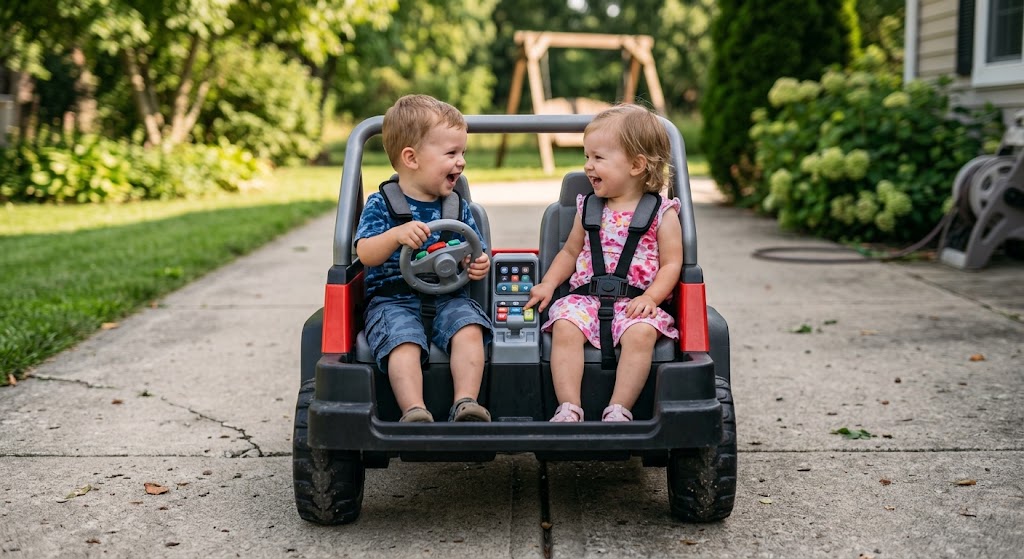
Restraints and passenger rules
Check whether each seat has its own belt or restraint and read the instructions for correct use. Do not assume that a single belt is suitable for two children. If the manual says the vehicle is designed for one rider, do not carry a passenger even if the body appears wide enough. Never add extra seats or modify the restraint system.
Who controls the vehicle?
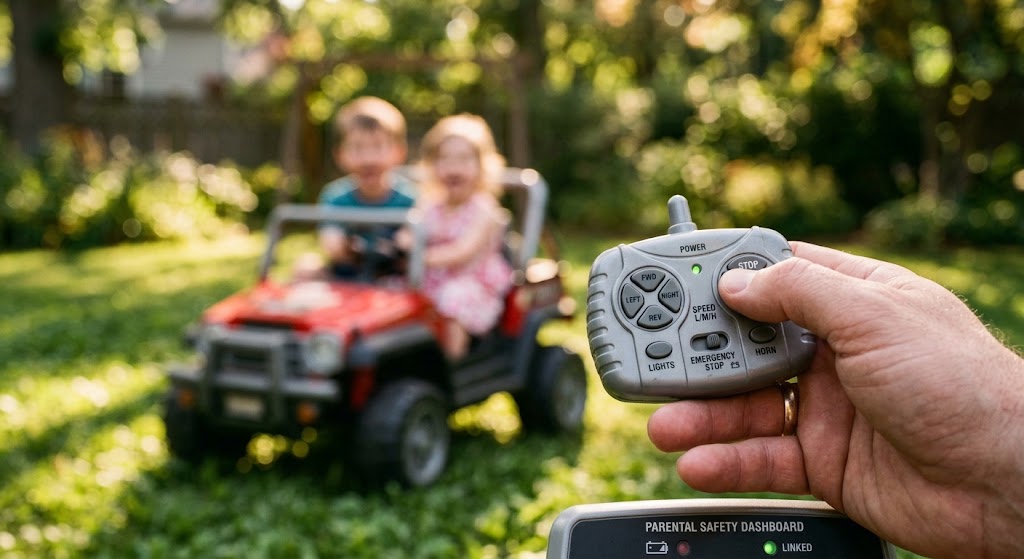
See two-seater ride-on cars with parent remotes on Amazon (affiliate link).
Many two-seat ride-ons have one steering wheel and one accelerator. Decide whether the older child is ready to be the driver while the younger child rides as a passenger. Set clear family rules: only the driver touches the controls, passengers remain seated, and the adult supervising decides when the ride stops. A parent remote, if included, is an additional control—not a replacement for staying nearby.
Battery and surface claims need model-specific checking
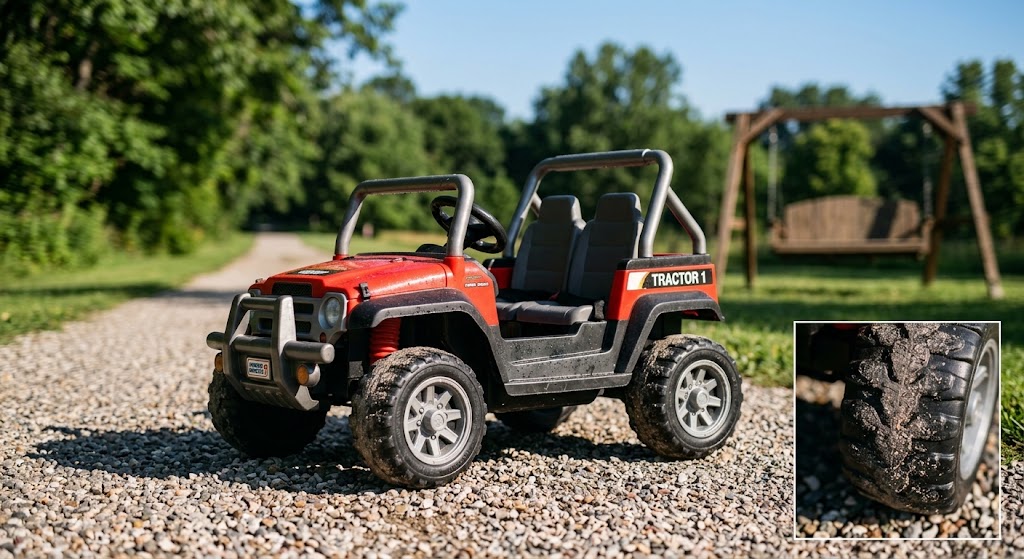
Some two-seat models use higher-capacity batteries or multiple motors, but voltage alone does not establish safe speed, passenger capacity or off-road ability. Read the exact model’s specifications for speed, terrain, charging time and maximum load. Do not assume that a vehicle advertised for grass or gravel is suitable for wet, uneven or sloping ground.
Practical points families sometimes overlook
Explore two-seat ride-on UTVs on Amazon (affiliate link).
- Overall length and width: will it fit through gates and storage doors?
- Turning space: can it turn without hitting walls, furniture or garden edges?
- Entry and exit: can both children climb in and out without climbing over each other?
- Storage: is there a dry place for the vehicle and charger?
- Turn-taking: agree in advance who drives and how long each child gets a turn.
Safety during shared rides
Use a flat, private, traffic-free area away from stairs, pools, roads and steep edges. An adult should supervise continuously. Keep both children seated and follow the manufacturer’s passenger and restraint instructions. Stop the ride if either child stands, leans out, argues over the controls or becomes uncomfortable.
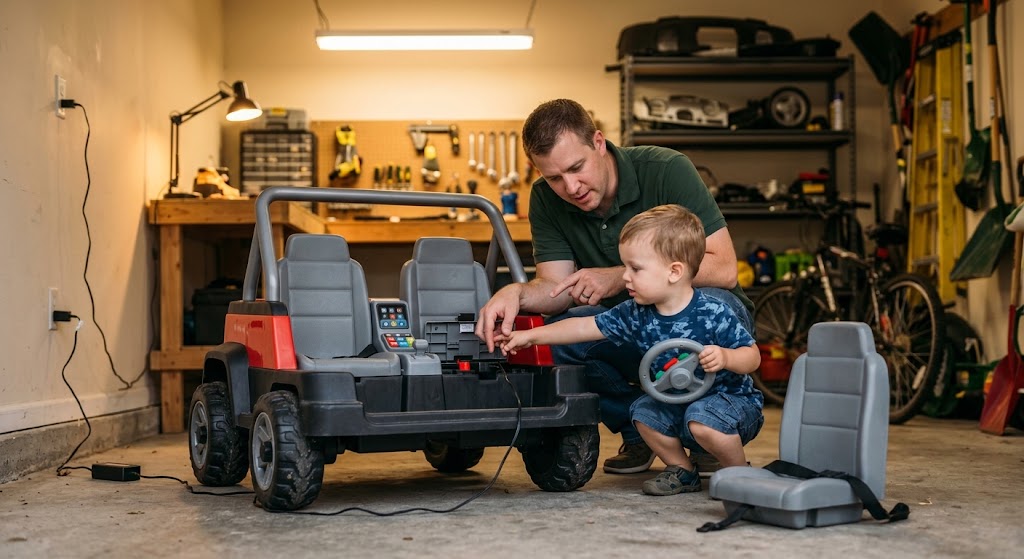
Charging and routine inspection
Use only the supplied or manufacturer-approved charger and follow the charging time in the manual. Before each ride, check the steering, wheels, seat attachments, belts, fasteners and battery compartment. Do not use the vehicle if a restraint is damaged or a mechanical part is loose.
Will a two-seater suit your siblings?
A two-seat model may be practical when both children meet the stated age and weight limits, fit the seats and can follow simple passenger rules. If the children are very different in size or readiness, separate toys or taking turns may be a better option. The larger vehicle is not automatically the better purchase.
For another perspective on child-sized ride-ons, see our comparison of pedal cars and electric ride-ons.
Frequently Asked Questions
How do I check whether two children fit in a two-seater ride-on?
Check the seat dimensions, legroom, individual seating positions and manufacturer’s combined weight limit. Both children must also meet the stated age and passenger requirements.
Can the combined weight limit be shared unevenly?
The total load must stay within the manufacturer’s limit, but that does not automatically mean any distribution is acceptable. Follow any separate passenger or seat limits in the manual.
Should both children wear seat belts?
Use every restraint supplied with the vehicle exactly as instructed. Do not add improvised belts or assume a lap belt is suitable unless the manufacturer specifies it.
Can a younger sibling ride as a passenger?
Only if the manufacturer explicitly allows the younger child’s age and size, and the child can sit appropriately in the designated seat. If the guidance is unclear, do not carry the passenger.
Sources
Health Canada – Play Time: Ride-On Toys and Battery-Operated Toys