
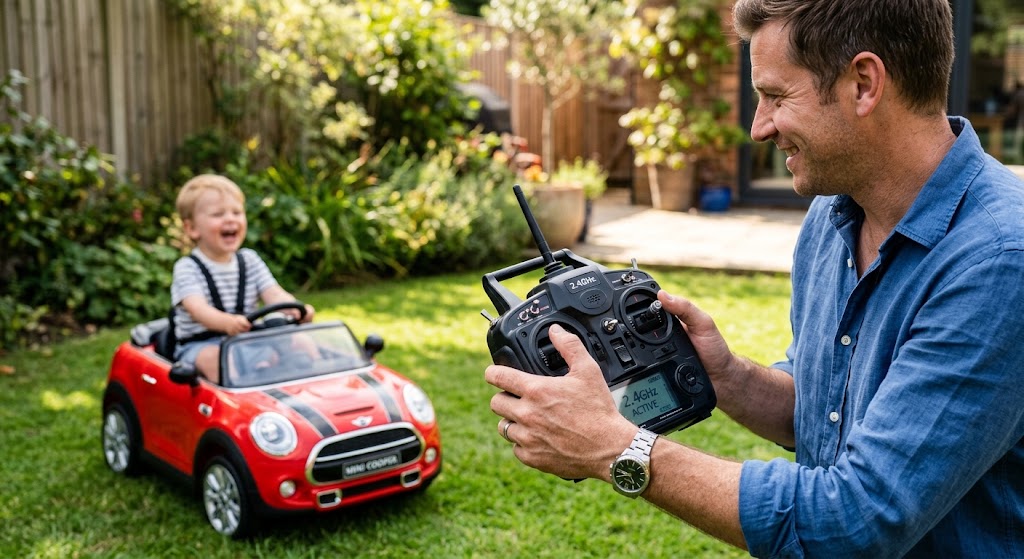
There is nothing quite like watching a toddler’s eyes light up when they step into their very own miniature vehicle. As parents, we love seeing that genuine joy and early sense of independence. However, that excitement can quickly turn into a heart-in-your-mouth moment when your three-year-old steers towards a flowerbed, a tree trunk, or the edge of the driveway. That is where finding the best remote control ride-on cars becomes a game-changer for parents who want to balance fun with safety.
Equipped with 2.4GHz parental remotes, these electric cars allow you to step in instantly, taking over steering and braking whenever your child gets a bit too adventurous. In this comprehensive guide, we will break down what makes a ride-on vehicle safe, how to pick the right voltage, and our top picks to keep your little driver happy and secure.
Disclaimer: This post contains affiliate links. As an Amazon Associate, I earn from qualifying purchases at no extra cost to you.
In This Article
Why Choose Remote Control Ride-On Cars for Young Drivers?
When toddlers first hop into a powered vehicle, their steering coordination and spatial awareness are still developing. According to childhood injury prevention research from organizations like the American Academy of Pediatrics (AAP), physical play toys that involve motorized movement require close supervision to prevent tip-overs and collisions.
Remote override systems give parents complete control over the vehicle’s movement. Rather than running behind the car to physically catch it, you hold a handheld remote that overrides manual foot pedal inputs.
Here is why parents prefer these dual-control vehicles:
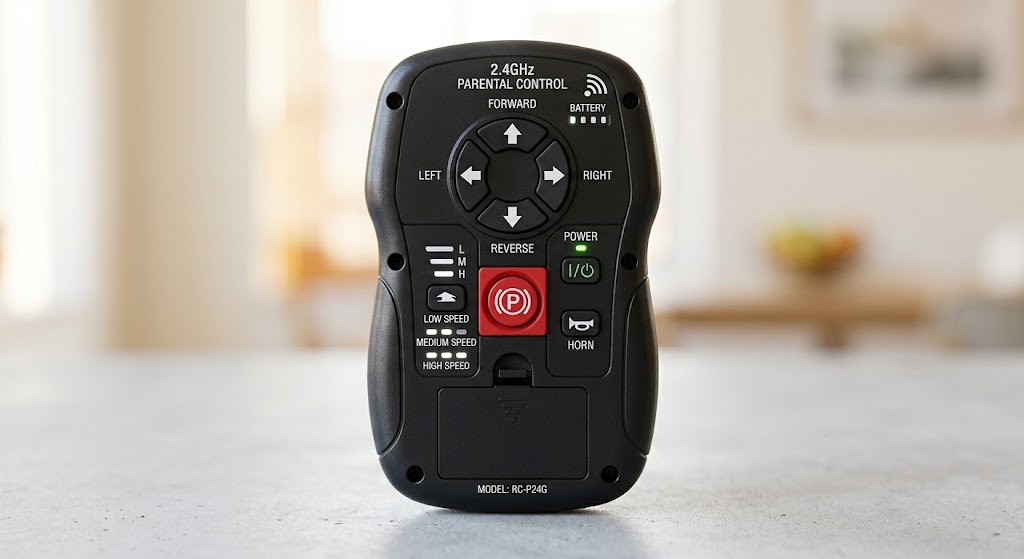
- Instant Emergency Braking: Most 2.4GHz remote controls feature a dedicated “P” (Park or Pause) button that halts the vehicle instantly.
- Gradual Confidence Building: Toddlers can focus on pressing the foot pedal while you handle steering until their coordination matures.
- Terrain Navigation: If your lawn has minor bumps or tight corners, you can guide the car effortlessly around obstacles.
Key Safety Features in the Best Remote Control Ride-On Cars
Not all electric cars are built with the same safety standards. When searching for the best remote control ride-on cars, keeping these structural and electrical features at the top of your checklist ensures a smooth, secure ride every time.
1. Soft-Start Acceleration Technology
Standard electric motors can jerk forward the moment a child presses the gas pedal, which can startle toddlers or cause neck strain. Vehicles with soft-start systems accelerate gradually over 1 to 2 seconds, creating a smooth and comfortable start.
2. Multi-Point Safety Belts & Lockable Doors
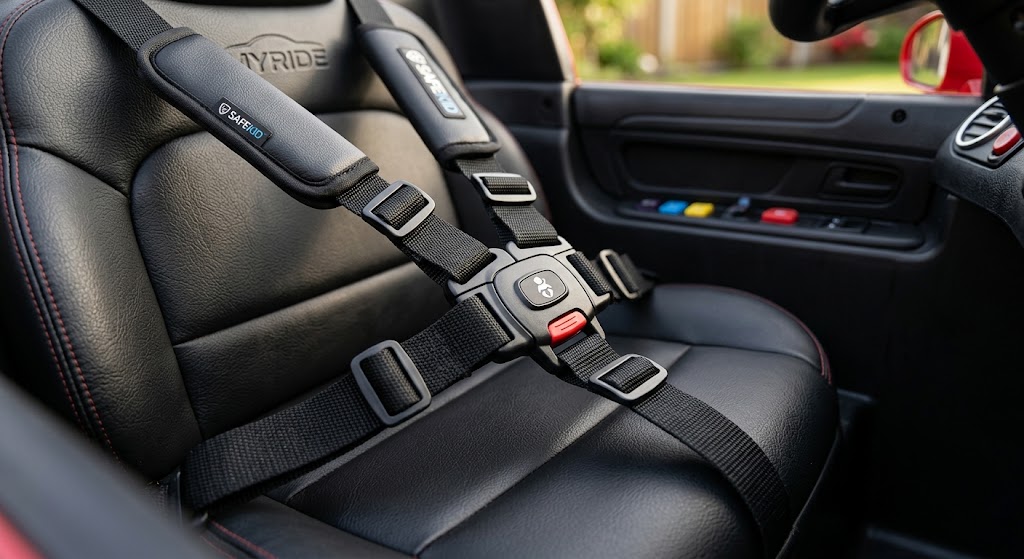
A basic lap belt is fine for older kids, but toddlers benefit greatly from 3-point harnesses or adjustable shoulder straps. Additionally, look for cars with high doors that lock from the outside so your child cannot open them while moving. For maximum peace of mind, you can check out the top-rated Remote Control Ride-On Cars with 3-Point Harness on Amazon to keep your toddler extra secure.
3. Remote Control Priority Override
Ensure the car uses a 2.4GHz frequency rather than older infrared systems. 2.4GHz controllers offer a longer range, zero interference from other devices, and full priority override—meaning parent commands automatically take precedence over whatever the child is doing with the steering wheel or foot pedal.
4. Shock Absorbers and Rubber EVA Tires
Plastic wheels tend to slip on wet grass and vibrate heavily on pavement. Upgrading to EVA (Ethylene-Vinyl Acetate) foam rubber tires along with four-wheel spring suspension creates a smoother ride and better traction on rough ground.
6V vs 12V vs 24V: Choosing the Right Power Output
Selecting the appropriate voltage is a fundamental step in choosing the best remote control ride-on cars for your child’s age and weight class. Developmental guidelines from child safety authorities like UNICEF Child Development highlight that matching a toy’s speed capabilities to a child’s cognitive development prevents accidental injuries.
| Battery Voltage | Max Speed | Recommended Age | Best Suitable Terrain |
| 6 Volt | 1.5 – 2.5 mph | 1.5 to 3 years | Smooth indoor floors, flat driveways |
| 12 Volt | 3.0 – 5.0 mph | 3 to 5 years | Grass, packed gravel, paved sidewalks |
| 24 Volt | 5.0 – 8.0+ mph | 5+ years | Rough trails, inclines, two-seater buggies |
If you are looking for a reliable balance of speed, durability, and battery life, browse the latest prices for 12V Remote Control Ride-On Trucks on Amazon.
Top Recommended Ride-On Categories for 2026
Depending on your child’s personality and where you plan to drive, certain styles of ride-on cars stand out for durability, comfort, and control.
Licensed Sports Cars & Sedans
If your child loves sleek designs, licensed miniature replicas like the Mercedes G-Wagon, BMW i8, or Lamborghini Urus offer realistic features such as working LED headlights, horn sounds, and Bluetooth audio systems. These cars are typically 12V models, making them perfect for cruising down the sidewalk under your watchful remote guidance.
Off-Road UTVs and 2-Seater Trucks
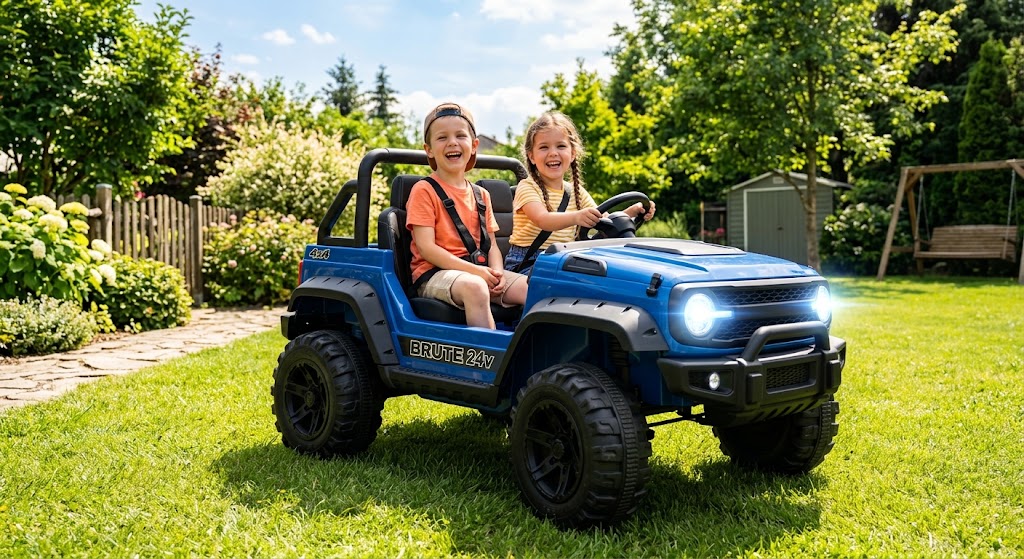
For families with large yards, dirt paths, or siblings who want to ride together, 24V UTV buggies are built to handle rougher environments. They feature higher ground clearance, sturdy frames, and dual motor setups that do not stall when driving over thick grass. If you have two little drivers at home, take a look at the best-selling 2-Seater Off-Road Remote Control UTVs on Amazon for spacious riding.
Maintenance & Safe Operation Tips for Parents
To ensure your child gets years of safe entertainment out of their ride-on vehicle, consistent maintenance and clear ground rules are essential.
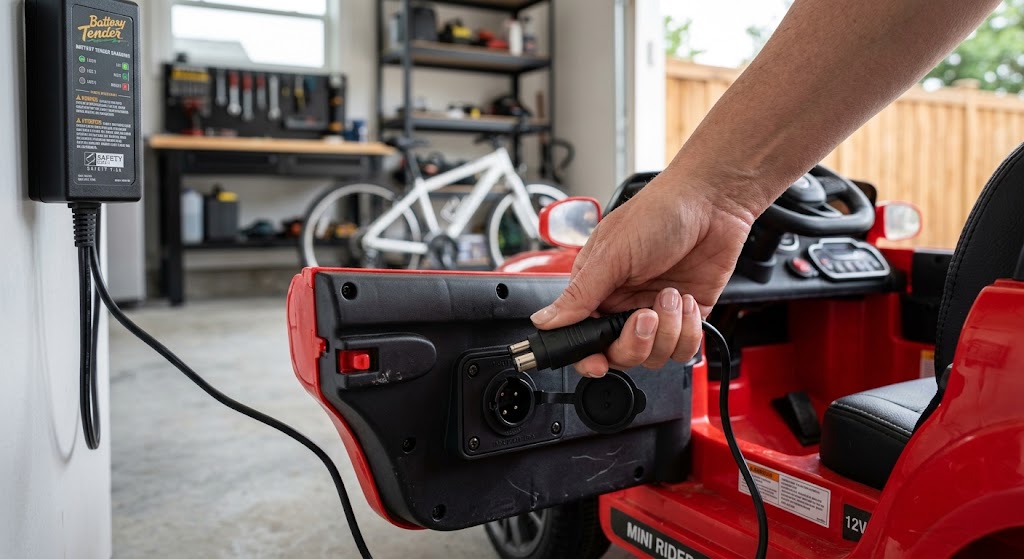
1. Battery Care Basics
- Initial Charge: Charge the battery for a full 8 to 12 hours before its very first use (check the manufacturer’s manual).
- Avoid Deep Discharge: Do not let the battery drain completely to zero; charge it regularly after play sessions.
- Off-Season Storage: Store the battery in a dry, temperate space during winter months, giving it a top-up charge once a month.
To protect your investment from rain, dust, and sun damage when parked outside, consider picking up a durable Universal Waterproof Ride-On Car Cover on Amazon.
2. Setting Play Boundaries
Even with parental remote controls, establish clear safety rules from day one:
- Always wear closed-toe shoes while driving.
- Never operate the car near open streets, swimming pools, or steep drop-offs.
- Keep hands and feet inside the cabin at all times while the car is moving.
Final Thoughts on Remote-Parented Driving
Investing in the best remote control ride-on cars allows your child to explore outdoor play, practice spatial skills, and experience the thrill of “driving” while giving you total control over their safety. By prioritizing cars with 2.4GHz remote override systems, soft-start acceleration, and durable safety harnesses, you can create fun, stress-free outdoor memories that your little driver will cherish for years to come.
For younger toddlers, explore our top picks for the [best 6V electric ride-on cars for 1 to 2-year-olds].