
One of the foundational tenets of Dr. Maria Montessori’s educational philosophy is that children have an innate desire to participate in real-world, adult activities. Toddlers do not just want to play with toy kitchens—they want to prepare real food alongside you. This natural inclination forms the heart of “Practical Life” in Montessori methodology. By introducing Montessori practical life tools tailored to their small hands, parents can unlock a world of independence, concentration, and self-confidence in their young children.
Transforming your home into a Montessori-friendly environment doesn’t require expensive gadgets or a complete home overhaul. It simply means providing real, functional tools scaled down to a child’s proportions. In this guide, we will explore why practical life work matters and highlight five accessible tools you can easily introduce into your daily routine.
In This Article
Why Practical Life Activities Matter in Early Childhood
Practical life activities encompass everyday tasks like cleaning, cooking, dressing, and caring for the environment. While these routines might seem mundane to adults, they serve as powerful developmental building blocks for toddlers and preschoolers.
Research and educational frameworks supported by the Association Montessori Internationale (AMI) emphasize that practical life exercises lay the groundwork for all future academic learning.
Here is how these simple tools impact child development:
- Fine Motor and Gross Motor Coordination: Pouring water, sweeping, and slicing soft fruit refine muscle control and hand-eye coordination.
- Enhancing Executive Function: Completing a task from start to finish—such as wiping a spill—teaches sequence, planning, and focus.
- Building Independence and Self-Esteem: When children accomplish real tasks independently, they develop a genuine sense of purpose and pride.
- Fostering Order and Responsibility: Children learn to respect their physical environment and take responsibility for maintaining it.
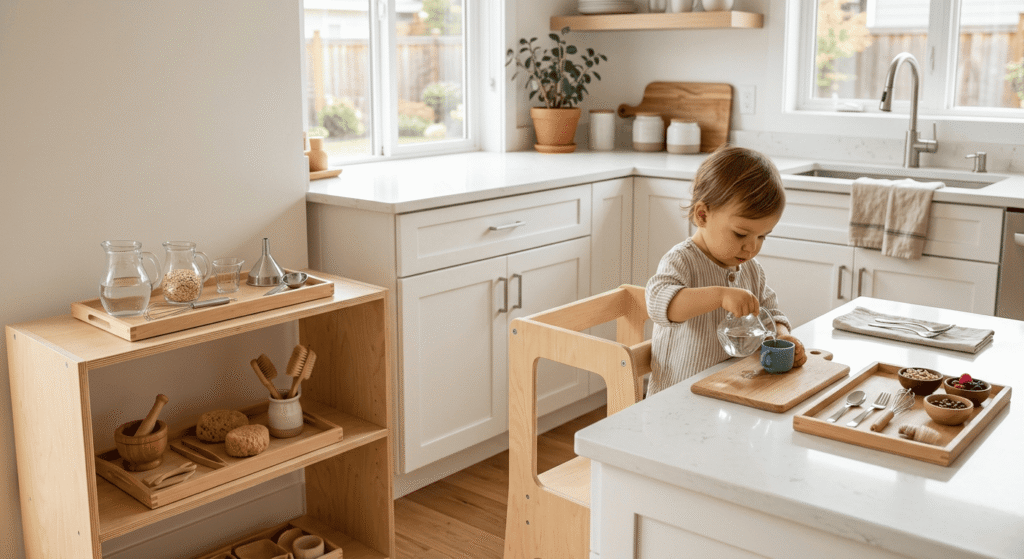
Top 5 Montessori Practical Life Tools to Introduce at Home
You don’t need a certified classroom to practice Montessori principles. Adding these five budget-friendly, child-sized tools to your home can spark meaningful everyday learning.
1. Child-Sized Glass Pitchers and Small Cups
In many modern households, plastic cups are the norm for toddlers. However, Montessori environments favor small, real glass pitchers and cups.
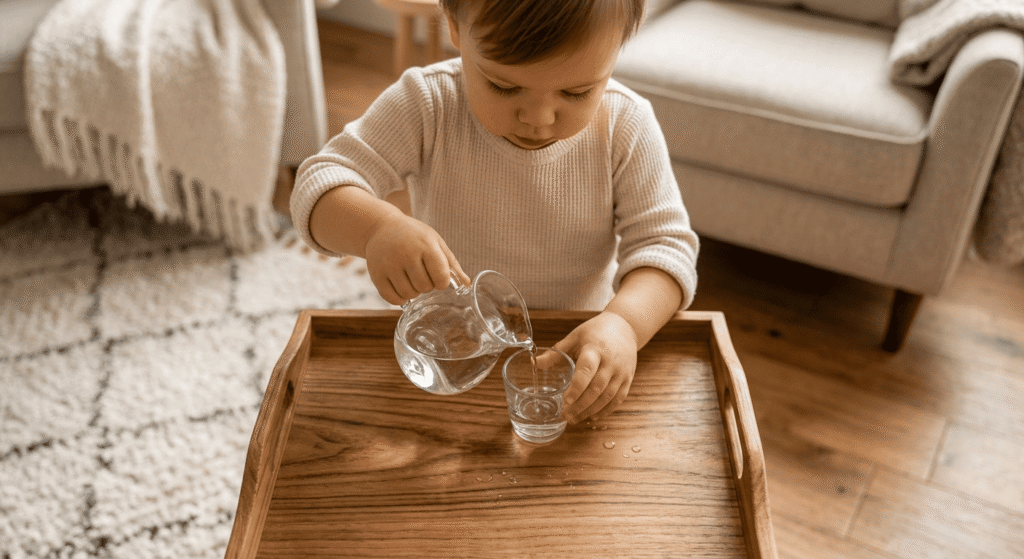
- Why it works: Glass provides natural feedback through cause and effect. If a child drops a glass cup, it breaks—teaching them care, spatial awareness, and gentle handling. A small 4-6 oz glass pitcher allows toddlers to practice pouring their own water independently.
- How to introduce it: Fill the pitcher halfway with water and place it on a tray with a small glass. Demonstrate pouring slowly with two hands (one on the handle, one supporting the spout). Keep a small cloth nearby for inevitable spills!
2. Mini Wooden Chopper or Wavy Slicer
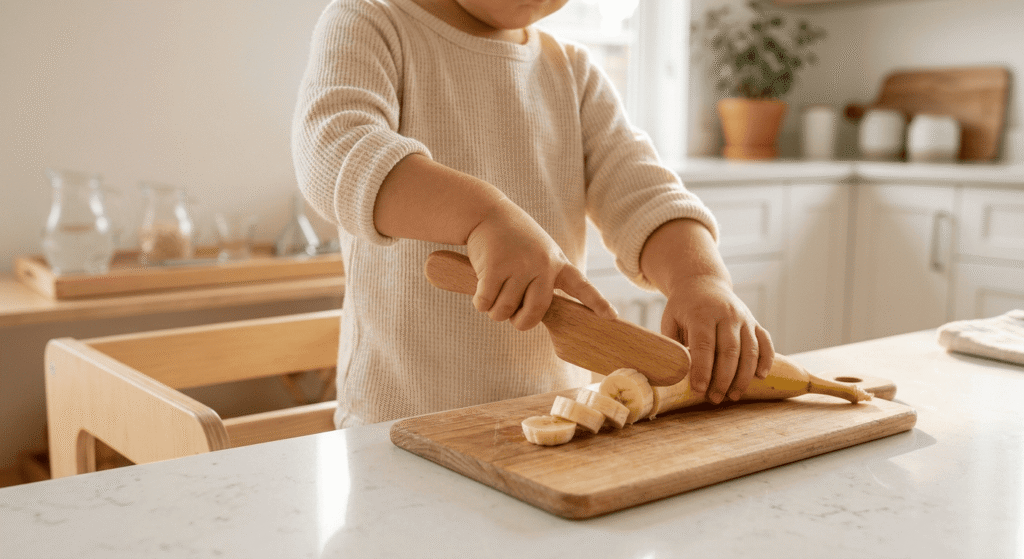
Cooking is one of the most enriching practical life experiences. A child-safe wooden knife or wavy cutter allows toddlers as young as 18 months to cut soft foods like bananas, avocados, or cooked carrots safely.
- Why it works: Slicing builds wrist strength, bilaterally coordinates both hands, and helps picky eaters connect with their food in a fun, non-pressured way.
- How to introduce it: Show your child how to place one hand on top of the chopper and press down firmly. Keep tasks short and manageable, such as slicing three banana pieces for snack time.
3. Child-Sized Broom and Dustpan
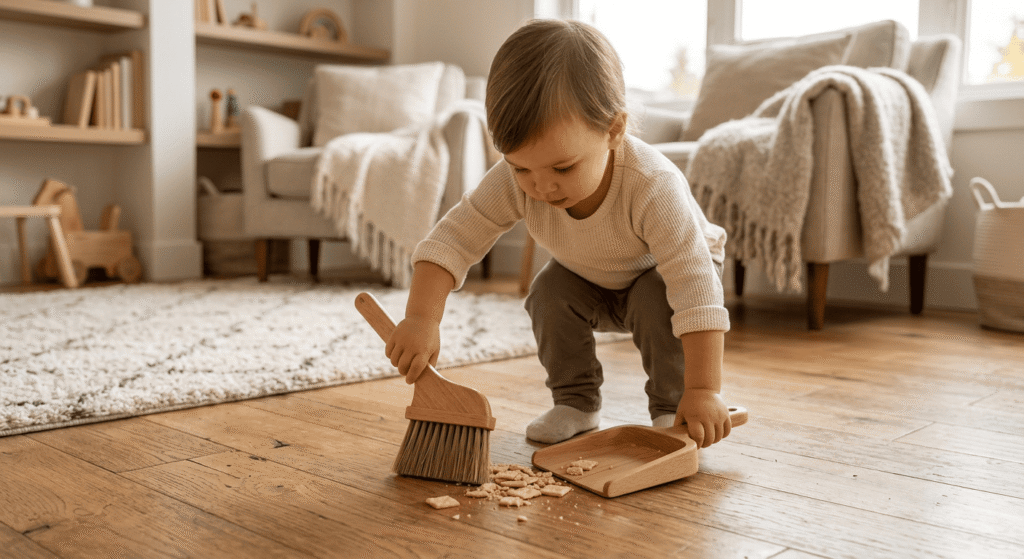
Cleaning up after oneself is an integral part of Montessori practical life exercises. Standard adult brooms are too unwieldy for toddlers, causing frustration rather than skill-building.
- Why it works: A lightweight, properly proportioned broom allows children to sweep up real crumbs or dry rice, promoting gross motor control and environmental responsibility.
- How to introduce it: Use painter’s tape to mark a square on the floor. Challenge your toddler to sweep the crumbs inside the square before sweeping them onto the dustpan.
4. Spray Bottle and Microfiber Wipes
Toddlers love playing with water, making a small spray bottle an irresistible cleaning tool.
- Why it works: Squeezing the trigger of a spray bottle strengthens the hand muscles needed later for writing and scissors use. Cleaning windows, plant leaves, or table surfaces gives them a clear, visible sense of accomplishment.
- How to introduce it: Fill a mini spray bottle with plain water. Hand your child a small cloth and show them how to mist a table surface and wipe it dry using circular motions.
5. Self-Care Washing Station or Small Basin
Caring for oneself is just as vital as caring for the environment. Setting up a low self-care area with a small wash basin, hand towel, and mirror encourages personal hygiene habits early on.
- Why it works: Accessible self-care stations allow toddlers to wash their hands or wipe their faces without needing an adult to lift them up to a high bathroom sink.
- How to introduce it: Position a low basin, small bar of soap, and hand towel on a child-accessible table. Guide them through washing hands before meals and drying them thoroughly.
How to Prepare Your Home Environment for Success
Introducing these Montessori practical life tools is most effective when paired with an intentional, accessible environment. Early childhood guidelines from The Montessori National Curriculum emphasize the concept of a “Prepared Environment”—a space designed around the physical dimensions and capabilities of the child.
Here are four simple steps to set your home up for success:
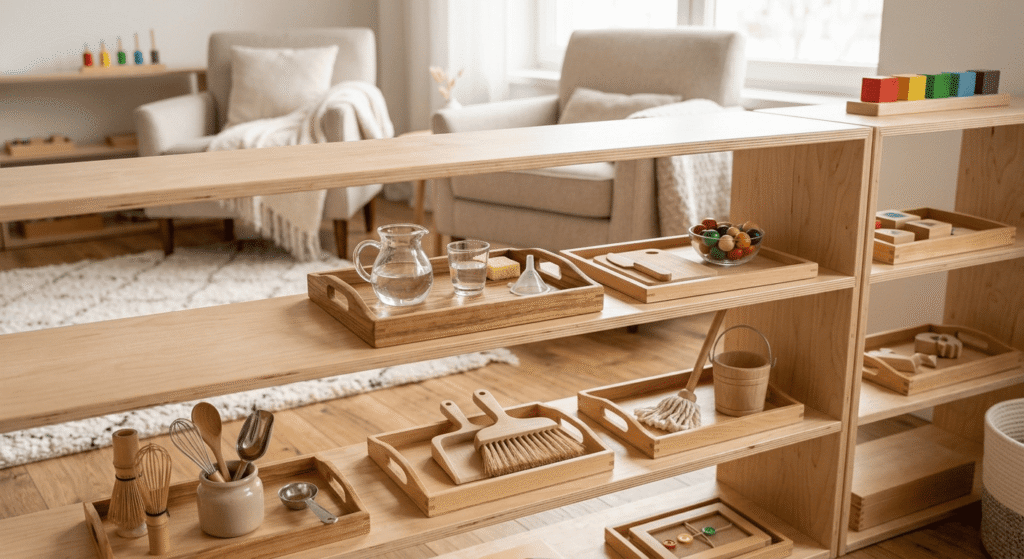
- Keep Tools Accessible: Store child-sized tools on low, open shelves or low hooks where your child can reach them independently without asking for help.
- Focus on Quality and Real Functionality: Avoid non-functional plastic toys. Choose real wood, metal, or glass items designed specifically for small hands.
- Embrace the Process over Perfection: Expect spills, mess, and slow progress. Focus on the effort and concentration your child exerts rather than whether the table is perfectly clean.
- Demonstrate Slowly with Few Words: When introducing a new tool, show the child how to use it with slow, exaggerated movements, minimizing spoken instructions so they can focus on your hands.
Final Thoughts
Integrating Montessori principles at home doesn’t require complex lesson plans. By introducing these essential Montessori practical life tools, you give your child the freedom to learn through real-life experience. Watching your toddler master pouring a glass of water or sweeping up a spill independently will highlight just how capable young children truly are when given the right tools.
“To help your toddler develop early logic and problem-solving skills, explore the [Top Shape Sorters and Stacking Toys for Toddler Development].”
“To support early milestones with purposeful play, discover the [Best Educational Toys for 1-Year-Olds That Teach, Not Distract].”