

Turning one is a massive milestone in a child’s life. Within just a few months, a baby transforms from a crawling infant into an active, curious toddler who actively explores their environment. Finding the best educational toys for 1 year olds is one of the most effective ways to support this pivotal stage, as their brain undergoes phenomenal neurological growth. As a parent, you want to guide this development in every way possible, which naturally leads you to the toy aisle.
However, walking down the modern toy aisle can be overwhelming. Shelves are packed with plastic gadgets that flash bright lights, sing synthesized songs, and move on their own at the press of a button. While these toys might capture a toddler’s attention instantly, they often serve as passive entertainment rather than educational tools.
To foster true cognitive, physical, and emotional growth, we need to shift our focus. The best educational toys for 1-year-olds are tools that invite active engagement, promote problem-solving, and teach foundational skills—without causing sensory overload or distraction.
In This Article
The Philosophy: Why the Best Educational Toys for 1 Year Olds Make Active Learners
There is a beautiful saying in early childhood education: “Passive toys make active learners, while active toys make passive learners.”
When a toy does everything—flashes lights, drives across the room, and talks—the child simply sits back and watches. They become a passive spectator. On the other hand, a simple set of wooden blocks does absolutely nothing on its own. It requires the child to pick it up, balance it, stack it, and problem-solve when the tower tumbles down. The child becomes the active driver of the play experience.
For a one-year-old, learning happens through physical interaction. They need to touch, rotate, drop, and feel textures to build spatial awareness and understand cause and effect. Open-ended toys—toys that can be used in multiple ways depending on the child’s imagination—are the ultimate educational tools for this age group.
Crucial Developmental Milestones at 12 Months
To choose the right educational tools, it helps to look at what is happening inside your toddler’s developing mind and body at one year of age:
- Gross Motor Skills: Many one-year-olds are mastering the art of pulling themselves up to stand, cruising along furniture, or taking their very first independent steps.
- Fine Motor Skills: The “pincer grasp” (using the thumb and index finger) is becoming highly refined. Toddlers love putting objects into containers and taking them back out.
- Cognitive Development: Concepts like object permanence (knowing something exists even when hidden) are firmly established. They begin to experiment with cause and effect consciously.
- Language Acquisition: While they may only say a few words, their receptive language (what they understand) is expanding rapidly. They love identifying familiar objects and animals.
Top Educational Toy Categories for 1-Year-Olds
When curating play things for your toddler, prioritize items that target these milestones. Here are the top categories of educational tools that truly teach.
1. Object Permanence Boxes and Shape Sorters
Around 12 months, toddlers are fascinated by the concept of containment. An object permanence box—a classic Montessori tool where a wooden ball is dropped into a hole and rolls out into a tray—teaches spatial awareness and fine motor precision. Basic shape sorters with simple geometric shapes (like a circle, square, and triangle) introduce early problem-solving skills as the child figures out how to align angles to fit the pieces through the slots.
Based on early childhood development research, simple open-ended objects promote deep focus and spatial awareness during crucial neurological milestones.
2. Stacking Cups and Wooden Building Blocks
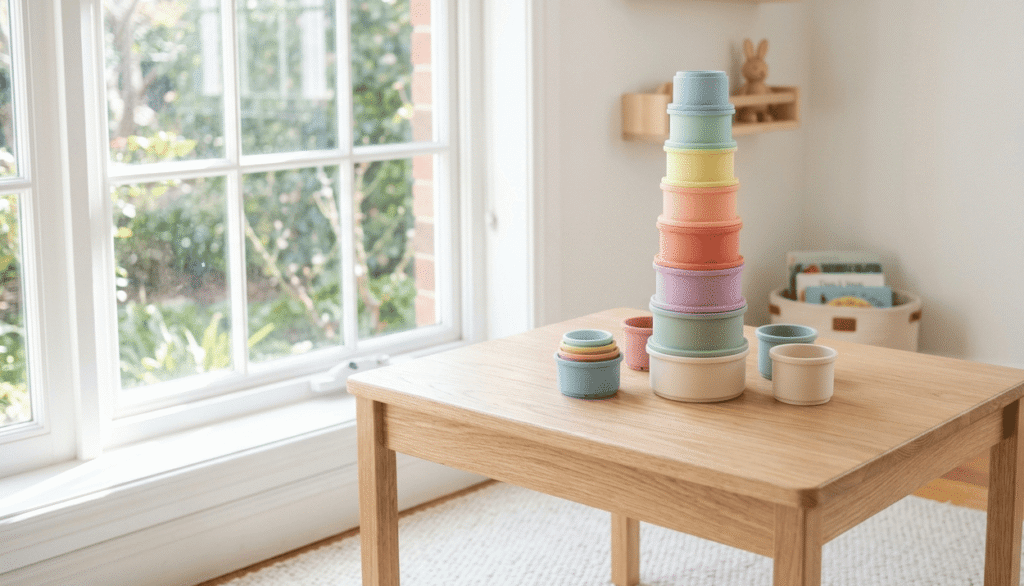
Do not underestimate the humble nesting cup. Stacking cups teach mathematical concepts like size graduation (big versus small), nesting, and balance. Stacking blocks require immense focus, hand-eye coordination, and spatial reasoning. Furthermore, knocking the tower down provides a fantastic lesson in cause and effect!
3. Push and Pull Toys
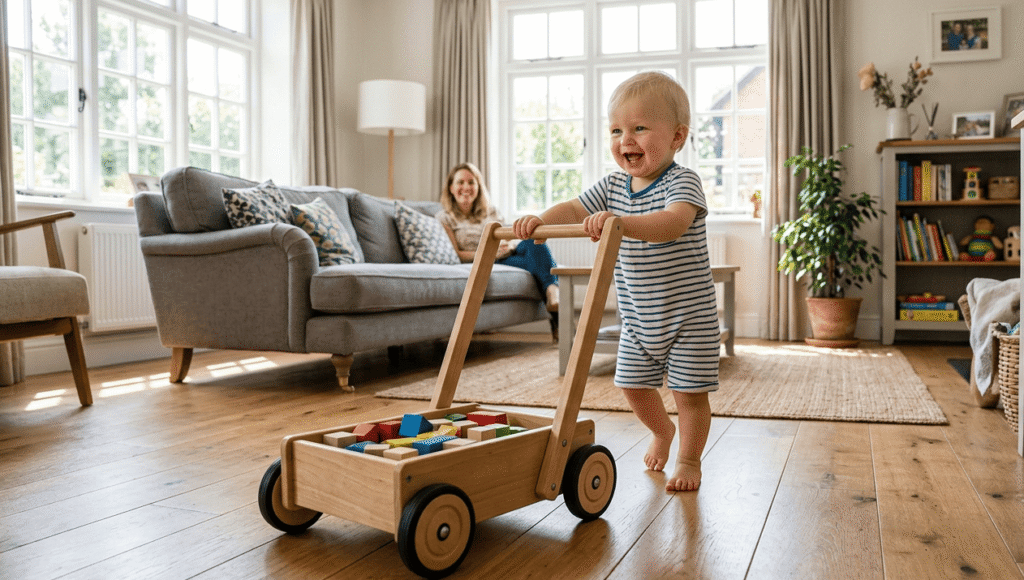
For the physical milestone of walking, a sturdy wooden push wagon is an exceptional tool. Unlike plastic baby walkers that suspend the child, a push wagon requires the toddler to balance independently while using their own strength to propel forward. Pull toys on a string are excellent for slightly older toddlers, as they learn to walk forward while tracking an object behind them.
4. Simple Wooden Peg Puzzles
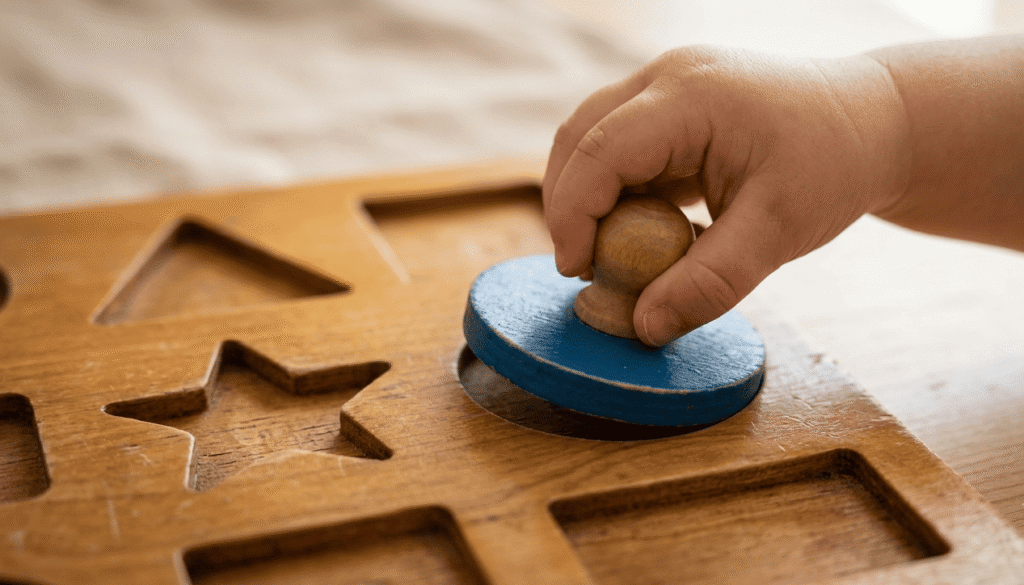
Puzzles with large wooden knobs are ideal for developing the pincer grasp. Matching a simple picture of an animal or a vehicle to its corresponding slot on the board exercises visual discrimination, spatial orientation, and early language skills as you name the objects together.
How to Spot a Distracting Toy (What to Avoid)
Not all toys labeled “educational” are beneficial. When evaluating toys for your one-year-old, be cautious of these common red flags:
- Excessive Battery-Operated Features: If a toy relies on constant battery power to be fun, it likely limits imagination. Flashing lights and loud, sudden noises can also trigger sensory overstimulation or over-exhaustion in young minds.
- Single-Purpose Toys: A toy that only does one specific action (like a plastic character that only plays one pre-recorded song when pressed) will quickly lose its educational value once the novelty wears off.
- Digital Screens: According to Major pediatric organizations, screen-based toys should be avoided for children under 18 to 24 months, as they delay real-world physical and social interaction.
Practical Tips for Mindful Toy Management
Choosing the best educational toys for 1-year-olds is only half the battle; how you manage them in your home matters just as much.
Practice Toy Rotation
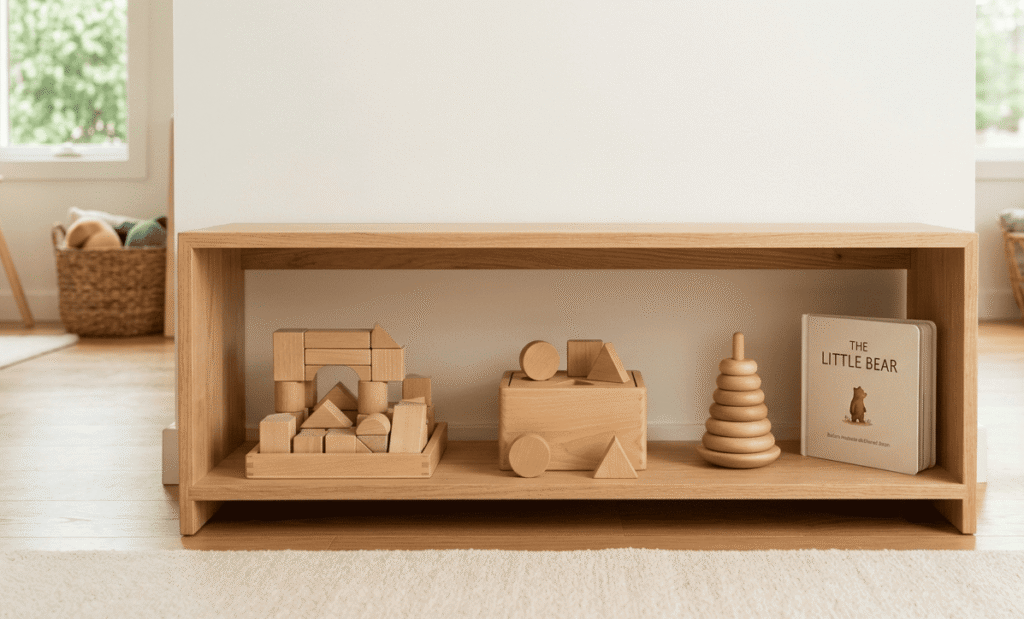
Having too many toys out at once causes “choice paralysis.” A toddler surrounded by twenty toys will flit from one to another without deeply engaging. Instead, display only 4 to 6 curated, high-quality toys on a low, accessible shelf. Store the rest away out of sight, and rotate them every week or two. You will be amazed at how a previously ignored toy feels brand new again.
Embrace Everyday Household Objects
Remember that to a one-year-old, the entire world is a laboratory. A metal mixing bowl, a wooden spoon, or an empty cardboard box can be just as educational as an expensive store-bought toy. Banging a spoon on a pot teaches rhythm and acoustics, while hiding a toy under a kitchen towel creates a wonderful game of peek-a-boo.
Conclusion
The best educational toys do not need to be loud, bright, or expensive. By choosing simple, durable, and open-ended tools made from natural materials like wood and silicone, you give your child the space to think, experiment, and create.
Instead of distracting your toddler to keep them quiet, invest in toys that invite them to become active participants in their own learning journey. Watch them concentrate, celebrate their small victories when a block balances, and enjoy this beautiful stage of mindful growth.
“Along with sensory play, when your toddler is ready to take their first steps, learn about [safe push toys vs traditional baby walkers] to support their movement.”
“To support early cognitive milestones in infants, learn [Why Every 8-Month-Old Needs an Object Permanence Box].”