
Cultivating a lifelong love for reading does not begin in primary school—it starts in the cozy lap of a parent long before a child can decode letters. For toddlers aged 1 to 3, traditional picture books with dense text often struggle to compete with a world full of sensory stimulation. This is where the magic of interactive storytelling comes into play.
By incorporating tactile elements, hidden flaps, engaging sounds, and movable parts, interactive storybooks for toddlers transform reading from a passive listening task into an active, hands-on adventure. These multisensory tools capture short attention spans and help build an early reading habit that forms the foundation for lifelong academic success.
In this guide, we will explore why interactive storybooks are so effective for early childhood development, the primary types of interactive books available, and actionable strategies for making daily reading a joyful family habit.
In This Article
Why Interactive Storybooks for Toddlers Work So Well
Toddlers are kinesthetic learners; they process the world primarily through touch, movement, and direct exploration. Sitting still to listen to a story can feel challenging when their bodies are wired to move. Interactive books bridge this gap seamlessly by offering physical engagement alongside narrative listening.
When a toddler lifts a flap to reveal a hidden puppy or presses a button to hear a tractor roar, several cognitive processes occur simultaneously:
- Language Acquisition: Hearing rich vocabulary paired with immediate visual and tactile feedback strengthens word association.
- Cause-and-Effect Understanding: Discovering that pulling a tab changes a picture teaches basic cause-and-effect reasoning.
- Fine Motor Precision: Flipping small felt flaps, tracing grooves, and pressing sound buttons refines finger dexterity.
- Sustained Focus: Interactive elements lengthen a toddler’s attention span by keeping their hands occupied while their mind follows the story.
According to reading research published by the Reading Is Fundamental (RIF) Organization, early exposure to interactive and engaging print materials significantly accelerates oral language development and print awareness in toddlers.
Top Types of Interactive Storybooks for Toddlers
Not all interactive books serve the same purpose. Depending on your child’s developmental stage, different formats offer unique learning benefits:
1. Lift-the-Flap Books
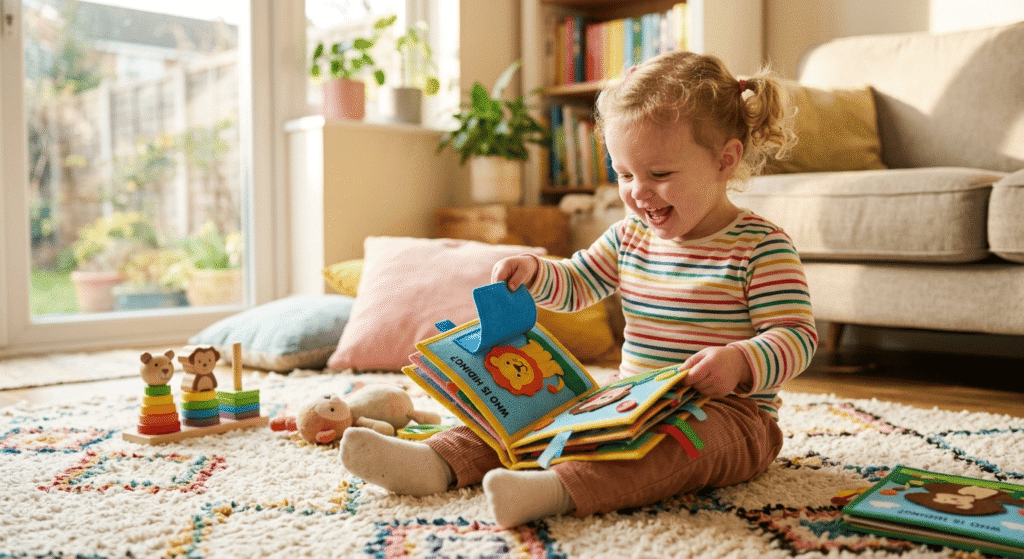
Lift-the-flap books turn reading into a game of peek-a-boo. Toddlers use their fingers to lift paper or felt flaps to discover hidden characters or answers to simple questions.
- Best For: Developing object permanence, curiosity, and spatial awareness.
2. Touch-and-Feel Books
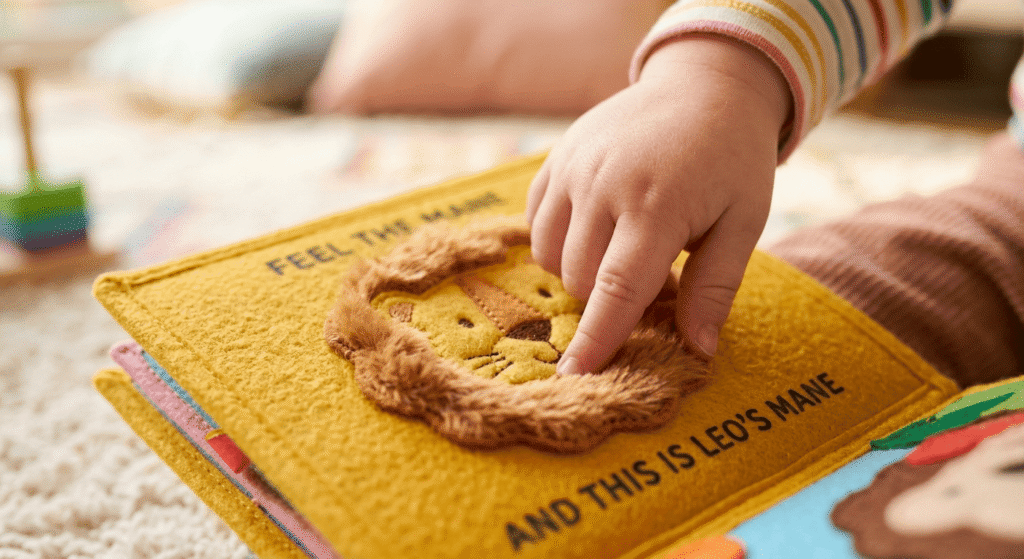
Featuring patches of fluffy faux fur, bumpy silicone, smooth foil, or rough sandpaper, these books cater directly to a toddler’s tactile curiosity.
- Best For: Sensory processing, descriptive vocabulary expansion (e.g., soft, rough, bumpy), and calm focus.
3. Sound and Musical Books
With embedded push-buttons, these books produce animal sounds, instrument notes, or nursery rhymes that correspond to the story on the page.
- Best For: Auditory discrimination, rhythm recognition, and independent play.
4. Slide-and-Find Mechanisms (Pull-Tab Books)
Featuring sliding panels, these books allow children to pull tabs to transform scenes or bring characters to life.
- Best For: Hand-eye coordination and spatial reasoning.
Top Recommended Interactive Storybooks for Toddlers
To help you curate your home library, here are some timeless, highly-rated interactive titles loved by early literacy experts:
- Dear Zoo by Rod Campbell: A classic lift-the-flap book that introduces animals, descriptive adjectives, and simple repetition.
- Never Touch a Dinosaur! by Make Believe Ideas: A durable silicone touch-and-feel book with bumpy textures and humorous rhymes.
- Where Is Baby’s Belly Button? by Karen Katz: An engaging lift-the-flap book that teaches body parts and vocabulary through vibrant illustrations.
- Press Here by Hervé Tullet: A brilliant minimalist book that instructs toddlers to press, shake, and tilt pages to create magical visual transformations—without any digital screens!

How Interactive Storybooks for Toddlers Build a Lasting Reading Habit
Developing an early reading habit is less about teaching word recognition and more about creating positive emotional associations with books. Interactive storybooks make books feel like toys—exciting, approachable, and fun.
When children associate storytime with affection, play, and discovery, reading becomes a self-motivated habit rather than a forced chore. Over time, as their attention span grows, they naturally transition from tactile interactive books to longer narrative picture books.
For further developmental guidance on early childhood reading milestones, you can explore the parent resources curated by the Library of Congress Center for the Book.

Practical Tips for Parents: Maximizing Storytime Engagement
To get the most out of your interactive reading sessions at home, keep these simple practices in mind:
- Follow Your Child’s Lead: Let your toddler choose which book to read and how fast to flip the pages. It is completely okay if they want to lift the same flap five times in a row!
- Ask Open-Ended Questions: Instead of just reading the words, ask, “What do you think is hiding under the green felt?” or “How does the bear’s fur feel?”
- Create a Cozy Reading Nook: Place a small basket of durable interactive books at your toddler’s eye level so they can access books independently throughout the day.
- Incorporate Reading into Daily Routines: Establish predictable reading times—such as right after breakfast or as part of the bedtime routine—to solidify the habit.

Final Thoughts: Opening the Door to Early Literacy
Choosing high-quality interactive storybooks for toddlers is one of the most effective ways to nurture early literacy, fine motor skills, and creative imagination. By turning reading into a hands-on, playful experience, you spark a sense of wonder that will stay with your child as they grow into an independent reader.
Gather a few interactive titles today, find a cozy spot, and enjoy the magical journey of learning together!
“For interactive play that boosts fine motor skills, discover the [Best Busy Boards for Toddlers to Keep Tiny Hands Safely Engaged].”
“If you want to support your child’s language skills, explore these [Top Language Development Toys for 18-Month-Olds to Encourage Early Speech].”