
Every parent knows the toddler dilemma: an endless surge of energy, an unstoppable curiosity to explore every household item, and a desire to press, pull, twist, and slide everything in sight. From light switches and door latches to shoe buckles and coat zippers, toddlers learn by interacting directly with the physical world around them.
Enter the busy board—also known as a sensory board or activity board. Inspired by Montessori learning principles, these clever developmental tools combine real-world mechanical gadgets onto a single, safe, and portable play space.
If you are looking for a way to channel your toddler’s natural curiosity into productive, skill-building fun, finding the best busy boards for toddlers is a game-changer for your home. Let’s explore how these tactile activity centers keep tiny hands safely engaged for hours while nurturing critical developmental milestones.

In This Article
What Are the Best Busy Boards for Toddlers and Why Kids Love Them?
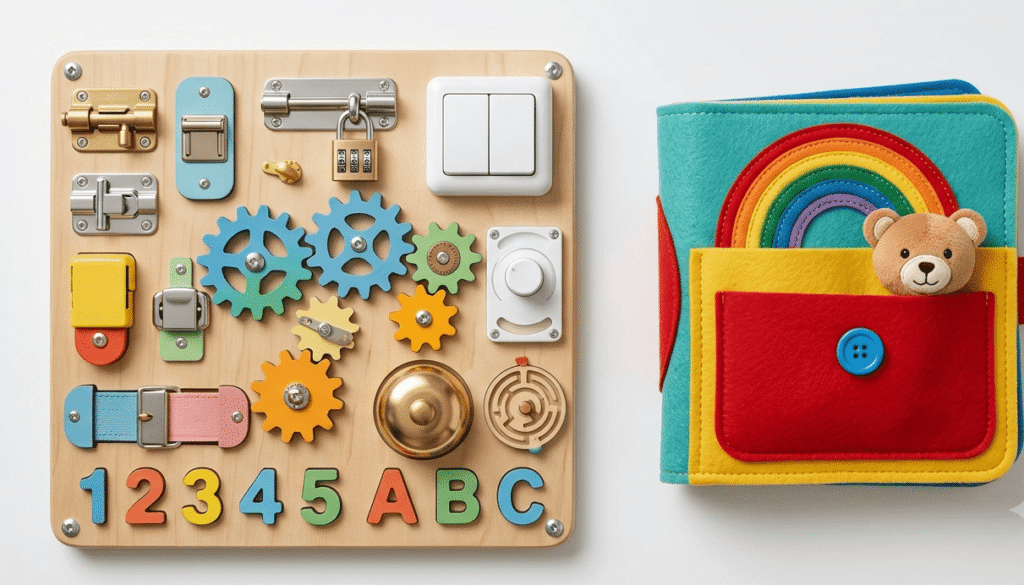
A busy board is a hands-on activity center packed with everyday fasteners, hardware, and sensory elements. Instead of high-tech digital screens or battery-powered sound makers, a busy board uses simple mechanics like slide bolts, shoe laces, wooden gears, belt buckles, clock hands, and spinning wheels.
Toddlers are naturally drawn to busy boards because they satisfy their innate craving for autonomy and real-world mastery. In a world where adults constantly say “don’t touch that,” a busy board offers a completely safe zone where every latch can be flipped, every gear can be turned, and every buckle can be snapped without any safety risks.
Crucial Developmental Benefits of the Best Busy Boards for Toddlers
While busy boards are undeniably entertaining, their true value lies in the rich developmental benefits they offer during early childhood.
1. Fine Motor Skill & Hand-Eye Coordination Development
To slide a bolt latch or push a button through a small loop, a toddler must coordinate their small hand muscles with visual input. Using busy boards strengthens the “pincer grasp” (thumb and index finger grip), hand strength, and wrist flexibility—skills essential for holding pencils, using cutlery, and tying shoes later in life.
According to guidance on early physical milestones from the American Academy of Pediatrics, refining fine motor skills during toddlerhood directly supports future academic readiness and self-care independence.
2. Problem-Solving & Cause-and-Effect Understanding
When a toddler encounters a tricky latch on a wooden activity board, their brain goes into problem-solving mode. How does this move? What happens if I pull this switch? Why won’t this door open until I slide the lock?
Through simple trial and error, toddlers build logical reasoning skills, spatial awareness, and an intuitive understanding of cause-and-effect relationships.
3. Encouraging Independent, Screen-Free Play
One of the greatest gifts a busy board gives to parents is peace and quiet. Because the tasks on a sensory board provide an ideal level of challenge (not too easy, not too frustrating), children enter a state of focused immersion. This builds longer attention spans and helps toddlers develop the ability to play independently without relying on digital screens.
4. Sensory Processing and Tactile Exploration
Toddlers experience the world through touch. High-quality activity boards combine various textures—smooth sanded wood, metallic hinges, woven fabric straps, soft felt, and cold brass locks. This rich sensory feedback aids cognitive integration and helps soothe overstimulated children.

Key Features to Look For in the Best Busy Boards for Toddlers
Not all activity boards are created equal. When shopping for the best busy boards for toddlers, keep these essential factors in mind:
- Safety & Non-Toxic Materials: Look for natural, smoothly sanded wood with rounded corners. Paints and finishes must be non-toxic, lead-free, and water-based.
- Secure Attachment of Hardware: Hardware pieces must be firmly screwed or riveted into the base board to prevent choke hazards.
- Age-Appropriate Complexity: Choose a board that matches your child’s developmental stage. A 12-month-old needs simple gears and large buttons, while a 3-year-old will enjoy complex locks, keys, and shoe-lacing tasks.
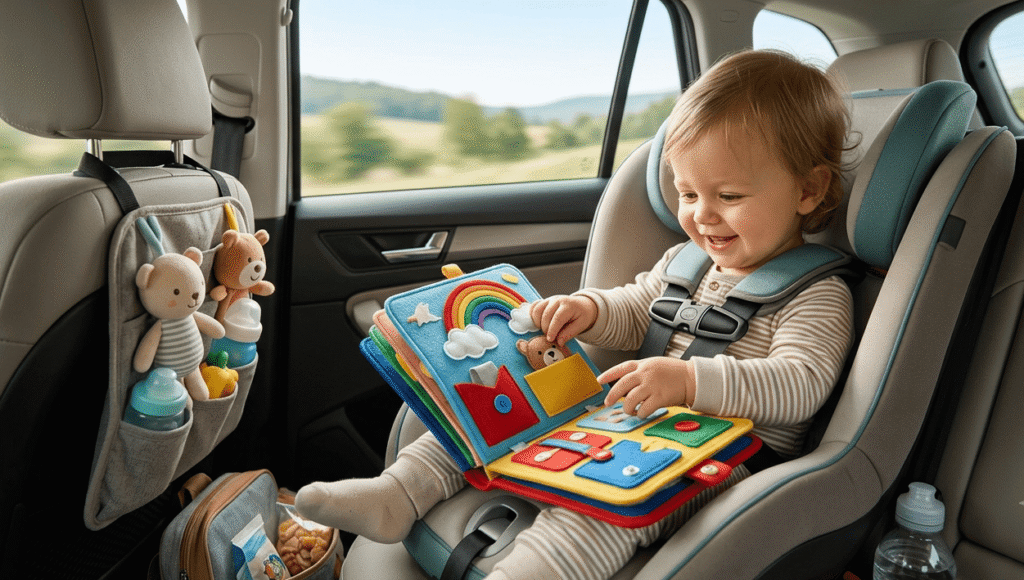
- Portability vs. Wall-Mounted: Decide whether you need a travel-friendly sensory board for car rides and flights or a heavy wooden board that anchors to a playroom wall.
Wooden vs. Felt: Choosing the Best Busy Boards for Toddlers
Parents often wonder whether to choose a traditional solid wooden busy board or a soft, foldable felt busy book. Both options have distinct advantages depending on how and where your child plays.
| Feature | Wooden Busy Boards | Soft Felt Activity Books |
| Primary Material | Solid Hardwood / Plywood | Soft Felt / Fabric / Webbing |
| Durability | Heavy-duty, heirloom quality | Lightweight, flexible |
| Best For | Home playrooms, nursery wall mounts | Travel, airplanes, car trips |
| Element Types | Real latches, locks, gears, wooden doors | Zippers, Velcro, snaps, shoelaces |
| Safety Profile | Extremely sturdy; requires wall anchoring if large | Soft and flexible; zero hard impact risk |
For home playrooms, wooden busy boards provide a realistic, tactile experience that lasts for years. For families constantly on the move, lightweight felt busy books fit easily into diaper bags for quiet entertainment on airplanes or in restaurant waiting rooms.
Safety Guidelines for Using the Best Busy Boards for Toddlers
While busy boards are engineered to provide safe interaction with real-world objects, safety precautions are still paramount. According to safety protocols outlined by the U.S. Consumer Product Safety Commission (CPSC), parents must regularly inspect toys with small mechanical parts for wear and tear.
Parental Safety Checklist for Busy Boards:
- Routine Checkups: Periodically inspect all screws, rivets, and hinges to ensure nothing has loosened over time.
- Avoid Sharp Edges: Ensure metallic latches have rounded corners and no sharp burrs.
- Watch Cord Lengths: Any strings, laces, or ribbon elements should be under 7 inches to eliminate strangulation risks.
- Supervise Younger Toddlers: Always supervise children under 3 years old, especially when playing with boards that include small movable keys or removable pegs.
How to Introduce a Busy Board for Maximum Engagement
To ensure your toddler stays engaged with their new activity board over time, follow these simple play strategies:
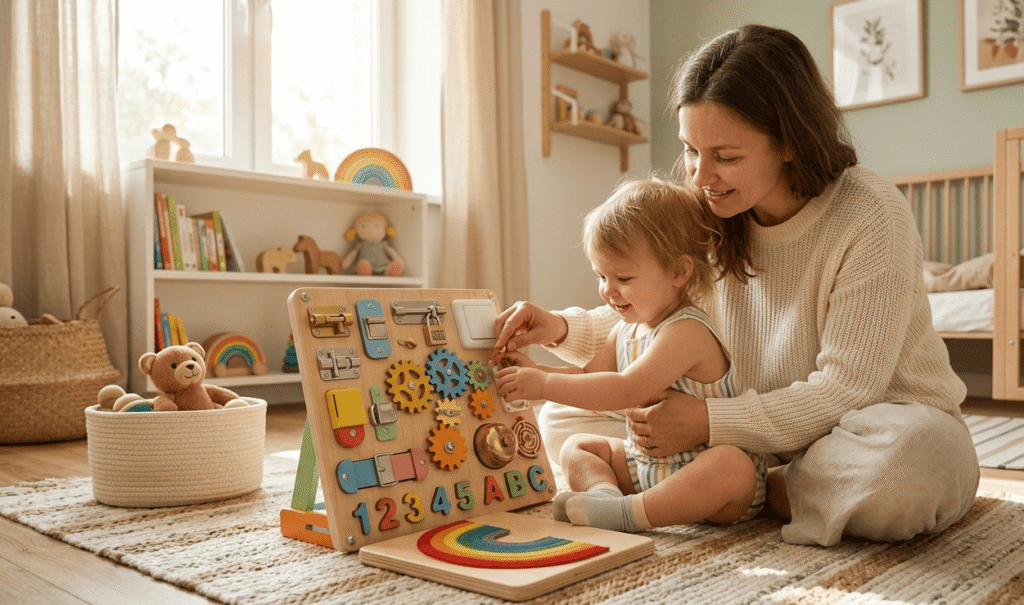
- Model the Actions First: Sit down with your toddler and demonstrate how a latch slides or how a buckle clips. Let them watch your hands before trying it themselves.
- Allow Space for Trial and Error: Resist the urge to fix things immediately when your child struggles with a tricky lock. Give them time to figure it out; the feeling of accomplishment when they succeed builds real confidence.
- Practice Toy Rotation: Keep the busy board out for a week, then put it away for a few days. Rotating toys keeps them fresh, novel, and exciting every time they reappear.
Final Thoughts: Investing in Quiet, Purposeful Play
In a marketplace flooded with noisy, flashing plastic gadgets, the best busy boards for toddlers stand out as timeless tools of practical learning. By transforming everyday household mechanics into a safe, structured play experience, busy boards satisfy a toddler’s natural curiosity while honing crucial fine motor, cognitive, and sensory skills.
Whether you choose a beautifully crafted wooden wall board or a portable felt busy book, you are giving your toddler an opportunity to focus, learn, and play independently—keeping tiny hands safely engaged for hours at a time.
“Along with sensory play, when your toddler is ready to take their first steps, learn about [safe push toys vs traditional baby walkers] to support their movement.”
“To make feeding time stress-free and engaging, check out [The Best High Chair Toys to Keep Your Baby Engaged During Mealtime].”