
Before a child ever writes their first letter or traces a straight line, their small hands must undergo a complex physical evolution. At age three, children transition from using their whole hand to control objects (palmar grasp) to using individual fingers with precision (pincer grasp). This physical foundation is essential for holding a pencil, using scissors, and performing daily tasks independently.
Choosing the right fine motor skill toys for 3-year-olds is one of the most effective ways parents can prepare their children for formal handwriting. Instead of forcing rigid tracing drills, playful fine motor tools strengthen hand arches, build finger dexterity, and foster hand-eye coordination naturally through hands-on engagement.
In this guide, we will examine why fine motor development matters at age three, how specific hand muscles prepare children for writing, and the top-rated toys designed to build pre-writing confidence.
In This Article
Building Pincer Grasp with Fine Motor Skill Toys for 3-Year-Olds
Handwriting is often viewed as an academic skill, but physically, it is a demanding fine motor task. Holding a pencil efficiently requires a strong pincer grasp—the ability to hold an object between the thumb and index finger, supported by the middle finger (the tripod grip).
When a 3-year-old struggles with drawing or gets fatigued quickly during coloring, it is rarely due to a lack of interest. More often, their small hand muscles—specifically the intrinsic muscles of the palm—are not yet strong enough to maintain a steady grip.
By incorporating specialized play tools into daily routines, toddlers develop:
- Pincer Control: Precision finger movements needed for holding pencils and crayons correctly.
- Bilateral Coordination: Using both hands together (e.g., holding paper with one hand while cutting with the other).
- Hand-Eye Coordination: Aligning visual input with precise motor movements.
- In-Hand Manipulation: Moving small objects around within the palm using only the fingers.
According to research published by the American Occupational Therapy Association (AOTA), early childhood fine motor mastery is a key indicator of future academic readiness and handwriting fluency.
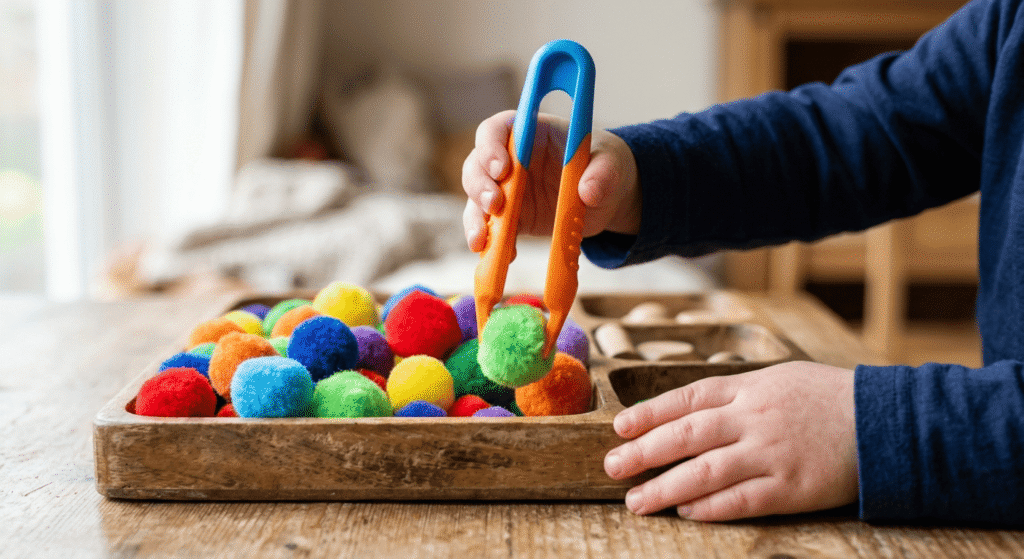
Key Fine Motor Skill Toys for 3-Year-Olds That Build Handwriting Readiness
Not all fine motor toys target the same muscle groups. To ensure balanced hand development, look for toys that encourage four primary physical actions:
1. Squeezing and Pinching Tools
Toys that require squeezing (like playdough tools, tweezers, or water squirt toys) build finger endurance and strengthen the palm’s arch.
2. Threading and Lacing Activity Sets
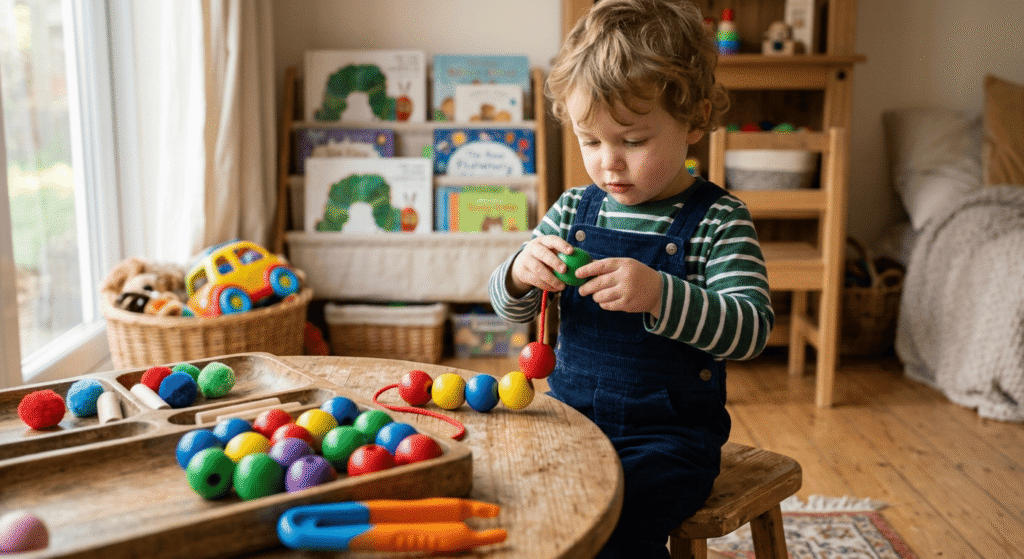
Stringing large wooden beads onto a lace requires precise eye-hand alignment and stabilizes the non-dominant hand.
3. Stacking and Pegboard Systems
Inserting small pegs into holes or connecting interlocking blocks trains the finger pads to press firmly and pinch accurately.
4. Cutting and Snapping Mechanics
Using child-safe spring scissors or snapping button toys trains the hand to open and close fluidly while maintaining finger control.
Top Recommended Fine Motor Skill Toys for 3-Year-Olds
Here are our top recommended toys that effectively bridge the gap between early play and pre-writing strength:
1. Learning Resources Fine Motor Tool Set (Best Overall)
This classic set includes alligator tweezers, a handy scooper, a twisty dropper, and squeeze sifter tools. It transforms simple sensory bins into an engaging hand-strengthening workout.
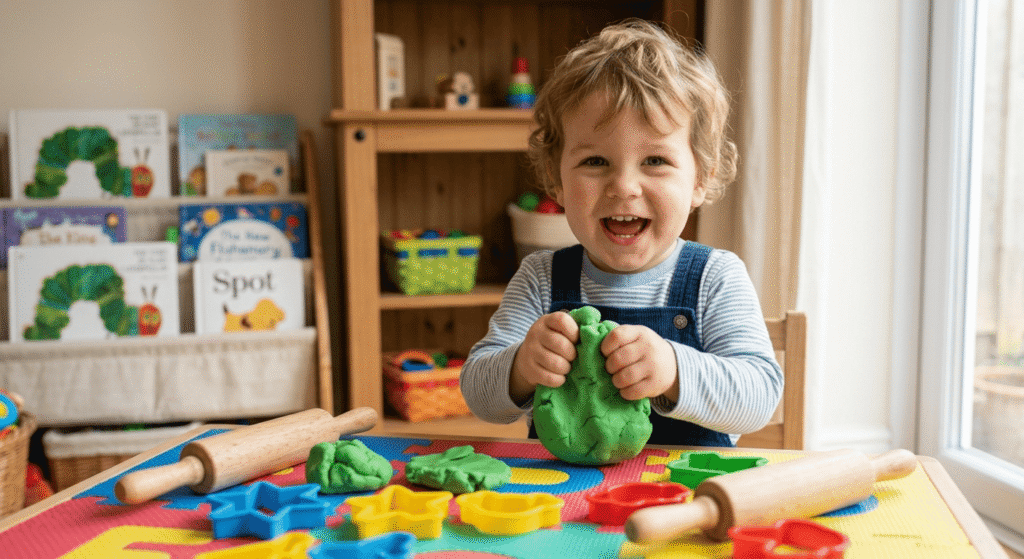
2. Playdough and Clay Modeling Kits (Best for Hand Strength)
Squeezing, rolling, and pinching playdough provides natural resistance that strengthens intrinsic palm muscles faster than almost any other activity.
3. Lacing Beads and Threading Boards (Best for Precision)
Large wooden lacing sets force children to use a tripod grip to navigate the thread through small holes, building patience and bilateral coordination.
4. Mushroom Pegboard Puzzle Sets (Best for Pincer Grasp)
Placing mushroom-shaped pegs into board slots forces toddlers to use their thumb and forefinger, directly mimicking the physical motion of holding a pencil.
How Fine Motor Skill Toys for 3-Year-Olds Drive Classroom Success
The physical benefits of fine motor toys extend directly into early preschool classrooms. Children who build strong finger dexterity at age three adapt to classroom demands much more smoothly.
- Pencil Control without Fatigue: Stronger hand arches prevent hand cramps during early drawing and tracing exercises.
- Independence in Daily Tasks: Improved dexterity allows 3-year-olds to button their coats, zip backpacks, and open snack wrappers without adult assistance.
- Enhanced Spatial Awareness: Understanding how pieces fit together translates to understanding letter formation and spacing on paper.
For additional developmental guidelines regarding early childhood physical milestones, you can visit the Centers for Disease Control and Prevention (CDC) Child Milestones Guide.
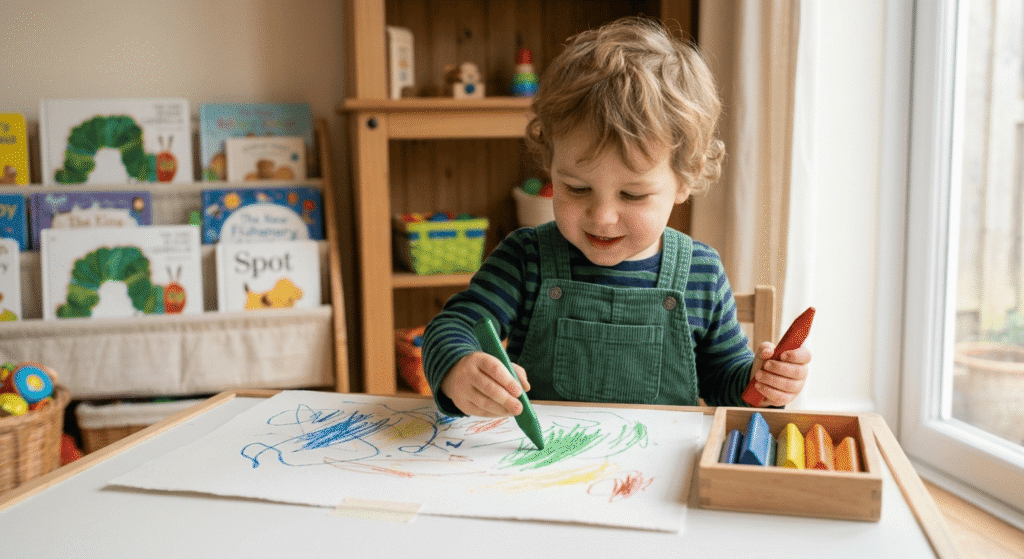
Simple Home Activities Using Fine Motor Skill Toys for 3-Year-Olds
You do not always need specialized equipment to work on fine motor skills. Here are simple, budget-friendly ideas you can try at home:
- Peeling Stickers: Peeling adhesive stickers off a sheet requires a precise pincer grasp and high visual focus.
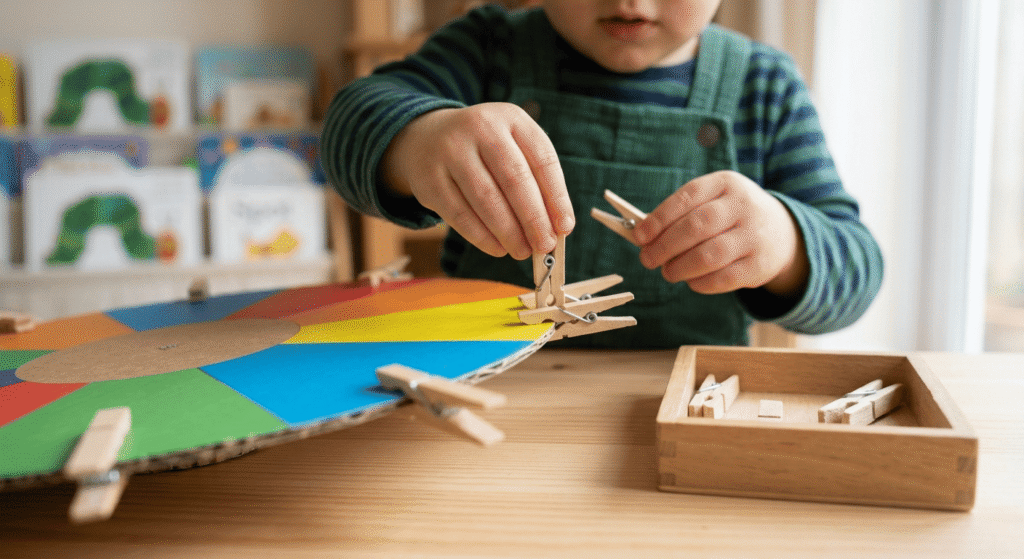
- Clothes-pin Matching: Squeezing wooden clothespins to clip onto cardboard builds pinch strength rapidly.
- Tearing Paper: Tearing construction paper into small pieces for collage art forces both hands to work in opposite directions.
- Spray Bottles: Spraying water onto plants or outdoor walls strengthens the index finger and forearm muscles.
Final Thoughts: Building Handwriting Confidence Step by Step
Selecting the best fine motor skill toys for 3-year-olds is about creating a playful, frustration-free path toward pre-writing competence. When you give your child opportunities to pinch, squeeze, lace, and stack, you are giving them the physical tools they need to hold a pencil with confidence when the time comes.
Invest in open-ended fine motor play today, and watch your child’s hand strength, independence, and creativity thrive!
“For interactive play that boosts fine motor skills, discover the [Best Busy Boards for Toddlers to Keep Tiny Hands Safely Engaged].”
“To boost your child’s creativity and imagination through open-ended play, check out the [Best Building Blocks for Toddler Imagination].”