
Long journeys can be tiring for young children, especially when they have to remain seated for much of the trip. A small collection of familiar, easy-to-use activities can make a road trip or flight feel more manageable. The most useful travel toys for kids are not necessarily the most complicated ones: they are usually compact, quiet, age-appropriate and simple to put away.
Table of Contents
Disclaimer: This post contains affiliate links. As an Amazon Associate, I earn from qualifying purchases at no extra cost to you.
Before choosing an item, think about your child’s age, how they play, the space available and whether you will be travelling by car or plane. A toy that works well on an airplane tray may not be suitable for use while a vehicle is moving. This guide compares nine practical options and explains what to check before packing them.
What Makes a Good Travel Toy?
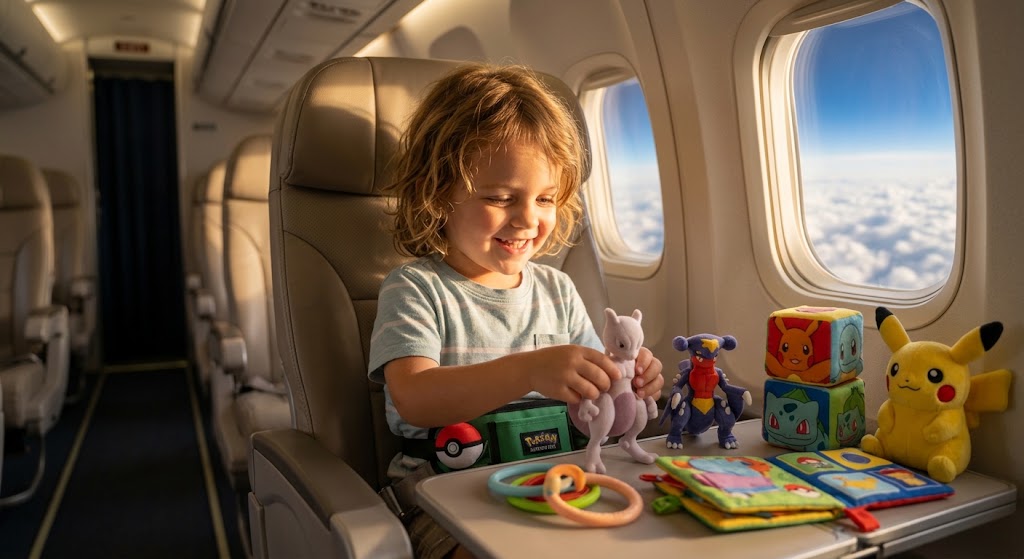
Good travel toys share a few practical qualities. They fit into a small bag, have few loose pieces, are easy to clean and can be used without disturbing other passengers. They should also suit the child’s current abilities rather than simply carrying an age label that sounds appealing.
Check the manufacturer’s age guidance and inspect toys for loose parts, damaged seams, sharp edges or exposed components. The U.S. Consumer Product Safety Commission’s toy-safety advice recommends choosing toys that match a child’s age and abilities and keeping small parts away from children under three. CPSC toy-safety FAQs explain additional requirements for toys intended for young children.
9 Travel Toys and Activities to Consider
1. Silicone Suction Toys
One-piece silicone spinners or suction-cup toys can offer simple pushing, turning and pulling actions. They may attach to a smooth tray or table, which can help keep the activity in one place. Choose a product with no detachable pieces and check that the suction base and moving parts remain firmly attached.
These toys are best used when the child is seated and an adult can supervise. Clean the surface before and after use, and do not rely on suction to make a toy safe or prevent it from falling. You can compare silicone suction toys on Amazon, checking the product’s age range and construction before buying.
2. Fabric Busy Boards
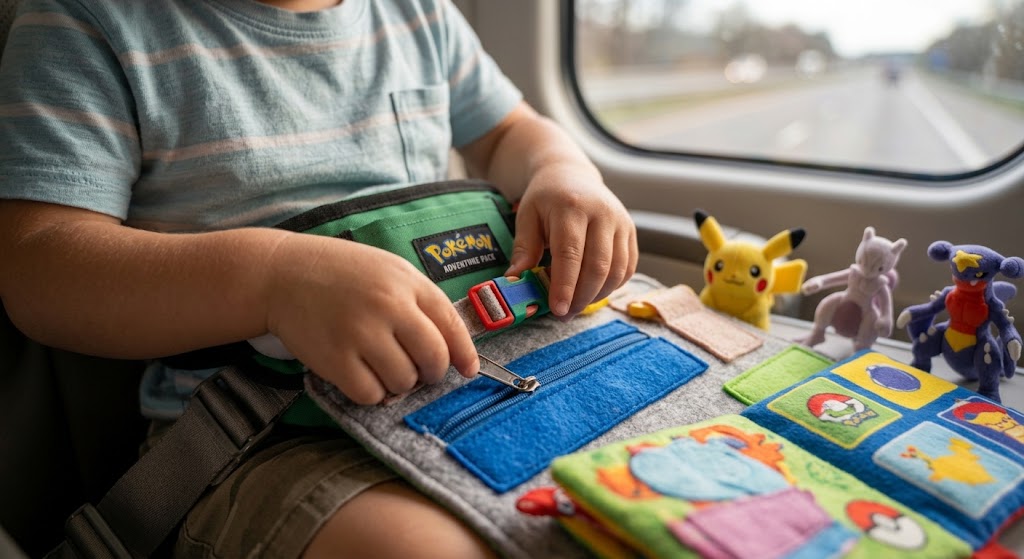
A fabric busy board may include large zippers, flaps, buckles and other fastening activities. It gives toddlers a chance to practise opening and closing familiar fasteners while seated. A soft, foldable design is usually easier to pack than a large wooden activity board.
Look closely at the stitching and make sure buttons, buckles and other parts cannot come loose. Avoid long cords, small detachable accessories and boards with components that are not suitable for your child’s age. Keep the activity in an adult’s view rather than attaching it to the car seat or harness.
3. Magnetic Drawing Boards
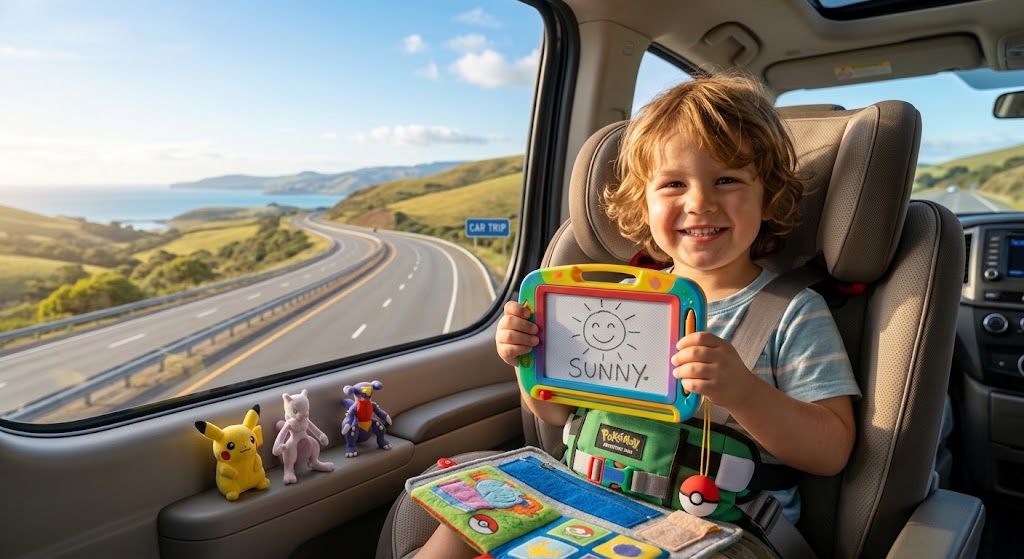
A drawing board with a tethered stylus lets children make marks and erase them without carrying loose crayons or paper. It can be useful for doodling, practising simple lines or playing drawing games together. A lightweight board with rounded edges is easier to manage in a small space.
Choose an age-appropriate model with a securely enclosed mechanism. Stop using it if the casing cracks, the stylus detaches or any internal component becomes accessible. As with all magnetic products, keep damaged items away from children. The CPSC explains the serious danger that can arise if children swallow powerful magnets in its magnet safety guidance. You can compare magnetic drawing boards on Amazon and review the manufacturer’s age recommendation.
4. Water-Reveal Activity Books
Water-reveal books use a refillable water pen to make pictures or patterns appear on reusable pages. They avoid paint and marker stains, although the pen and pages still need to be handled carefully. Pack the pen in a small sealed pouch and use only a little water at a time.
Check that the pen cap is secure and that the product is intended for your child’s age. An adult should refill the pen, and children should not be left to chew or suck on it. These books are a practical option when you want a quiet activity that can be reused after the pages dry.
5. Reusable Sticker Books
Reusable sticker books let children place large stickers on scenes such as farms, roads or familiar rooms, then move them to create a different picture. They can encourage conversation too: an adult might ask where an animal belongs or invite the child to describe what is happening in the scene.
For toddlers, choose large, age-appropriate pieces that are easy to handle and do not have small detachable accessories. Keep stickers away from the mouth and collect them after play so they do not become litter or a choking hazard. For younger children who still mouth objects, a sturdy board book may be a better choice.
6. A Small Plush Toy or Hand Puppet
A familiar soft toy can provide comfort in an unfamiliar place and become part of a simple storytelling game. A small hand puppet gives a parent another way to sing, talk or invent a short story while waiting at a gate or taking a rest stop.
Choose a washable toy with securely attached features and no beads, buttons or other small parts that could detach. Check seams regularly, especially if the child likes to chew or pull at the fabric. A favourite comfort toy from home may be more useful than buying a new one just for the trip.
7. Large-Piece Travel Puzzles
A small puzzle with a few large, chunky pieces can be a good fit for a child who already enjoys matching shapes or pictures. A folding board or shallow case helps keep the pieces together. Familiar themes, such as animals or vehicles, can make the activity easier to start.
Check the recommended age and the size of every piece. Avoid puzzles with small pieces for children under three, and do not use loose puzzle pieces in a moving vehicle if they could distract the driver or fall where they cannot be reached safely.
8. Story Cards and Small Picture Books
A small picture book or a set of sturdy story cards can turn waiting time into a shared activity. Talk about the pictures, find familiar objects or make up a story together. You do not need a complicated toy to keep a young child interested; a few minutes of attention from a parent can be enough.
For toddlers, choose board books with durable pages and no loose accessories. Keep cards together in a pouch and use larger cards rather than tiny flashcards that can be misplaced or mouthed.
9. A Simple Activity Pad
A compact activity pad can include matching games, tracing paths, picture searches or simple colouring pages for children who are ready for them. Pair it with a short, age-appropriate pencil or crayon and keep the supplies in a zip pouch. For younger toddlers, choose large, washable materials and supervise closely.
Skip products that contain loose gel, beads, water beads or small sensory fillers if the child might bite or damage the item. A torn or leaking sensory pad should be discarded rather than repaired for continued child use.

For a ready-made option, compare toddler travel activity sets on Amazon and check every included piece against your child’s age and abilities.
Packing Tips for Road Trips and Flights
- Pack a few choices: Three or four different activities are often easier to manage than a large bag full of toys.
- Rotate them: Offer one activity at a time and keep another familiar option ready for later.
- Use a small pouch: Store pieces together and check the floor and seat area before leaving.
- Plan for cleaning: Pack a wipe or cloth for washable surfaces and follow the toy manufacturer’s cleaning instructions.
- Keep essentials accessible: Snacks, water, nappies and comfort items may be more useful than another toy.
- Take movement breaks: When travelling by car, stop in a safe place for breaks rather than trying to entertain a child with loose objects while driving.
Important Car-Seat and Airplane Safety
Do not attach toys, straps or accessories to a car-seat harness unless the car-seat manufacturer specifically permits that accessory. Avoid hard, heavy or sharp objects that could become projectiles in a sudden stop. A child should remain correctly buckled in the restraint, and an adult should never hand items to a child in a way that distracts the driver.
For flights, use toys only when it is safe and practical to do so, and follow crew instructions during taxi, take-off and landing. If you plan to use a child car seat on board, check that it is approved for aircraft use and follow the installation instructions. The Federal Aviation Administration’s guidance on child restraint systems explains the required labelling and how an approved restraint should be installed.
For any journey, keep small parts, loose magnets, button batteries and damaged toys away from young children. The CPSC warns that swallowing more than one magnet can cause serious internal injuries; read its magnet safety information and seek urgent medical help if you suspect a child has swallowed a magnet.
Frequently Asked Questions
How many travel toys should I pack for a toddler?
Start with a few varied activities rather than packing everything. A drawing board, a familiar book and one soft toy may be enough for a short journey. Adjust the amount to the length of the trip and your child’s interests.
What are good toys for a long airplane flight?
Quiet, compact choices such as a reusable activity book, a small board book, a soft toy or an age-appropriate drawing board are often practical. Follow crew instructions and keep items stored when required.
Can toddlers play with toys while sitting in a car seat?
Only offer lightweight, age-appropriate items that do not interfere with the harness or distract the driver. Do not attach toys or straps to the restraint unless the car-seat manufacturer allows it. When in doubt, save play for a safe rest stop.
Are magnetic toys safe to take when travelling?
Choose only intact, age-appropriate products and keep loose or damaged magnets away from children. Avoid high-powered magnet sets and stop using any toy if its casing cracks or a magnet becomes exposed.
What should I avoid packing for a toddler?
Avoid toys with small detachable parts, loose magnets, long cords, sharp edges, button batteries or fillers that could leak if bitten. Check the age label and inspect toys before each trip.
Final Thoughts
The most useful travel toy is one your child can enjoy safely and that you can manage easily while travelling. A few familiar activities, sensible packing and regular breaks can make a long journey more comfortable without promising that any toy will keep a toddler occupied for hours. Choose according to your child’s age and interests, and keep safety ahead of convenience.
If your child enjoys hands-on play at home, you may also like our guide to sensory balls and blocks for babies, our article about busy boards for toddlers, and our ideas for interactive storybooks for toddlers.