
A lunchbox needs to do more than look cheerful. It should fit the food your child actually eats, open without a struggle, travel comfortably in a school bag and be straightforward to clean. The best bento lunchboxes for kids make it easier to pack different foods in one container, but no single design suits every age, appetite or school routine.
Disclaimer: This post contains affiliate links. As an Amazon Associate, I earn from qualifying purchases at no extra cost to you.
In this guide, we look at nine styles and product options, from divided plastic trays to stainless-steel boxes and insulated containers. We also cover leak resistance, materials, cleaning and an important point that is sometimes overlooked: keeping perishable food at a safe temperature until lunchtime.
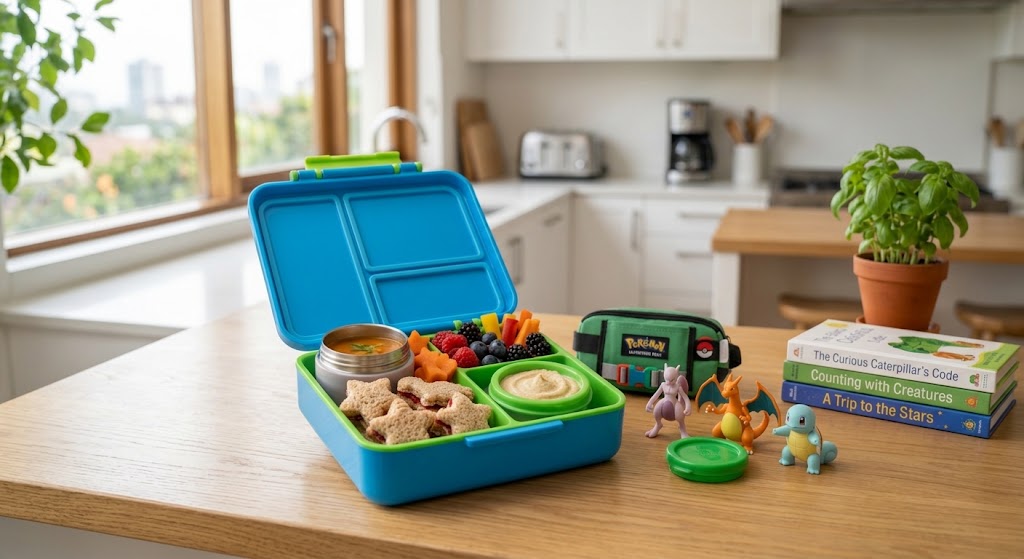
Table of Contents
What a Bento Lunchbox Can and Cannot Do
A bento-style lunchbox uses separate sections or removable containers to hold different foods in one portable case. This can help keep crackers away from juicy fruit, make portions easier to arrange and give children a choice of familiar foods. It does not automatically make a meal balanced or keep food cold. Those depend on what you pack and how you store it.
Think about your child’s real lunch routine before choosing a design. Does the school provide a refrigerator? Will the lunch stay in a warm classroom or backpack for several hours? Can your child open the clips independently? Does the school allow nuts, reusable cutlery or insulated food jars? These practical details matter more than a long list of features.
9 Bento Lunchbox Styles and Options to Consider
1. Bentgo Kids Prints 5-Compartment Box
This divided lunchbox is designed around several separate food sections. It may suit families who like to pack a mix of fruit, vegetables, a sandwich portion and a small snack in one tray. Before buying, check the current model dimensions, age guidance and care instructions; product versions and included accessories can differ.
Consider whether your child can open and close the latch without help. The number of compartments is useful only if the portions are large enough for the foods your child eats. See Bentgo Kids Prints on Amazon and confirm the exact version and seller details before ordering.
2. Yumbox Original 6-Compartment Lunchbox
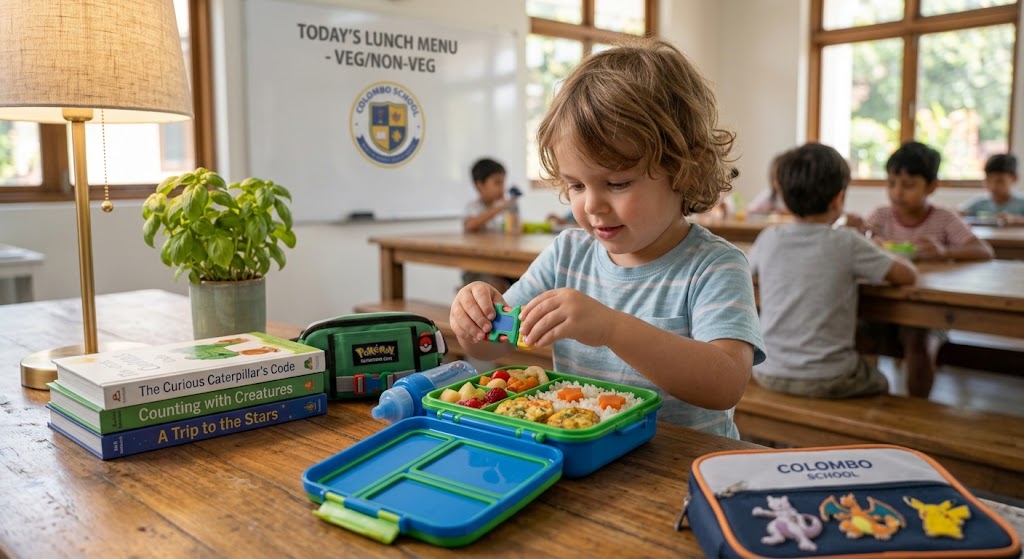
A multi-section tray can work well for children who enjoy trying several small portions rather than one large sandwich. The Yumbox Original is known for its compartment-style layout. Check the manufacturer’s current instructions to understand which foods and textures the seal is designed to contain; do not assume every divided lunchbox is suitable for soup or very runny foods.
For a child who is still learning to manage lunch independently, practise opening the box at home before sending it to school. This can reveal whether the latch is too stiff or the lid is difficult to align.
3. PlanetBox Rover Stainless-Steel Lunchbox
Stainless steel is an option for families who prefer a metal food-contact surface. The PlanetBox Rover uses a divided layout, so it may appeal to children who like separate foods. Metal boxes can be sturdy, but they may be heavier than plastic alternatives and often need a separate carrying bag or sleeve.
Check which accessories are included, whether the lid closes securely and how the manufacturer recommends cleaning it. Stainless steel should not be placed in a microwave. Compare PlanetBox stainless-steel lunchboxes on Amazon, checking the exact model rather than relying on a general listing.
4. PlanetBox Shuttle Compact Steel Container
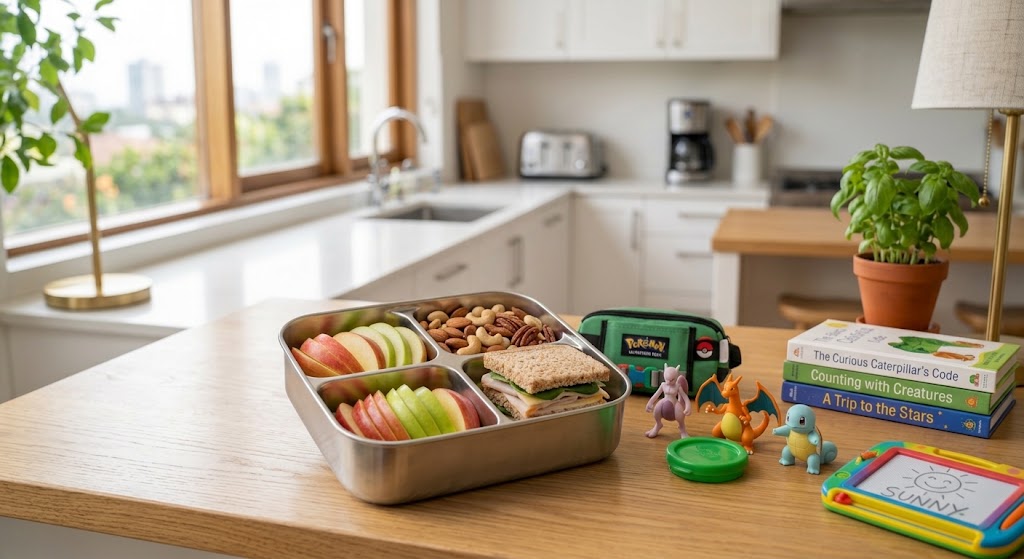
A smaller divided container can be a better fit for a snack, a short school day or a child with a smaller appetite. The compact format takes up less room than a larger multi-compartment box, but check its internal capacity against the food you intend to pack.
It may not replace a full lunchbox for every child. Look at the dimensions, weight and available accessories, and consider whether a separate insulated bag is needed.
5. OmieBox Insulated Hot-and-Cold Bento Container
A lunchbox with a separate insulated food jar can be useful when you want to pack a warm meal alongside foods that are served cold. The OmieBox combines a divided lunch area with a removable insulated container. This design is more substantial than a simple snack tray, so check the overall size and weight before placing it in a small backpack.
Follow the manufacturer’s directions for preparing and filling the insulated jar. Do not assume that an insulated container will keep food at a safe temperature indefinitely. See OmieBox lunch containers on Amazon and confirm the current model details.
6. Bentgo Kids Chill with Cooling Insert
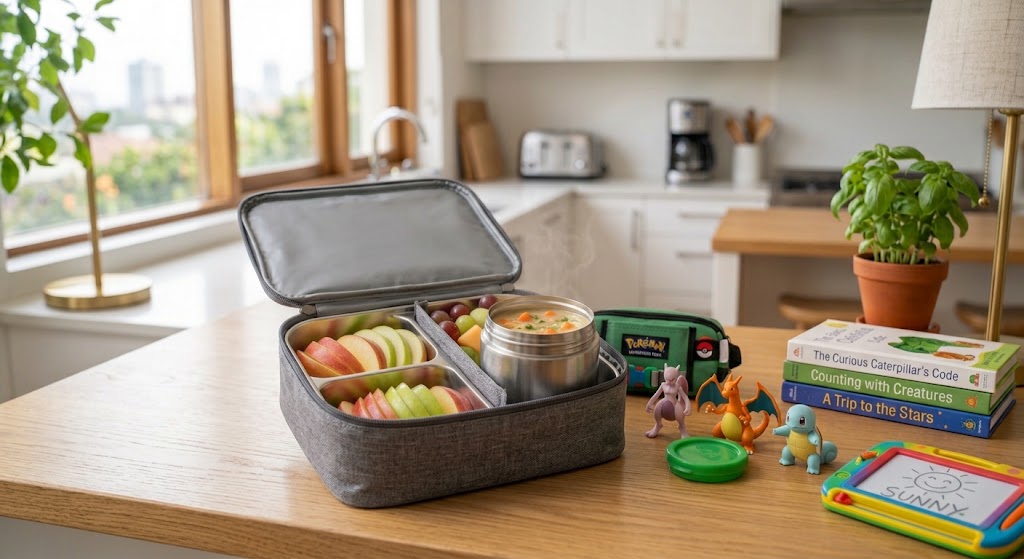
Some lunchbox designs include a removable cooling insert or are intended to be used with a freezer pack. These can be convenient, but the presence of an ice pack does not guarantee that perishable food will remain cold until lunchtime. Follow the product instructions and use additional cold sources when food-safety guidance calls for them.
Compare the space available for food after the cooling component is fitted. Also check whether the insert needs to be frozen overnight and whether it is removable for cleaning.
7. Bentgo Pop Dual-Zone Lunch Container
Older children may prefer a simpler layout with fewer, larger sections rather than a tray designed around many small portions. A dual-zone container can provide room for a main item and a side, while a removable divider may offer some flexibility. Check the actual capacity and whether it fits your child’s usual lunch bag.
Do not choose a larger box just because your child is getting older. The right size is the one that holds an appropriate amount of food without being awkward to carry.
8. Munchkin Lunchie Bento Box
A compact lunchbox with simple compartments and included utensils can be convenient for preschool meals or snacks. Before buying, check whether the utensils are easy for your child to remove and whether the box has enough room for the food portions you normally pack.
Practice using the closures at home. If your child cannot open the box without pulling hard or spilling the contents, choose a simpler design or ask the school whether staff can help at mealtime.
9. A Simple Two-Compartment Lunchbox
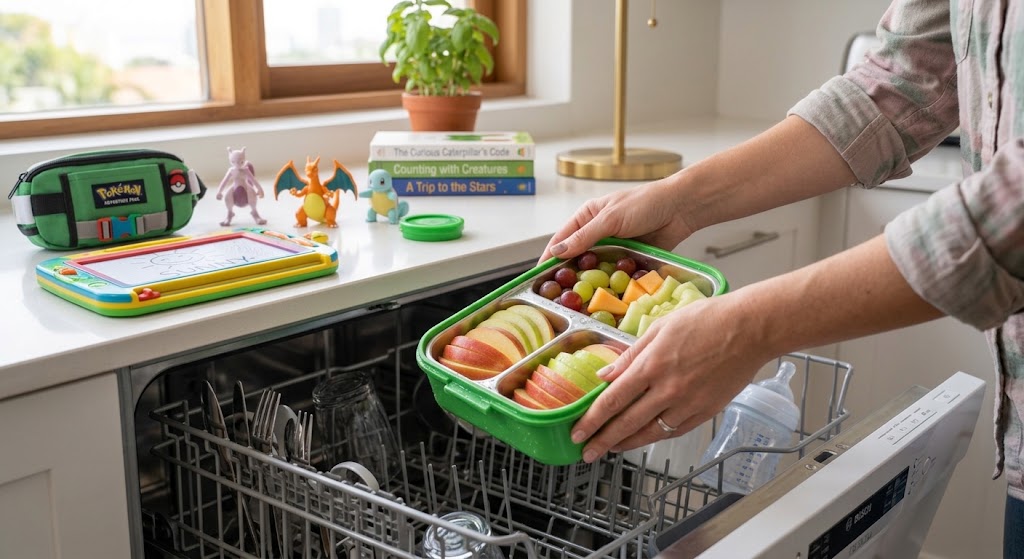
A basic two-section container is worth considering if your child prefers familiar foods and does not need lots of separate compartments. Fewer sections can mean fewer corners to clean and more room for a sandwich, wrap or larger snack. Look for a secure lid and a size that fits the child’s bag.
This does not need to be an expensive branded product. A well-made reusable food container that is clearly labelled for food use and suitable for repeated use may be a practical choice. Avoid reusing single-use takeaway tubs for daily lunch storage.
How to Choose a Lunchbox for Your Child
- Capacity: Compare the internal dimensions with your child’s usual portions. A large-looking outer case may have shallow compartments.
- Opening and closing: Let your child practise the latch, clips and any separate containers before the first school day.
- Leak resistance: Check what the manufacturer says about liquids. Many divided boxes are intended for solid or semi-solid foods, not soups or drinks.
- Materials: Choose a product intended for repeated food contact. Read its use, temperature and cleaning instructions rather than relying only on broad labels such as “BPA-free”.
- Weight: A steel box or a model with several inserts may be heavier. Consider the full packed weight, not just the empty container.
- School requirements: Check rules about nuts, cutlery, reheating, refrigeration and food allergies.
- Replacement parts: See whether seals, lids or inserts can be replaced if they become damaged or lost.
For reusable plastic containers, follow the manufacturer’s intended-use instructions. Do not microwave a container unless it is specifically labelled as microwave-safe. The U.S. Food and Drug Administration’s food-packaging information explains how materials intended to contact food are assessed, while the Singapore Food Agency’s guidance on plastic food packaging advises using reusable containers as intended and replacing those that become cracked or heavily worn.
Keep Packed Lunches at a Safe Temperature
A bento box is a container, not a refrigerator. Foods such as meat, dairy products, cooked rice and cut fruit may need temperature control depending on the food and how long it will be stored. If your child’s lunch includes perishable items, use an insulated lunch bag and suitable cold sources. USDA guidance recommends using two cold sources, such as frozen gel packs or frozen water bottles, and placing them around the perishable food.
The USDA identifies 40°F to 140°F (about 4°C to 60°C) as the temperature danger zone where bacteria can grow more rapidly. Keep cold foods cold, and use a properly insulated food jar for hot foods. For more detail, read the USDA’s packed-lunch food-safety advice.
Do not rely on a lunchbox’s marketing claim that it “keeps food fresh” as a substitute for safe handling. If the school has a refrigerator, find out whether children can use it. If not, plan the meal and packing method around the time between leaving home and eating.
Cleaning and Everyday Care
Empty the lunchbox as soon as your child returns home. Wash the container, lid, seals and removable inserts according to the care label. Some parts may be dishwasher-safe while others require handwashing, so do not assume the entire box can go into the dishwasher.
Allow every part to dry fully before closing and storing it. Check corners and silicone seals for trapped food, odours, cracks or mould. Replace damaged components rather than continuing to use a container that can no longer be cleaned properly or closed securely.
Frequently Asked Questions
Are all bento lunchboxes leak-proof?
No. Some are designed to keep solid foods separate, while others have seals intended for moist foods. Check the manufacturer’s specific leak-resistance claims and test the box at home before packing runny foods.
Is stainless steel better than plastic for a kids’ lunchbox?
Neither material is automatically best. Stainless steel is durable and should not be microwaved, while reusable plastic may be lighter and available in more divided designs. Compare weight, cleaning instructions, intended food use and your child’s ability to handle the box.
Can I put a bento lunchbox in the microwave?
Only if the manufacturer clearly labels the specific part as microwave-safe and provides instructions. Never microwave stainless steel or metal parts, and do not assume a removable tray and its outer case share the same heating instructions.
How can I keep a school lunch cold?
Use an insulated lunch bag and suitable cold sources for perishable foods. USDA guidance recommends two cold sources, positioned around the food, and keeping the lunch out of the temperature danger zone.
What size lunchbox should I buy?
Choose a size based on your child’s appetite, the food you pack and the space in their school bag. A smaller box that your child can open and finish comfortably may be more useful than a large box with many unused compartments.
Final Thoughts
The right lunchbox is one that fits your child’s everyday routine. Compare capacity, latch design, weight, cleaning requirements and the school’s storage arrangements before choosing. A divided tray can make packing varied foods easier, but safe food temperatures and regular cleaning are just as important as the container itself.
For simple ideas that help children take part in everyday routines, see our guide to Montessori practical-life tools for home.