
In an era dominated by flashing lights, plastic electronics, and fast-paced digital distractions, a quiet revolution is happening in kids’ playrooms around the world. Modern parents are taking a step back and rethinking the modern play experience. The debate of wooden toys vs. plastic toys is no longer just about aesthetics; it has become a central conversation around child development, safety, and environmental responsibility.
As we become more conscious of what we bring into our homes, eco-friendly wooden play has re-emerged as the gold standard for intentional parenting. But why exactly are traditional wooden toys making such a massive comeback? Let’s dive deep into why eco-friendly play is winning the hearts of conscious families today.
In This Article

The Rise of Sustainable Parenting and Conscious Play: Wooden Toys vs Plastic Toys
Today’s generation of parents is more environmentally aware than ever before. With rising concerns over climate change, plastic pollution, and landfill overflow, eco-conscious living has extended straight into the nursery.
Plastic toys—often mass-produced and petroleum-based—frequently end up broken or discarded within months, contributing significantly to global microplastic pollution. On the flip side, high-quality wooden toys offer a sustainable alternative that aligns with zero-waste and eco-friendly lifestyle values. According to sustainable living insights from sources like the World Wildlife Fund (WWF), reducing single-use and non-recyclable plastics is crucial for safeguarding the planet for future generations.
Choosing wooden toys is not just buying a plaything; it is an investment in our planet’s future, teaching children from a young age to value durable, natural materials over disposable consumerism.
1. Safety First: Chemical-Free and Non-Toxic Play
One of the biggest drivers shifting parents toward wooden toys is health and safety. Babies and toddlers experience the world through their senses—which means almost every toy eventually ends up in their mouths.
- The Plastic Problem: Many cheap plastic toys contain harmful chemicals such as Phthalates, Bisphenol A (BPA), and PVC, as well as synthetic dyes that can leach off during play.
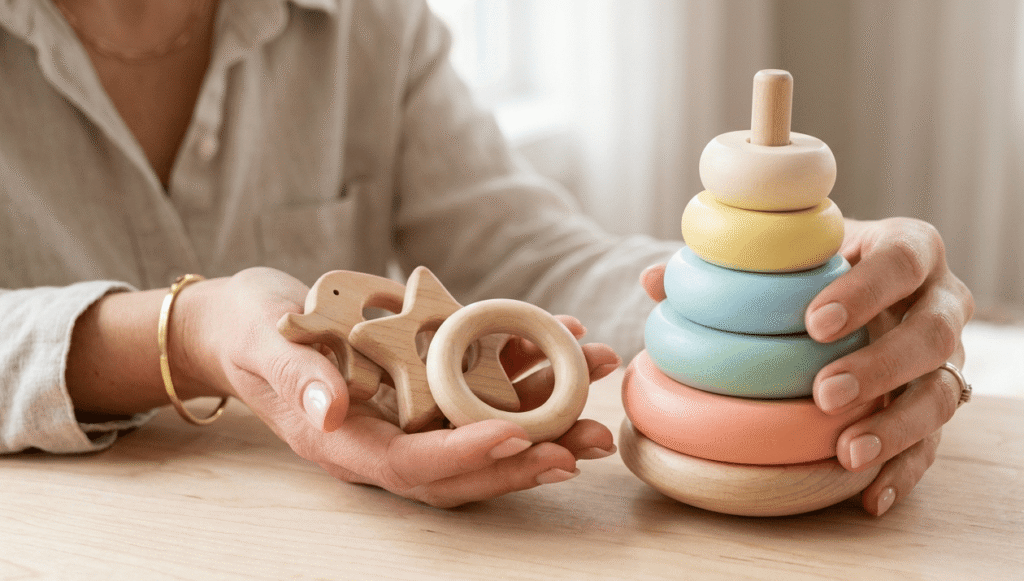
- The Wooden Solution: High-quality wooden toys are made from natural hardwoods (like beech, maple, or rubberwood) and finished with non-toxic, water-based paints or natural oils like beeswax.
When you hand a wooden teether or stacking ring to your child, you get total peace of mind knowing they aren’t ingesting harmful petrochemicals.
2. Cognitive Benefits: Open-Ended Play vs. Passive Entertainment
If you’ve ever watched a child play with a battery-operated plastic toy, you’ve likely seen the pattern: push a button, watch the light flash, listen to a song, and repeat. While entertaining initially, these toys offer passive play. The toy does all the work, leaving little room for active imagination.
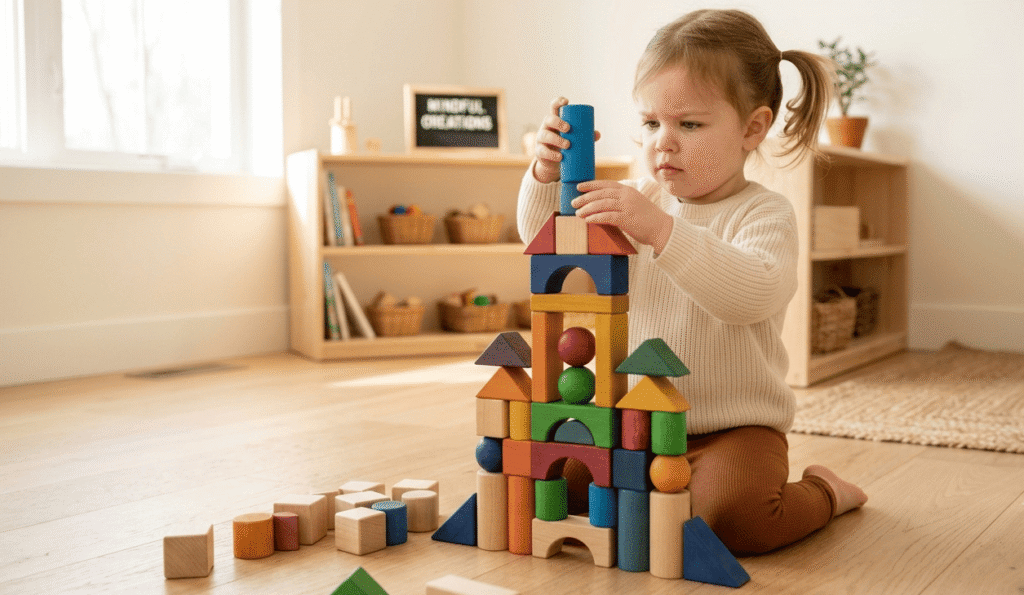
Wooden toys, by design, are minimalist and open-ended. A simple set of wooden blocks isn’t tied to a specific character or narrative. Today, it’s a castle; tomorrow, it’s a space station or a bridge over a river.
Key Cognitive Advantages of Wooden Toys:
- Encourages Problem-Solving: Building with wood requires understanding balance, gravity, and spatial awareness.
- Sparks Creativity: Without pre-programmed sounds, children create their own sound effects, dialogues, and worlds.
- Fosters Longer Attention Spans: Unplugged toys allow children to enter deep states of focused, calm play.
Organizations promoting early education, such as UNICEF Child Development Guidelines, emphasize that unstructured, creative play is foundational for healthy brain development and emotional regulation.
3. Sensory Enrichment: The Tactile Connection with Nature
In child development, sensory input goes far beyond visual and auditory stimulation. Touch plays a vital role in sensory processing and emotional grounding.
Plastic is smooth, cold, light, and uniform. Wood, however, has a unique tactile footprint. It carries warmth, natural grain textures, varying weights, and even a faint, comforting organic smell. This rich sensory experience grounds children, connecting them subtly to nature even while playing indoors. The subtle weight of wooden toys also helps toddlers develop better muscle control, precision, and fine motor skills as they stack, balance, and maneuver pieces.
4. Durability and Timeless Heirloom Quality
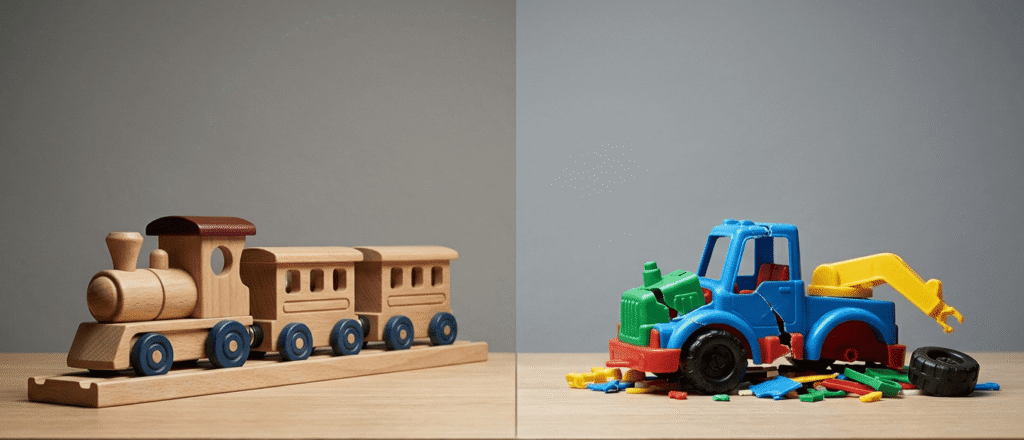
How many plastic toys have broken in your house after a single fall? Plastic becomes brittle over time, cracks under pressure, and breaks beyond repair—ending up in the trash bin.
Wooden toys are built to endure. They survive drops, throws, and years of energetic toddler play. Instead of breaking, wood ages gracefully, developing a rich patina that adds character.
+————————+——————-+——————–+
| Feature | Wooden Toys | Plastic Toys |
+————————+——————-+——————–+
| Durability | Decades / Lifelong| Easily Breaks |
| Eco-Impact | Biodegradable | Hundreds of Years |
| Safety Risk | Non-Toxic | Potential Chemicals|
| Play Style | Open-Ended | Scripted / Passive |
+————————+——————-+——————–+
This remarkable durability makes wooden toys true family heirlooms. A wooden train set or rocking horse can easily be passed down from child to child, or even generation to generation, building cherished memories along the way.
5. Decluttering the Playroom: Aesthetic and Calming Spaces
Overstimulated children often become restless and overwhelmed. Bright, neon plastic toys with jarring electronic noises create visual clutter that can elevate stress levels for both kids and parents.
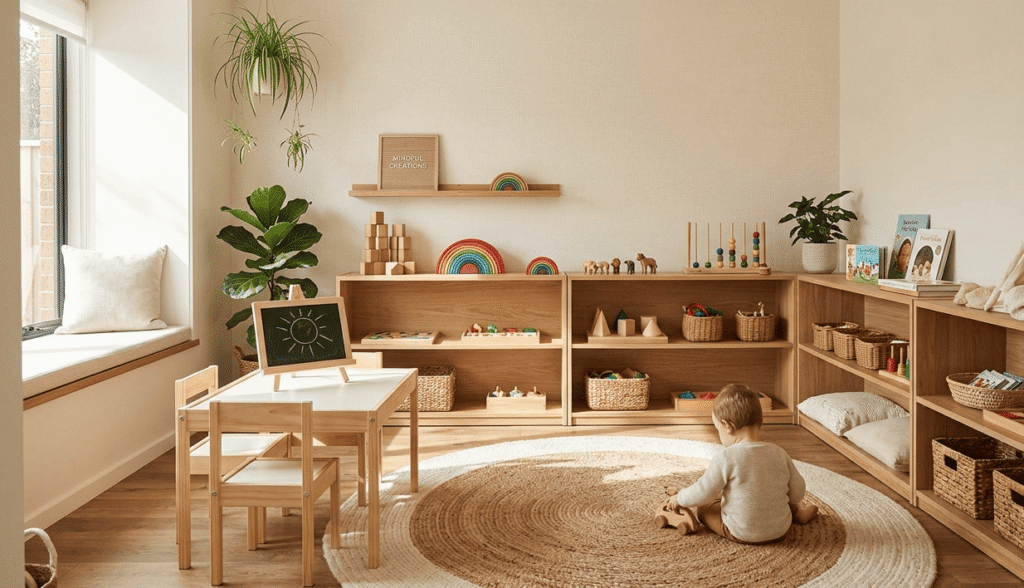
Modern parenting trends, such as Montessori and Waldorf philosophies, advocate for minimalist, aesthetically pleasing play spaces. Wooden toys fit seamlessly into modern home decor. Their warm, neutral, organic tones create a calm, inviting play environment that promotes tranquility and focused exploration.
Making the Switch: How to Start Transitioning to Eco-Friendly Toys
If your playroom is currently filled with plastic, don’t panic! You don’t need to throw everything away overnight. Transitioning to sustainable play is a step-by-step process:
- Audit Existing Toys: Donate or recycle plastic toys that your children have outgrown or no longer play with.
- Prioritize Basics: Start your wooden collection with versatile staples—like building blocks, play kitchens, wooden cars, and rainbow stackers.
- Choose Quality Over Quantity: One well-crafted wooden toy provides far more play value than five cheap plastic ones.
- Look for Certifications: Ensure wood is sourced sustainably (look for FSC certification) and coated with non-toxic finishes.
Final Thoughts: Investing in Play That Matters
When comparing wooden toys vs. plastic toys, the winner is clear for modern parents seeking intentional, health-conscious, and eco-friendly lifestyles. Wooden toys nourish a child’s imagination, support crucial physical and cognitive development, and protect our environment.
By making the shift toward eco-friendly play, you aren’t just purchasing toys—you are shaping a childhood built on creativity, connection with nature, and sustainable values that will last a lifetime.
💡 Related Read: Keep your baby entertained while developing their motor skills with the best high chair toys during mealtime.
“For enhancing auditory development and rhythm through play, explore the [Best Musical Toys for 9-Month-Olds to Nurture Cognitive Skills].”