
Disclosure: As an Amazon Associate, I earn from qualifying purchases at no extra cost to you.
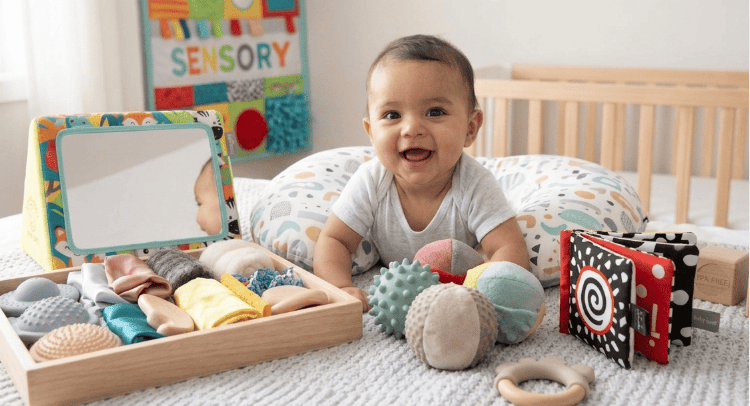
The first few months with a baby are full of small discoveries. Around 3 months of age, many babies begin to spend more time looking at faces, following moving objects, listening to sounds, and exploring with their hands.
At this stage, sensory play doesn’t need to be complicated. Simple activities—such as looking at high-contrast patterns, listening to gentle sounds, touching different textures, or watching a familiar face—can become meaningful moments of interaction between parent and baby.
The American Academy of Pediatrics encourages play from birth, including talking, singing, showing interesting objects, offering safe textures, and giving babies opportunities to explore the world around them.
This guide explores a few simple sensory play ideas and tools that may fit naturally into your baby’s daily routine.
Table of Contents
What Sensory Play Looks Like at 3 Months
At around 3 months, many babies become more interested in the world around them.
They may:
- Look at faces and familiar objects
- Follow moving toys with their eyes
- Bring their hands toward their mouth
- Hold lightweight toys for short periods
- Respond to sounds and voices
Every baby develops at their own pace, but play at this age is usually simple and focused on looking, listening, touching, and interacting with caregivers.
Interested in high-contrast visual activities? Check out our guide to [Black and White Flashcards for Newborns] for more ideas on using simple high-contrast images during early play.
1. High-Contrast Cards and Toys
Young babies often enjoy looking at strong visual contrasts such as black-and-white patterns.
High-contrast cards, soft books, or simple toys can provide an interesting visual target during tummy time or quiet play.
These items don’t need to be expensive. Even a simple card placed nearby during supervised play can encourage a baby to look, focus, and track movement.
🔵 [Explore high-contrast baby cards and toys on Amazon]
2. Soft Rattles and Wrist Rattles
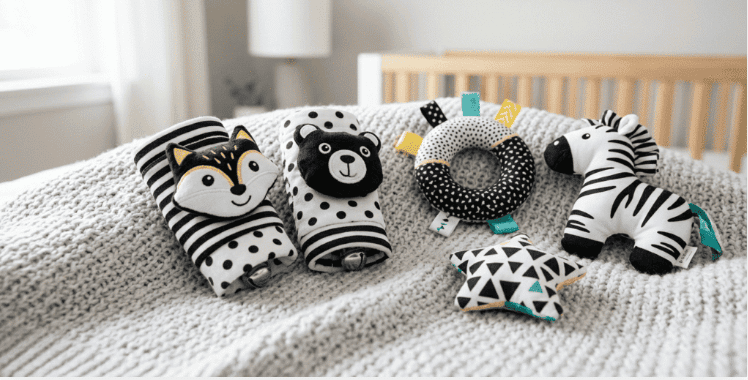
Around this age, some babies begin to swipe at objects and briefly hold lightweight toys.
Soft rattles or wrist rattles can introduce gentle sounds while encouraging babies to move their arms and hands.
Choose products that are lightweight, age-appropriate, and free from small removable parts. Always supervise your baby during play.
🔵 [See soft rattles for babies on Amazon]
3. Crinkle Books and Texture Toys
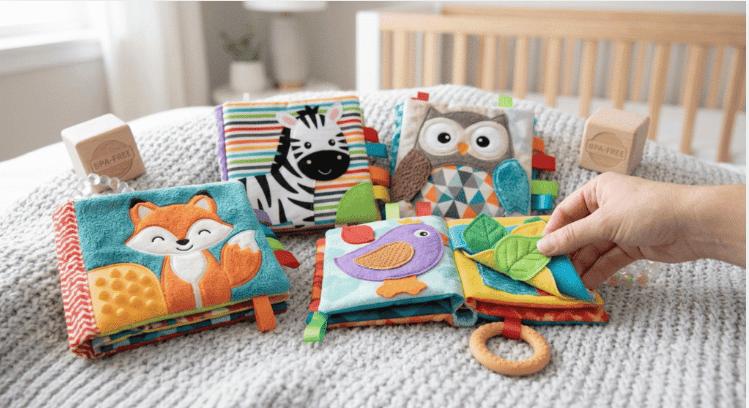
Babies explore through touch as well as sight and sound.
Soft crinkle books, fabric toys, or textured materials can provide different sensory experiences during play.
AAP guidance notes that babies benefit from opportunities to touch and mouth safe objects with different textures.
🔵 [Explore baby crinkle books on Amazon]
4. Baby-Safe Mirrors
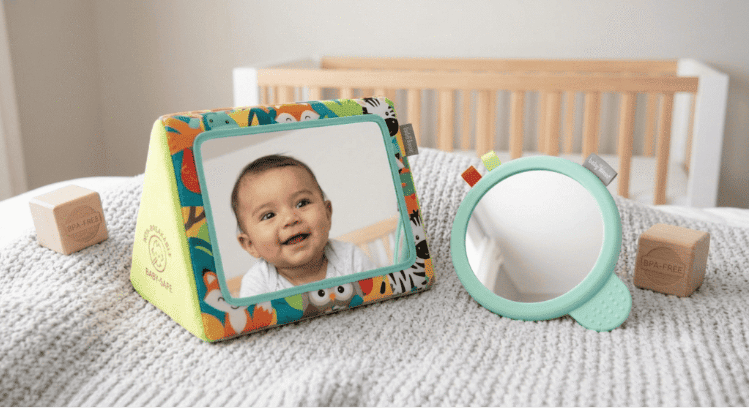
Many babies enjoy looking at faces—including their own reflection.
A baby-safe mirror placed nearby during tummy time or floor play can encourage looking, smiling, and interaction.
Mirrors should always be designed for infants and used during supervised play.
Simple Ways to Make Sensory Play More Engaging
You don’t need lots of toys to create meaningful play experiences.
Try:
- Talking and singing to your baby
- Making facial expressions
- Moving toys slowly for your baby to follow
- Including short tummy time sessions
- Changing positions so your baby sees different views
The AAP notes that caregiver interaction is one of the earliest and most important forms of play.
Safety Tips
- Always supervise sensory play.
- Choose age-appropriate toys.
- Avoid items with small detachable parts.
- Check products regularly for damage.
- Follow manufacturer age recommendations.
Play at this age should be simple, safe, and enjoyable.
Final Thoughts
Sensory play for a 3-month-old doesn’t need complicated equipment or expensive toys.
Simple experiences—looking at high-contrast images, listening to gentle sounds, touching safe textures, and interacting with a parent—can become enjoyable parts of everyday life.
The goal isn’t to teach specific skills quickly. It’s simply to give your baby opportunities to explore, move, observe, and spend time with you.
📚 Sources
- HealthyChildren.org – Baby Development (0–3 Months)
- AAP – The Power of Play
- HealthyChildren.org – Simple Ways to Entertain Your Baby
- AAP – Movement Milestones: Birth to 3 Months
- AAP – Toy Buying Tips for Babies
Frequently Asked Questions
What sensory activities are good for a 3-month-old?
High-contrast cards, soft rattles, mirrors, gentle music, tummy time, and simple parent interaction are common sensory activities for young babies.
Do I need special sensory toys?
No. Many simple objects and interactions can support sensory play. Your voice, facial expressions, and safe household items can all become part of play.
How long should sensory play last?
Short sessions of a few minutes at a time are often enough. Follow your baby’s cues and stop if they become tired or upset.
Are mirrors safe for babies?
Baby-safe mirrors designed for infants can be used during supervised play. Follow manufacturer recommendations and avoid breakable mirrors.