
Disclosure: This post contains Amazon affiliate links. As an Amazon Associate, I earn from qualifying purchases at no extra cost to you.
A licensed ride-on car can appeal to a child who recognises a familiar car badge, while a parent remote can give an adult an extra way to control a compatible vehicle. These are two different features: licensing relates to branding and design, while remote control relates to how selected driving functions operate. Neither feature, by itself, proves that a ride-on is safer or better made. Compare the exact model’s age and weight limits, speed, stopping behaviour, seat fit, battery details and instructions before choosing.
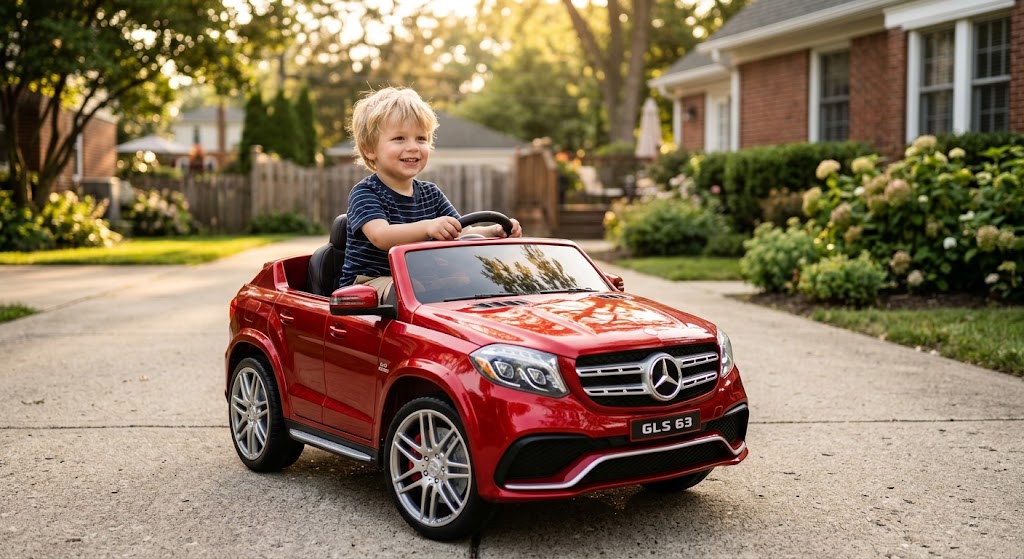
What does “licensed” mean?
A licensed ride-on is made with permission to use a vehicle manufacturer’s branding or design elements. Depending on the model, this may include a badge, grille, body shape, dashboard details or model name. It is primarily a branding and styling distinction. A licensed badge does not automatically mean the toy has better safety features, stronger materials or more reliable performance than an unlicensed alternative.
Look for the actual manufacturer or importer, model number, age guidance, maximum load, battery specifications, instructions and seller contact details. If a product page focuses on a famous badge but omits basic technical information, ask the seller for the manual before buying.
Choosing between car styles and brands
BMW- and Mercedes-Benz-inspired ride-ons are often styled as compact sports cars, roadsters or SUVs. Ford-inspired options may include pickup or off-road-style bodies. These are broad design trends rather than fixed product specifications. Compare the exact model’s length, width, seat space, door design and turning space instead of assuming that every vehicle from one brand has the same dimensions or features.
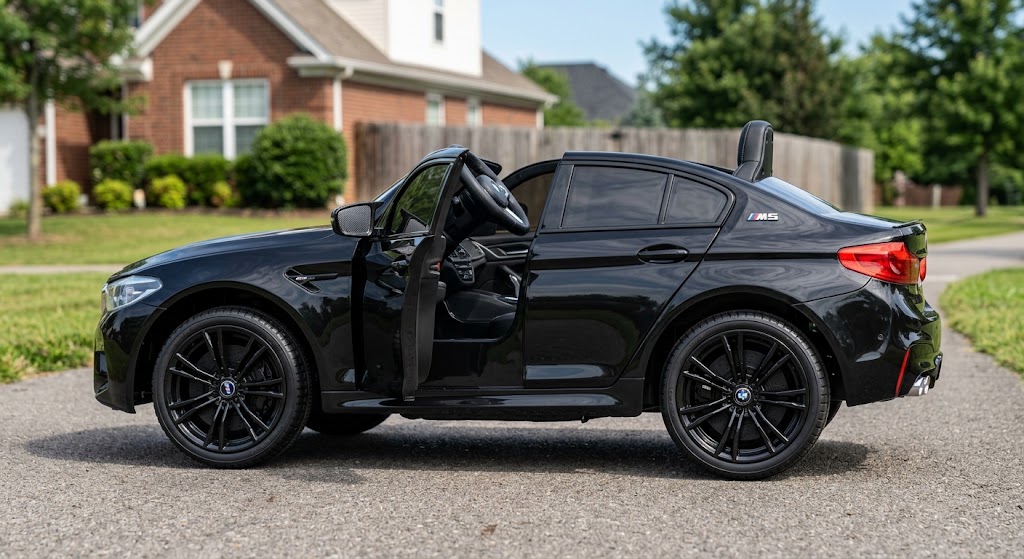
What can a parent remote actually do?
On compatible ride-ons, a parent handset may control some combination of forward and reverse movement, steering, speed selection or stopping. The available functions vary by vehicle. Some systems allow the adult remote to take priority over the child’s pedal or steering inputs; others work differently. Never assume that every remote has an emergency-stop button or full override.
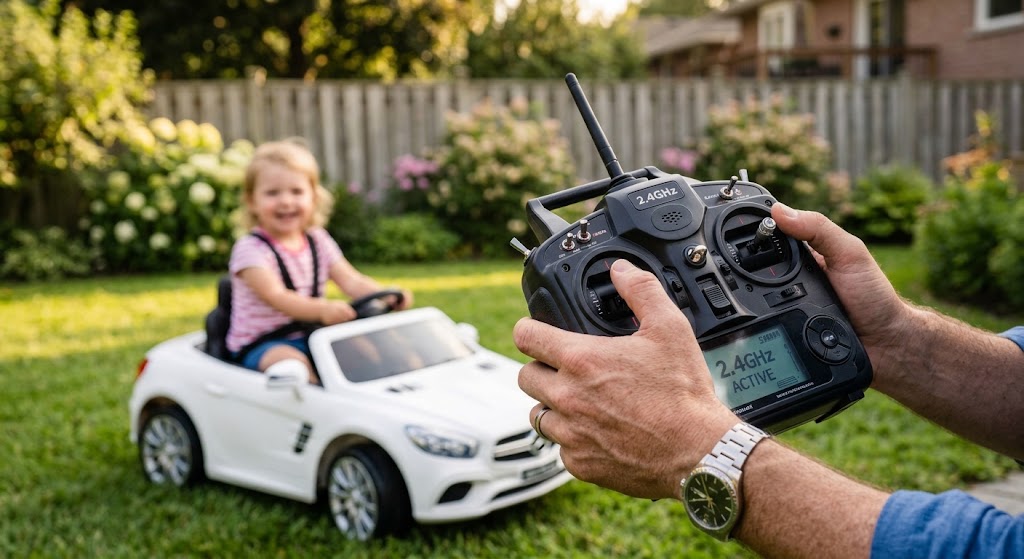
Check compatibility, pairing and range
Confirm whether the handset is included or sold separately, whether it is paired to the exact model and which batteries it needs. Read how to pair it and what happens if the signal is lost. A stated maximum range is not permission to let the child travel farther away: walls, obstacles, interference and battery condition can affect performance. Keep the vehicle within clear sight and close enough for direct intervention.
Test the controls before the first ride
Read both manuals, check the handset batteries and test forward, reverse, steering and the stop function with no child in the seat. Confirm which control has priority when the adult remote and child controls are used at the same time. If the remote behaves unpredictably or loses connection, stop using the vehicle until the problem is resolved.
Safety and fit matter more than the badge
Check the manufacturer’s minimum age and maximum weight. Consider the child’s height, legroom, seat width, back support and ability to reach the controls and sit steadily. Check the speed setting, how the vehicle starts and stops, and the restraint supplied with the exact model. Do not assume a belt shown in a product photograph is included or suitable for every child.
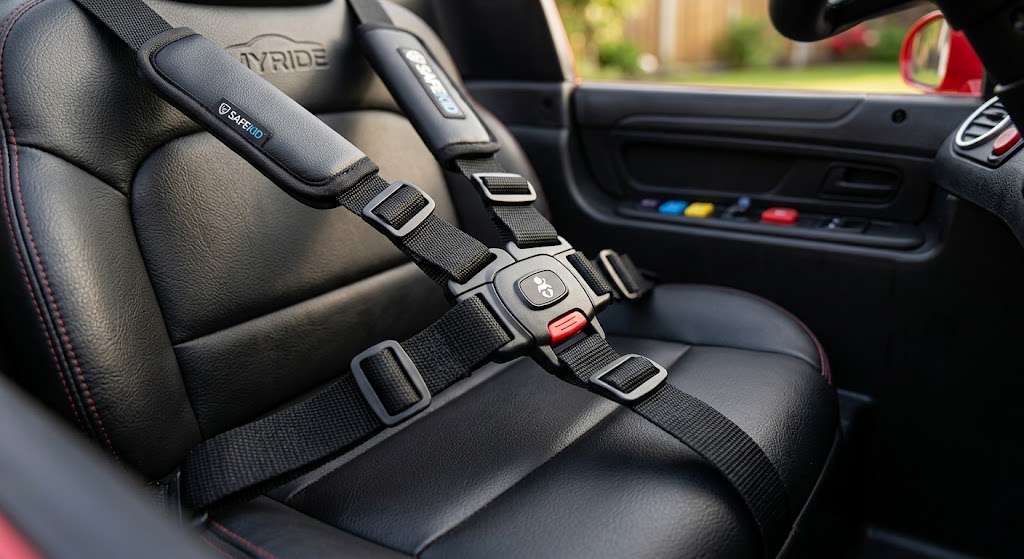
Use the ride-on only on surfaces and slopes permitted by the manufacturer. Choose a clear, flat, traffic-free area away from roads, driveways, stairs, pools and pedestrians. Keep the child seated and supervise continuously. Stop using the vehicle if the steering, wheels, restraint, wiring or battery compartment is loose, cracked, damaged or unusually hot.
Battery, charging and everyday care
Battery voltage alone does not tell you a vehicle’s top speed, age suitability or runtime. Check the battery type and capacity, the manufacturer’s estimated play time and the specified charging period. Actual runtime can change with child weight, surface, temperature, battery age, speed setting and frequent starts and stops.
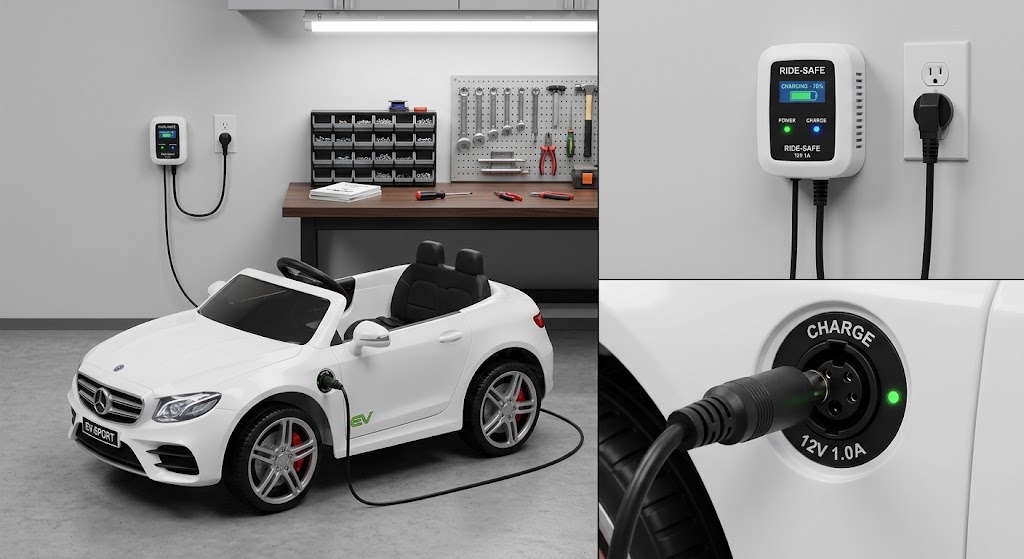
For a licensed model, keep the exact model number and manufacturer details with the manual. The vehicle’s brand badge may not identify the company that supplies replacement electrical parts, so check who handles battery, charger and remote-control support before buying. If the remote uses a separate battery, follow the manual for the correct type and replacement procedure.
A parent’s checklist before buying
- The manufacturer, model number, age range and maximum load are clearly stated.
- The child fits the seat and can reach the controls as intended.
- The speed, starting behaviour and stopping method are explained.
- The remote is included or its separate purchase is clearly stated.
- The manual explains remote pairing, operating range and control priority.
- The permitted riding surface and charging instructions are provided.
- The seller provides clear support and replacement-part information.
To compare current options, browse licensed electric ride-on cars for kids on Amazon, remote-control ride-on cars on Amazon or licensed ride-on trucks on Amazon. These are product-search links, not endorsements of every listing; check the exact model details before purchasing.
For more age-specific considerations, read our guide to ride-on car safety for one-year-olds and our overview of off-road ride-on trucks and jeeps.
For additional product examples, you can also compare these previously featured options: remote-control ride-on cars with a three-point harness and 12V remote-control ride-on trucks. Check the current listing, included accessories and model instructions before buying.
Frequently Asked Questions
Does a licensed ride-on car always have better quality?
No. Licensing relates to the use of a brand’s name or design. Compare the actual build, instructions, safety features, warranty and model specifications.
Can a parent remote stop every ride-on car?
No. Remote functions differ. Check the manual to see whether the handset can steer, change direction, control speed or stop the exact vehicle.
Can I supervise from indoors if the car has a remote?
No. A remote is an additional control feature, not a replacement for close, continuous adult supervision.
What should I do if the remote stops responding?
Stop the ride immediately and follow the manufacturer’s troubleshooting instructions. Do not let the child continue until the controls work reliably.
Sources
Health Canada – Play Time: Ride-On Toys and Battery-Operated Toys