
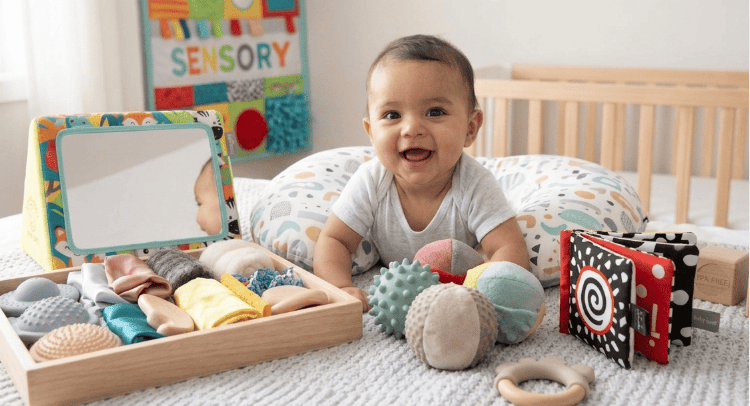
“By the time your baby reaches 3 months of age, introducing sensory play for 3-month-olds is a wonderful way to encourage early discovery…”The sleepy newborn phase begins to fade, and your baby becomes awake, alert, and deeply curious about the world around them. They are discovering that they have hands, they are learning to smile socially, and they are starting to interact with their environment on purpose.
At this stage, your baby’s brain is like a sponge, absorbing thousands of new sensations every day. This is the perfect window to introduce sensory play—activities that stimulate your baby’s senses of sight, sound, and touch.
Sensory play doesn’t require complicated instructions or expensive electronic screens. In fact, the best tools are simple, passive objects that encourage your baby to explore safely.
In this guide, we will look at how sensory development shifts at 3 months and the best, safest tools you can use to encourage early discovery.
In This Article
Sensory Play for 3-Month-Olds: Sensory Awakening Stage
To choose the right play tools, it helps to understand what your 3-month-old is physically experiencing:
- The Sense of Touch: Your baby’s hands are no longer tightly balled into fists; they are opening up. They will begin to reach out and clumsily grab fabrics, hair, and toys, bringing everything straight to their mouth to explore textures.
- The Sense of Sight: Their tracking skills are improving. They can now follow a moving object smoothly across a 180-degree arc and are starting to appreciate bright primary colors, especially red and green.
- The Sense of Sound: They are becoming more attuned to the direction of sounds. They will turn their head toward a rattle, music, or the sound of your voice, and they love making vowel sounds (cooing) in response.
“According to child development experts, a baby’s brain builds millions of connections during these early months.”
Top 4 Tools for Safe Sensory Play for 3-Month-Olds
Here are the best expert-approved sensory tools to introduce during your baby’s daily play routines:
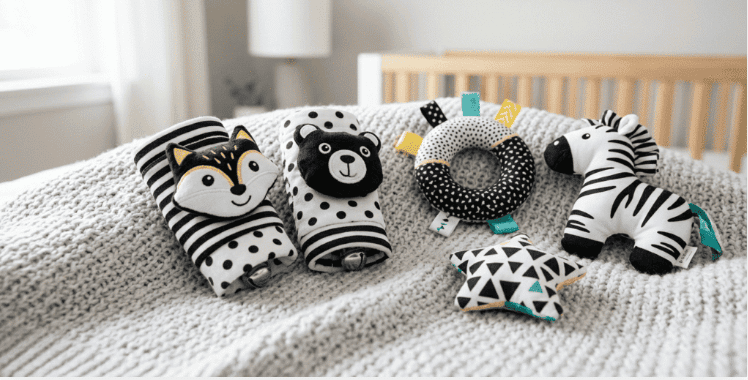
1. High-Contrast Soft Rattles and Wrist Socks
At 3 months, babies are discovering their feet and hands but don’t always realize these limbs belong to them. Wrist rattles and foot-finder socks are soft, wearable toys that make a gentle sound whenever your baby moves.
- How it helps: It connects body movement with sound (auditory processing) and encourages your baby to lift their legs and reach for their feet, strengthening their abdominal muscles.
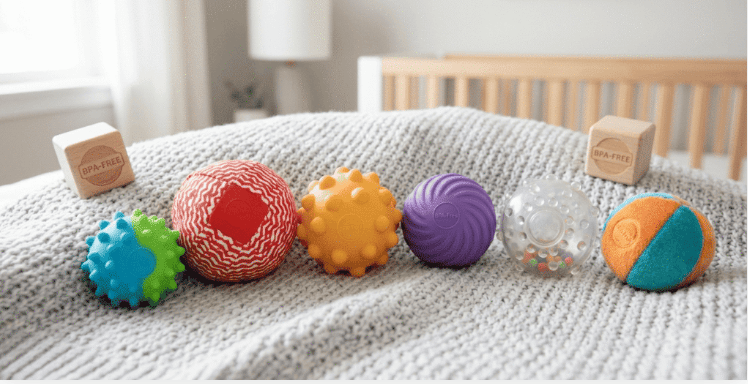
2. Textured Sensory Balls (BPA-Free)
A set of small, soft plastic balls with different surface textures—such as bumps, ridges, swirls, and dimples—is a fantastic sensory tool.
- How it helps: Gently roll these balls over your baby’s bare arms, legs, and tummy. This skin-to-object tactile stimulation helps calm their nervous system and introduces them to different physical feelings. Later, they will practice gripping these varied surfaces.
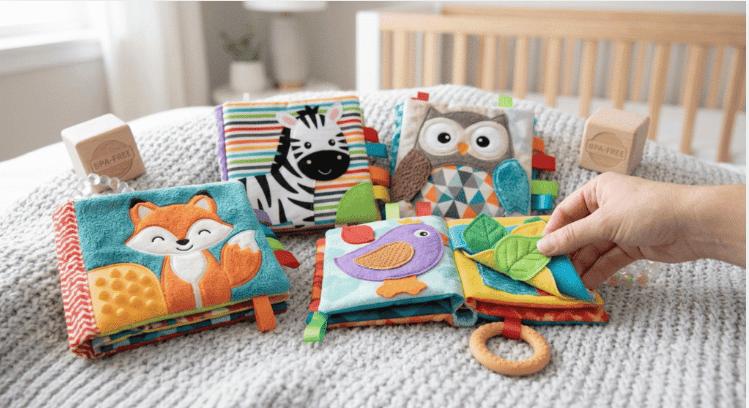
3. Sensory Crinkle Books
Traditional paper books are easily torn and hard for a 3-month-old to handle. Crinkle books are made of soft fabric with a crinkly material hidden inside the pages that makes a satisfying sound when squeezed.
- How it helps: It satisfies three senses at once: they see the bright pictures, they feel the soft fabric, and they hear the crunching sound. It is a wonderful, safe way to build an early love for books.
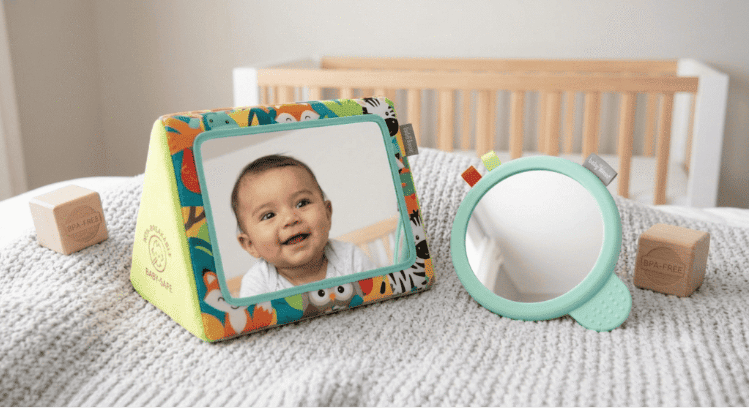
4. Non-Breakable Baby-Safe Mirrors
Babies love human faces more than anything else. A floor mirror designed specifically for infants allows them to gaze at the most fascinating face in the room—their own!
- How it helps: During tummy time, propping a mirror in front of your baby promotes social-emotional development and visual tracking. They will track their own movements, blink, and eventually smile at their reflection.
Safety First: Essential Guidelines for Sensory Play for 3-Month-Olds
Since 3-month-olds explore everything with their mouths, safety is the number one priority during playtime.
- Avoid Small Parts: Any toy or object must be too large to fit entirely into a cardboard toilet paper roll. If it fits, it is a choking hazard.
- Look for Non-Toxic Certifications: Ensure all plastics are BPA-free and textiles are painted with non-toxic, water-based dyes.
- Supervision is Key: Never leave your baby unattended with sensory toys, especially items like soft fabrics or crinkle papers that could accidentally cover their face.
The Impact of Early Sensory Play for 3-Month-Olds
Sensory play at 3 months isn’t about teaching academic concepts; it’s about helping your baby feel comfortable and curious in their own body and environment. By introducing simple textures, gentle sounds, and captivating visuals, you are providing the raw ingredients their brain needs to build millions of healthy neurological connections.
Take it slow, follow your baby’s cues, and enjoy watching the magic of early discovery unfold right before your eyes.
“If you are looking for high-contrast cards, check out our guide on…”
What is your baby’s favorite sound or texture right now? Do they prefer crinkly sounds or smooth surfaces? Let us know in the comments below!
“To support early milestones with purposeful play, discover the [Best Educational Toys for 1-Year-Olds That Teach, Not Distract].”