
Rainy weather can change the rhythm of a family day, especially when children have energy to burn and outdoor plans are off the table. A few well-chosen indoor activities can help fill the afternoon with movement, building, creativity and quieter play. The most useful options are not necessarily the most expensive: they are the ones that suit a child’s age, interests, available space and the amount of supervision an adult can provide.
Disclaimer: This post contains affiliate links. As an Amazon Associate, I earn from qualifying purchases at no extra cost to you.
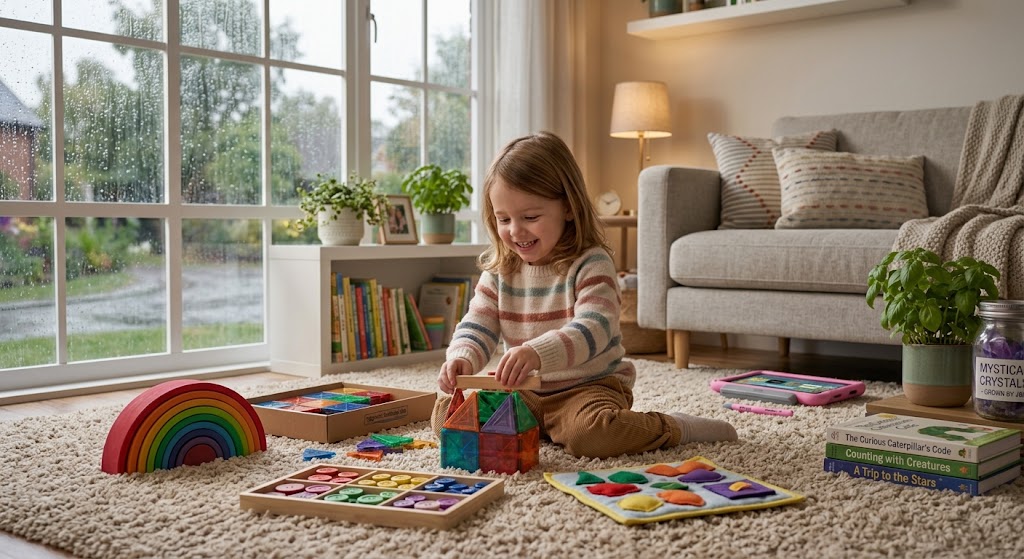
Why Have a Few Indoor Play Options Ready?
Children do not need a special toy for every rainy day. Everyday materials such as cushions, large cardboard boxes, washable crayons and picture books can be enough to start a game. A few dedicated toys can add variety when children want to move, build or work on a project.
Play is also an opportunity for adults and children to spend time together. The American Academy of Pediatrics explains that toys are most useful when they encourage interaction, imagination and supportive play rather than simply promising educational results. Read the AAP article Selecting Appropriate Toys for Young Children in the Digital Era for more background.
8 Rainy-Day Toys and Activities to Consider
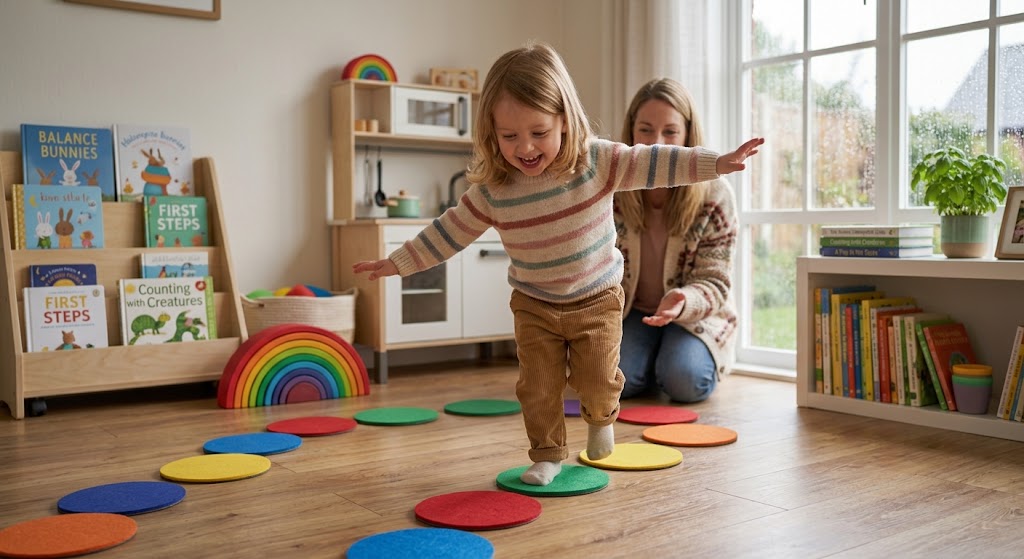
1. Balance Stepping Stones for Indoor Movement
Balance stones can be arranged into a simple path across a clear floor. Children can step from one piece to another, change the spacing or invent a pretend river-crossing game. Choose a set with a stable, non-slip base and use it on a flat surface with enough room around it.
These sets are not suitable for every age or home. Follow the maker’s age and weight guidance, keep the route away from stairs and sharp furniture edges, and stay close while younger children play. Browse the balance stepping stones on Amazon to compare shapes, surface textures and storage options.
2. Foldable Play Tunnels
A play tunnel can turn a living room into a short crawling course or a pretend hideaway. Children may enjoy crawling through it, rolling a soft ball from one end to the other or using it as part of an imaginative game. Choose a tunnel that is suitable for the child’s size and can be opened and folded according to its instructions.
Set it up away from stairs, heaters, glass doors and furniture that could tip. Check seams and supports for damage, and put it away when play is finished so it does not become a tripping obstacle.
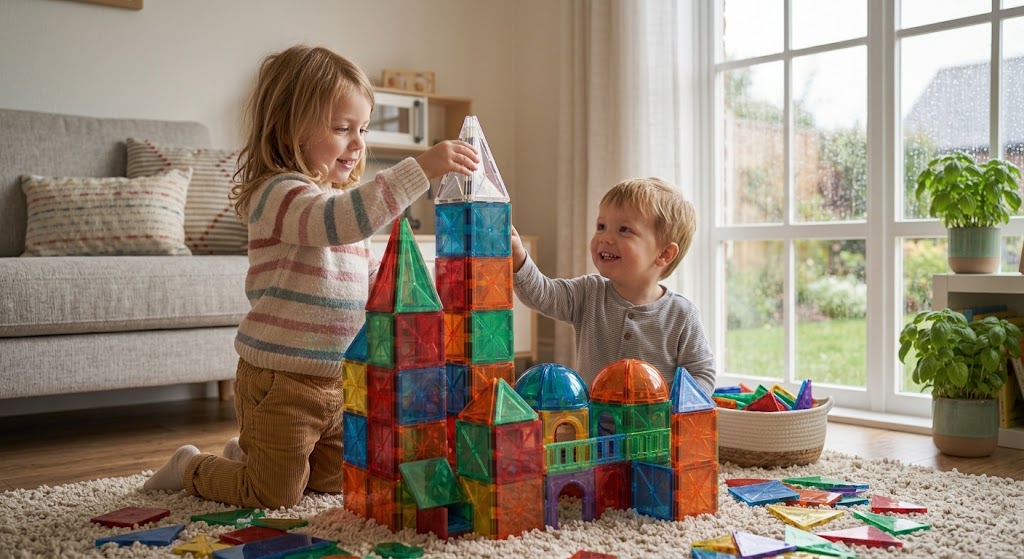
3. Magnetic Building Tiles
Magnetic tiles can be used to make simple shapes, walls, towers and pretend buildings. Older children may enjoy planning a design together, while adults can help younger children explore how the pieces connect. Look for clear manufacturer age guidance and sturdy tiles with magnets fully enclosed.
Important safety note: Magnetic construction toys are not appropriate for every child. Keep small or high-powered magnets away from young children, especially those who may put objects in their mouths. Inspect tiles before and after play; stop using a set if a tile cracks or a magnet becomes loose. Swallowed magnets can cause severe internal injuries. Read the U.S. Consumer Product Safety Commission’s magnet safety guidance and the American Academy of Pediatrics’ advice about magnetic toys.
4. Cardboard Fort-Building Materials
A large, clean cardboard box can become a shop, a playhouse, a rocket or a reading den. Children can decorate it with crayons or stickers, while an adult handles any cutting. Purpose-made fort kits with connectors are another option, but check that the pieces are suitable for the child’s age and do not create unstable structures.
Keep the fort low and lightweight. Do not let children climb on stacked boxes or pull heavy furniture into a structure. Remove staples, sharp edges, plastic wrapping and loose cords before play, and keep doorways and exits clear.
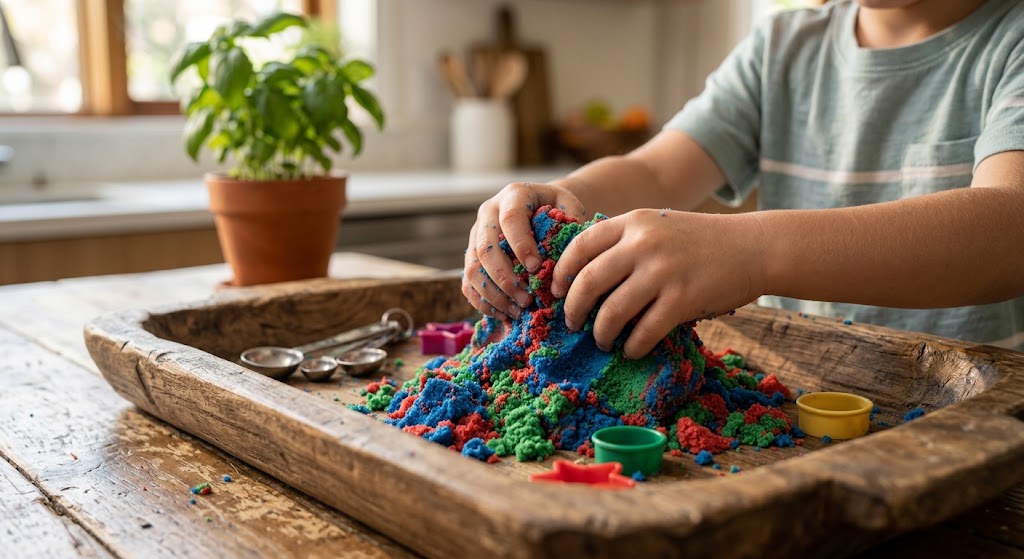
5. Kinetic Sand and Moulding Sets
Kinetic sand can be pressed, shaped and used with moulds on a tray or washable mat. It may suit children who enjoy tactile activities and making small shapes. It is not completely mess-free, so a contained play area and a simple clean-up routine help.
Check the package age recommendation and ingredient information before use. Keep it away from babies and children who still mouth objects, do not allow eating, and supervise play. Store it in its closed container after use. Compare kinetic sand play sets on Amazon by the amount supplied, included tools and manufacturer’s age guidance.
6. Reusable Water-Reveal Activity Pads
Water-reveal pads use a refillable water pen to make pictures or colours appear on a reusable surface. Once the page dries, the image fades and the activity can be repeated. They can be a practical option for families who want a drawing activity without paint or marker ink.
Check the recommended age, the size of the pen and whether any detachable caps or accessories could be choking hazards. Use only the supplied water pen as directed, wipe up spills promptly and do not leave water containers within reach of very young children.
7. Simple Craft Activity Boxes
Craft boxes may include stickers, large paper shapes, collage materials or pre-cut pieces for a guided project. For a younger child, choose activities with large components and minimal steps. Older children may prefer projects that involve planning and following instructions.
Check the age label and supervise the use of scissors, glue and small decorations. If you want to avoid liquid glue or glitter, look for sticker-based or peel-and-stick projects, but do not assume that every product marketed as mess-free is suitable for every age. Browse craft activity kits on Amazon and check what is actually included.
8. Jigsaw and Pattern Puzzles
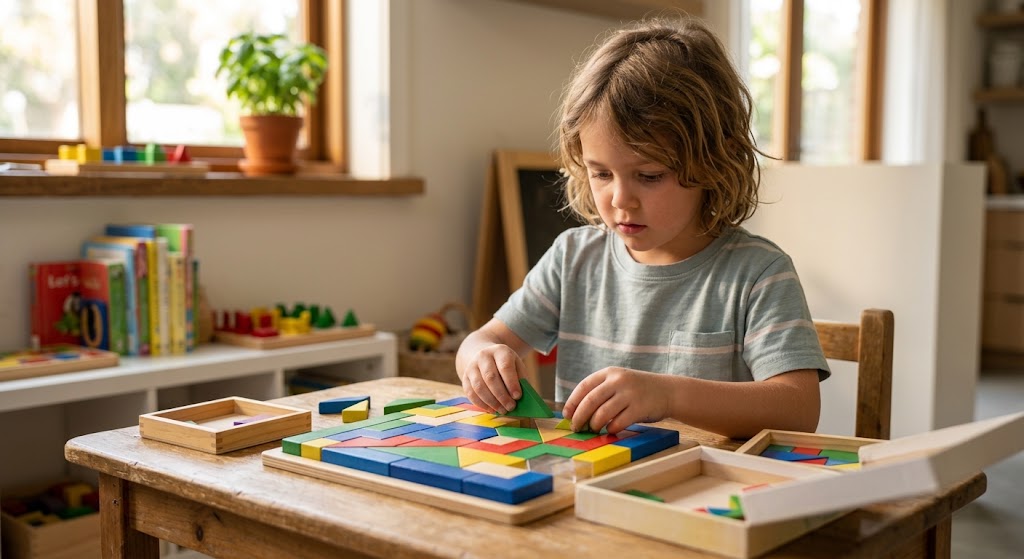
Puzzles provide a quieter option for a rainy afternoon. Younger children may start with chunky puzzles with a few large pieces, while older children can try jigsaws, matching games or pattern challenges with more steps. The right difficulty is the one that gives the child a chance to try without making the task frustrating.
Check the size and number of pieces against the child’s age and abilities, especially if younger siblings share the room. Put small pieces away after play and choose a flat surface where pieces are easy to see and collect.
A Simple Indoor Obstacle Course Without Buying More Toys
Not every rainy-day activity needs to come from a toy shop. With an adult setting it up, a short movement course can use floor markers, cushions placed flat on the ground, a soft ball and a clear path between them. Children can step around markers, crawl under a table with enough clearance or carry a soft toy from one basket to another.
Keep the activity low to the ground. Avoid jumping from furniture, climbing on chairs, running on slippery floors or using objects that can slide. Adapt the route to the child’s age and movement abilities, and stop if the child becomes tired or the space becomes crowded.
How to Choose Activities for Your Home
Before buying another toy, think about the room where it will be used and how much time you can spend supervising. A large tunnel may be fun but difficult to store in a small apartment. Sand and craft materials need a suitable surface and clean-up plan. Puzzles and water-reveal pads take less floor space but may be better for quieter periods.
| Activity | Space needed | What to check |
| Balance stones or tunnel | Clear floor area | Stability, age guidance and adult supervision |
| Magnetic tiles | Table or floor space | Age label, enclosed magnets and damage checks |
| Cardboard fort | Flexible floor area | Stable, lightweight construction and safe edges |
| Kinetic sand or craft kit | Table and tray | Age suitability, small parts and clean-up |
| Water pad or puzzle | Small table or floor area | Piece size, accessories and storage |
For younger children, use the age label as a starting point rather than the only safety check. The CPSC advises parents to follow toy age guidance and keep small parts away from children under three. Its toy safety guidance is a useful checklist when comparing products. Also inspect toys regularly and stop using any item with broken pieces, exposed magnets or damaged parts.
Make Rainy Days Easier With a Small Activity Rotation
Rather than putting every toy out at once, keep a small selection available and rotate the options when interest changes. One day might include movement and building; another might be better for puzzles, drawing or a story. Children may also enjoy repeating a familiar activity in a new way, so there is no need to keep buying something different.
If you want to prepare a few options in advance, compare products by age suitability, durability, storage needs and the materials included—not just by the number of pieces or the claims on the package. You can also browse a broader selection of indoor activity toys on Amazon, then check the exact listing details before choosing.
Rainy days can be a chance to slow down and play together. A cardboard box, a simple puzzle or a short indoor movement game may be just as useful as a new toy. Choose activities that fit your home, keep safety in mind and let your child help decide what to play.
For more hands-on ideas, read our guide to art and craft kits for toddlers or explore building blocks for toddler play.
Questions and Answers
What are some good rainy-day activities for children?
Try building with blocks, drawing, simple puzzles, pretend play, indoor movement games or supervised sensory activities. Choose based on the child’s age, interests and available space.
How can I make indoor play safer?
Clear the floor, keep play away from stairs and unstable furniture, follow product age labels, supervise movement activities and keep small parts, loose magnets and button batteries away from young children.
How many toys should I put out at once?
A small selection is often easier to manage. Offer a few different types of activity and rotate them when your child loses interest.
How can I reduce mess during indoor activities?
Use a washable mat or tray, prepare materials before play, keep wipes or a clean-up container nearby and choose activities that suit the amount of time you have for tidying.
Related reading: Push Toys vs. Traditional Baby Walkers | Travel Toys for Kids