
A one-year-old’s readiness for a ride-on toy depends on the child and the exact product. Some low, foot-powered ride-ons are designed for young toddlers who can sit steadily and reach the floor. Many battery-powered cars, however, have higher minimum age or weight requirements and controls that a one-year-old may not be ready to use. It is not safe to assume that every ride-on is suitable simply because it has a seat and four wheels.
Disclaimer: This post contains affiliate links. As an Amazon Associate, I earn from qualifying purchases at no extra cost to you.
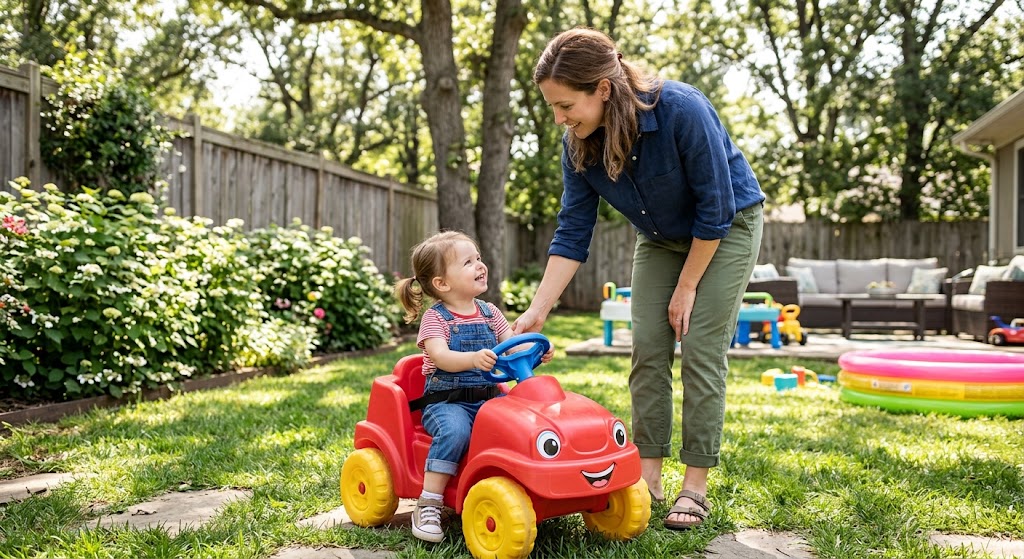
First, identify what kind of ride-on it is
A foot-to-floor toy moves when the child pushes against the ground. A battery-powered ride-on uses a motor and usually has an accelerator pedal or switch. These are not interchangeable categories. Read the packaging and manual to confirm the minimum age, maximum weight, intended use and required adult involvement. If the product is not explicitly intended for a one-year-old, do not use it with a child of that age.
Readiness matters more than a birthday
Before considering a ride-on, think about whether the child can sit upright without support, remain seated, reach the floor and understand simple instructions appropriate to their development. These observations do not override the manufacturer’s age guidance. If the child is unsteady, cannot reach the floor or becomes distressed, choose another form of play.
What to check on a suitable foot-powered toy
- A low seat that allows the child to place both feet on the floor.
- A broad, stable base and wheels that do not roll too freely.
- No sharp edges, exposed pinch points or loose small parts.
- A handle or steering wheel that is easy to grip.
- Clear age and weight information from the manufacturer.
- A stable design that does not tip easily during ordinary use.

Why battery-powered models need extra caution
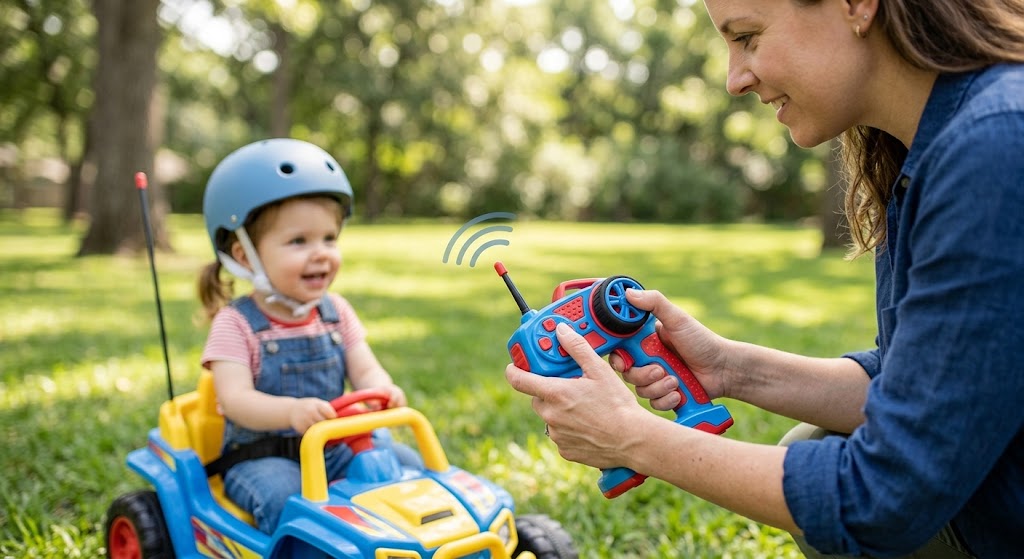
An electric ride-on may move faster than a young toddler can manage, and a one-year-old may not understand how to steer or stop it. A parent remote does not make an unsuitable vehicle suitable for this age. Check the manufacturer’s minimum age and all safety instructions. If the age range begins above one year, wait until the child meets the stated requirements.
Restraints and protective equipment
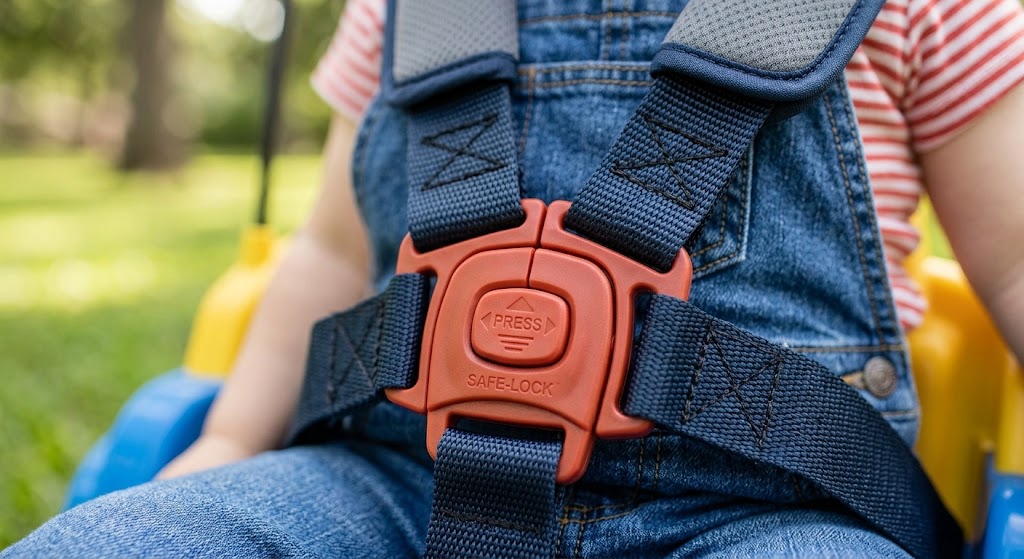
Do not assume every ride-on includes a five-point harness or that a particular belt is appropriate for every child. Use the restraint supplied with the model exactly as described by the manufacturer. A belt cannot compensate for an age-inappropriate vehicle or lack of supervision. Follow the manufacturer’s and local guidance on protective equipment.
Choose the play area carefully
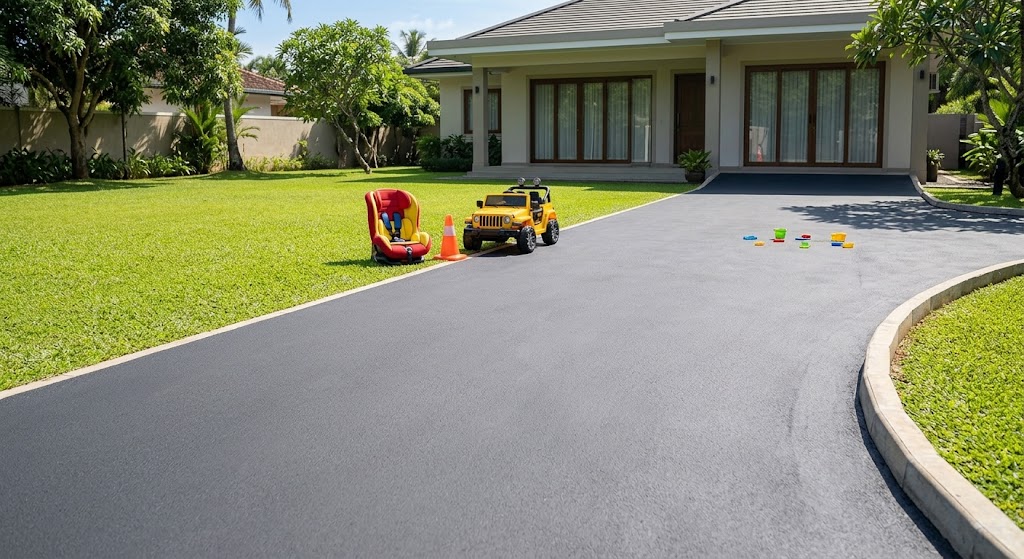
Use the toy only on a flat, private area away from roads, driveways, stairs, pools, slopes and other hazards. Keep the area clear of furniture, loose rugs, cords and pets. Stay within arm’s reach of a very young toddler and stop the activity if the child leans, stands or tries to climb out.
What if your child is not ready?
There is no need to introduce a ride-on at a particular age. Floor play, crawling, cruising along stable furniture and simple push-and-pull activities provide plenty of opportunities to explore movement. A toy should add enjoyment, not become a way to hurry a milestone.
A simple decision
For a one-year-old, consider only a product whose manufacturer clearly states that it is suitable for that age and whose seat, movement and controls match the child’s abilities. Many electric ride-ons are not designed for one-year-olds. When in doubt, wait and ask your child’s healthcare professional about any concerns regarding movement or readiness.
For more information on early walking toys, see our article about push toys versus traditional baby walkers.
Ride-On Examples to Compare
The products below illustrate different ride-on formats; they are not recommendations for every one-year-old. Check the specific model’s minimum age, maximum load, restraint instructions and supervision requirements. A product listing alone cannot establish whether it is suitable for your child.
- SEREED Baby Balance Bike — listed for ages 12–24 months; confirm the fit and supervision requirements.
- Radio Flyer Push Around Buggy — listed in Amazon toy catalog material for ages 1–4; check the current listing.
- Radio Flyer Grow With Me Racer — listed for ages 1.5–4; not intended for every one-year-old.
Frequently Asked Questions
Are electric ride-on cars suitable for most one-year-olds?
Many electric ride-ons are intended for older children. Check the exact model’s minimum age, weight limit, seat fit and control requirements; do not assume a one-year-old is ready because a product looks small.
What kind of ride-on may be more appropriate for a young toddler?
A simple foot-powered toy may be worth considering only when its manufacturer states that it is suitable and the child can sit securely and reach the floor. Read the age guidance and supervise closely.
What signs suggest my child may not be ready?
If your child cannot sit securely, reach the floor where required, understand basic stopping instructions or remain stable on the toy, wait. A ride-on is optional and should not be used to hurry development.
Can a one-year-old use a ride-on outdoors?
Only use a product in the way its manufacturer permits and on a flat, private area away from roads, stairs, pools and slopes. Stay within arm’s reach and stop if the child becomes unsettled.
Sources
Health Canada – Play Time: Ride-On Toys and Battery-Operated Toys