
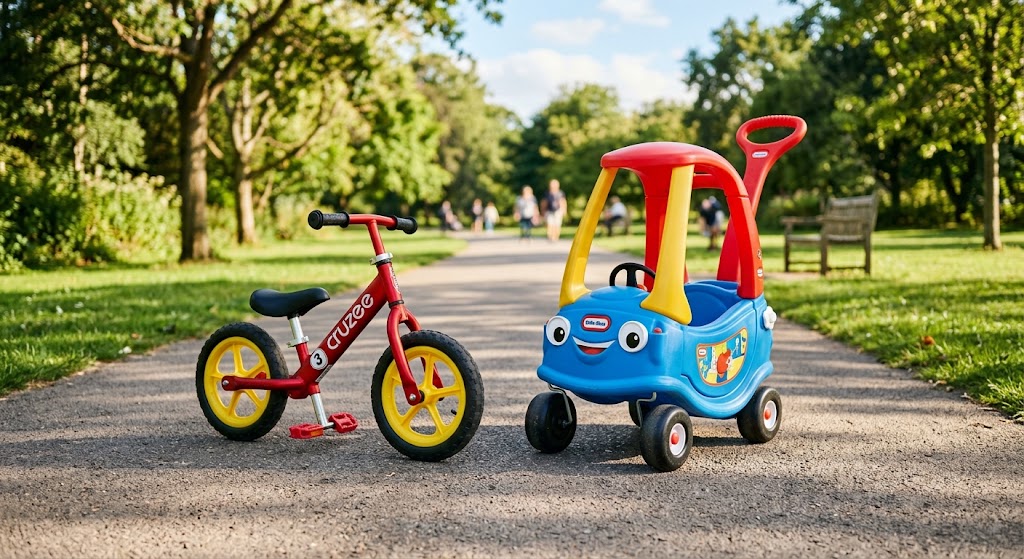
Comparing Best Balance Bikes vs. Baby Push Cars is one of the most common dilemmas parents face when choosing the right ride-on toy for their growing toddler. As young children progress from crawling to walking, active toys play a major role in shaping their physical coordination, muscle strength, and confidence. Both of these popular options encourage movement, but they target completely different developmental milestones.
At The Sprout Minds, we examine how these two classic ride-on toys compare so you can make an informed choice for your toddler’s growth.
In This Article
Understanding the Physical Mechanics of Ride-On Toys
Before comparing Best Balance Bikes vs. Baby Push Cars, it is essential to understand how each vehicle engages a child’s body differently.
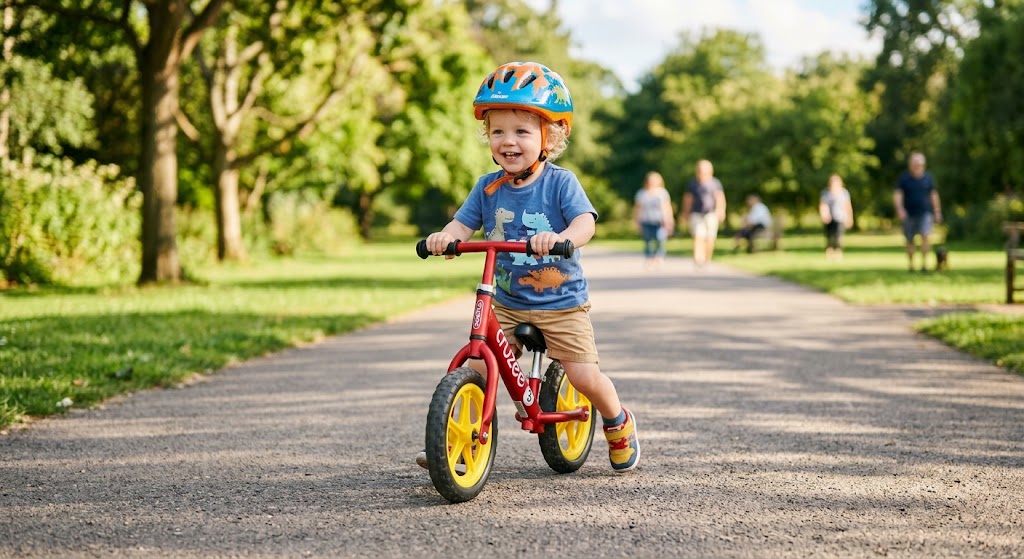
- Balance Bikes: These are pedal-less, two-wheeled bicycles designed to teach children steering and dynamic balance. Toddlers sit on the saddle and push off the ground using their feet, gliding as they gain momentum.
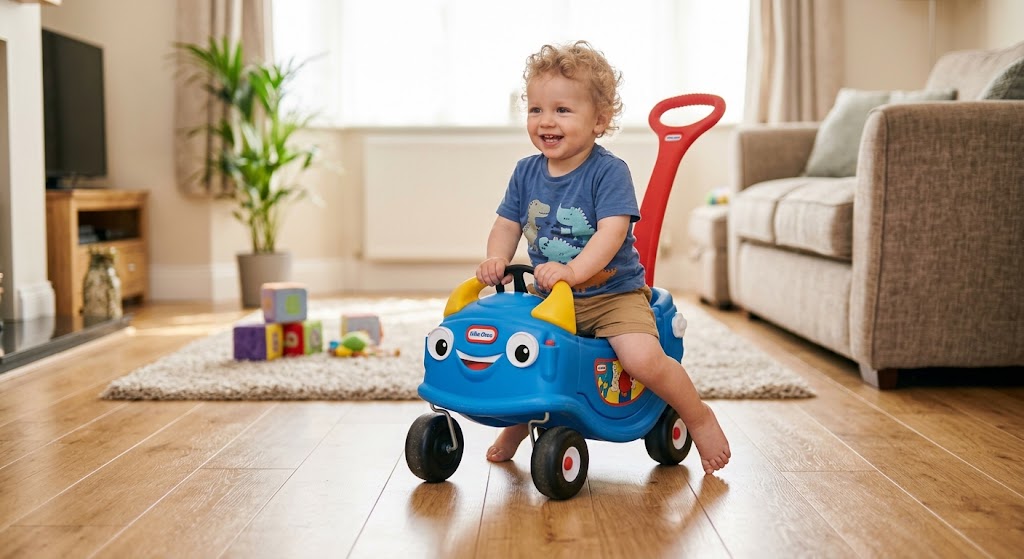
- Baby Push Cars: These are wide, four-wheeled vehicles (or push-along walkers) where toddlers sit or stand behind to push themselves forward using both feet. They rely heavily on ground stability rather than body balance.
Key Differences: Best Balance Bikes vs. Baby Push Cars at a Glance
To evaluate Best Balance Bikes vs. Baby Push Cars effectively, consider their fundamental physical demands:
| Feature | Baby Push Cars | Balance Bikes |
| Recommended Age | 9 to 18 Months | 18 Months to 4 Years |
| Primary Physical Focus | Leg strength, early walking confidence | Core balance, steering, spatial coordination |
| Number of Wheels | 3 or 4 wheels (High stability) | 2 wheels (Requires active balancing) |
| Pedal Transition | Requires training wheels later | Smooth transition directly to pedal bikes |
| Terrain Versatility | Smooth indoor floors, flat driveways | Grass, paved roads, outdoor trails |
How Balance Bikes Enhance Physical Development
Balance bikes are specifically engineered to prepare toddlers for traditional bicycles without ever needing training wheels.
1. Mastering Dynamic Balance and Core Strength
Two-wheeled balance bikes require continuous micro-adjustments from a child’s core and legs to stay upright. According to movement guidelines from the Centers for Disease Control and Prevention (CDC) (External Link 1), active physical play that challenges gross motor skills builds long-term spatial awareness and posture control.
2. Developing Hand-Eye and Steering Coordination
Steering a two-wheeled vehicle forces toddlers to process visual obstacles, judge distances, and adjust their grip strength simultaneously. This multi-tasking refines overall body awareness.
3. Smooth Transition to Pedal Bicycles
Because children master balancing first on a balance bike, they bypass the need for training wheels entirely when moving up to big-kid bikes around age 3 or 4.
How Baby Push Cars Support Early Growth
While balance bikes focus on advanced coordination, baby push cars serve a critical purpose for younger infants just discovering mobility.
1. Strengthening Lower Extremities for First Steps
For babies aged 9 to 15 months, push cars provide stable resistance. Pushing off the ground with both feet builds quadricep, ankle, and calf muscle strength essential for independent walking.
2. High Stability and Spatial Security
Because push cars feature four wide wheels, toddlers do not need to worry about tipping over. This stable base builds early physical confidence in hesitant walkers who are uncomfortable with uneven surfaces.
3. Multi-Functional Play
Most baby push cars include interactive lights, storage compartments, or walker handles behind the seat. As highlighted by child play safety insights at HealthyChildren.org (External Link 2), versatile play gear keeps young toddlers physically engaged while allowing safe rest periods when tired.
Age Appropriateness: Which Ride-On Fits Which Stage?
When weighing Best Balance Bikes vs. Baby Push Cars, matching the vehicle to your child’s age and motor skills ensures maximum safety and enjoyment.
- Age 9–18 Months (The Walker Stage): Baby Push Cars are the clear winner here. At this age, toddlers lack the core control needed to manage a two-wheeled balance bike. A push car offers stability, helping them transition safely from crawling to upright movement.
- Age 18–36 Months (The Explorer Stage): Balance Bikes take the lead during this phase. Once a toddler walks confidently and starts running, a balance bike provides the challenge needed to expand their speed, agility, and balance.
Safety Guidelines for Early Ride-On Play
Regardless of whether you choose a balance bike or a push car, follow these safety practices:
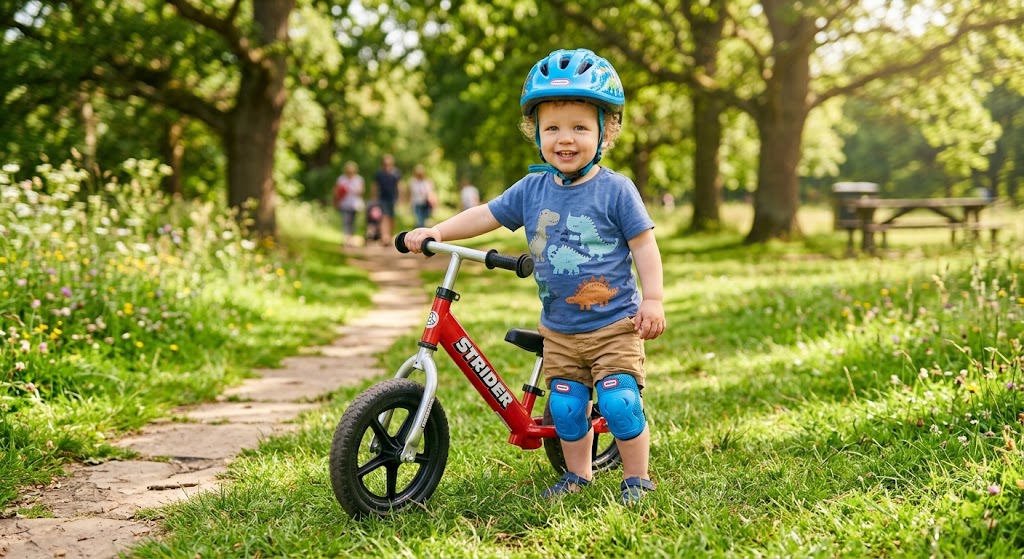
- Always Wear Protective Gear: Equip toddlers riding balance bikes with a properly fitted multi-sport safety helmet, especially when outdoors.
- Stick to Flat Surfaces: Avoid steep driveways, roads with traffic, and areas near stairs or swimming pools.
- Check Weight Limits & Seat Heights: Ensure your toddler’s feet can rest completely flat on the ground when seated on either vehicle.

Final Verdict: Best Balance Bikes vs. Baby Push Cars
In the debate between Best Balance Bikes vs. Baby Push Cars, there is no single absolute winner—rather, each vehicle excels at a different stage of early childhood development.
If your child is under 18 months and learning to stand or take early steps, a Baby Push Car provides the necessary physical support and leg conditioning. However, if your child is 18 months or older and running confidently, investing in a Balance Bike offers superior physical development, core strength, and coordination for years to come.
Follow The Sprout Minds for more expert parent guides, child toy comparisons, and developmental safety tips!
“Along with sensory play, when your toddler is ready to take their first steps, learn about [safe push toys vs traditional baby walkers] to support their movement.”