
Building blocks are among those toys that can be used in many different ways. A child might stack a few pieces into a tower, build a home for a toy animal, make a bridge for a small car or take everything apart and begin again. The appeal is often in the process rather than in creating one perfect finished model.
But not every building set is designed for the same age or style of play. Large interlocking blocks, magnetic geometric tiles and small precision bricks feel quite different in a child’s hands. This guide compares MEGA BLOKS, MAGNA-TILES and LEGO, with practical points to consider before choosing a set for your family.
The comparison is based on product types and manufacturer guidance, not hands-on testing of every set. Product ranges and age labels can vary, so check the exact box or product listing before purchasing.
Disclosure: This post contains affiliate links. As an Amazon Associate, I earn from qualifying purchases at no extra cost to you.
Table of Contents
MEGA BLOKS: Large Pieces for Early Builders
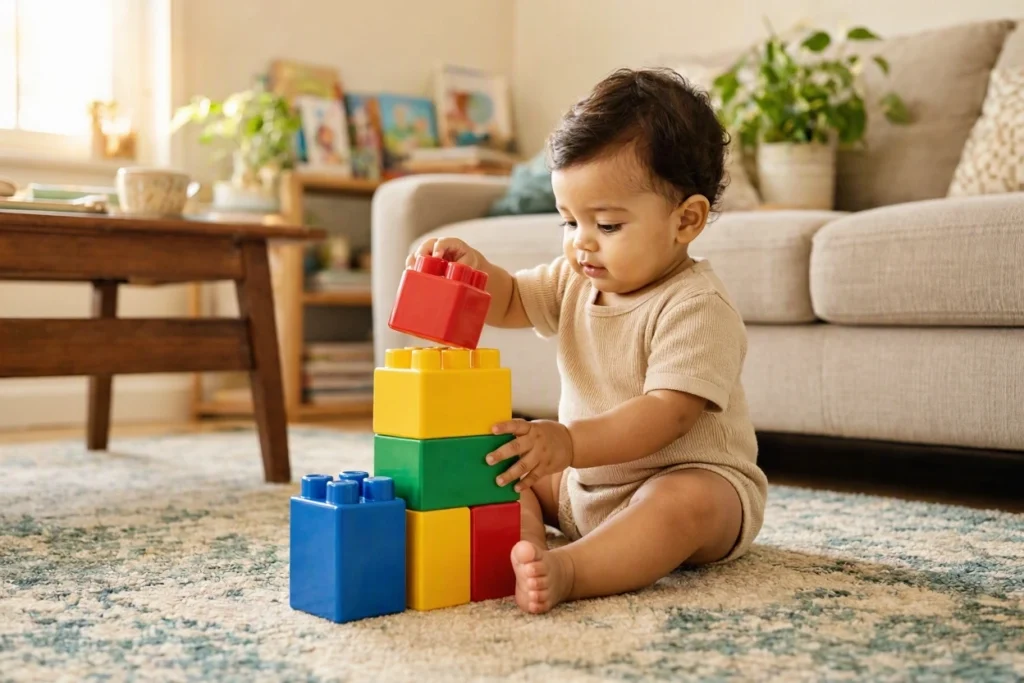
MEGA BLOKS First Builders sets use larger interlocking pieces that are easier for many young children to grasp, stack and pull apart than standard small construction bricks. Mattel’s First Builders range includes sets labelled for ages 1 and up, although the recommendation should always be checked on the individual box.
Play can be very simple at first. A child might connect two blocks, add another one, knock the tower over and start again. Parents can join in by making a short wall or a pretend garage, then letting the child decide what to add.
Some sets include a storage bag or container, which can make tidying up easier. Consider the number of pieces and whether the set can be stored in a place that younger siblings cannot access unsupervised.
May suit: Younger children whose current age and abilities match the set’s label, and who enjoy simple stacking and connecting activities.
If you are considering this style, browse MEGA BLOKS First Builders sets on Amazon. Confirm the exact set name, piece count and age recommendation before ordering.
MAGNA-TILES: Magnetic Shapes and 3D Structures
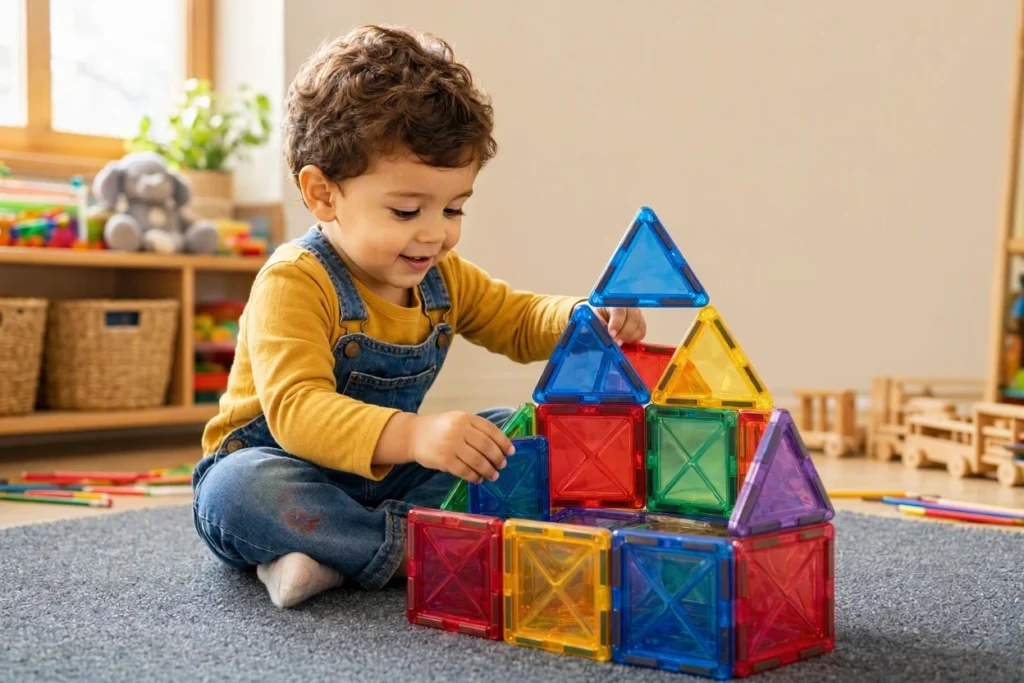
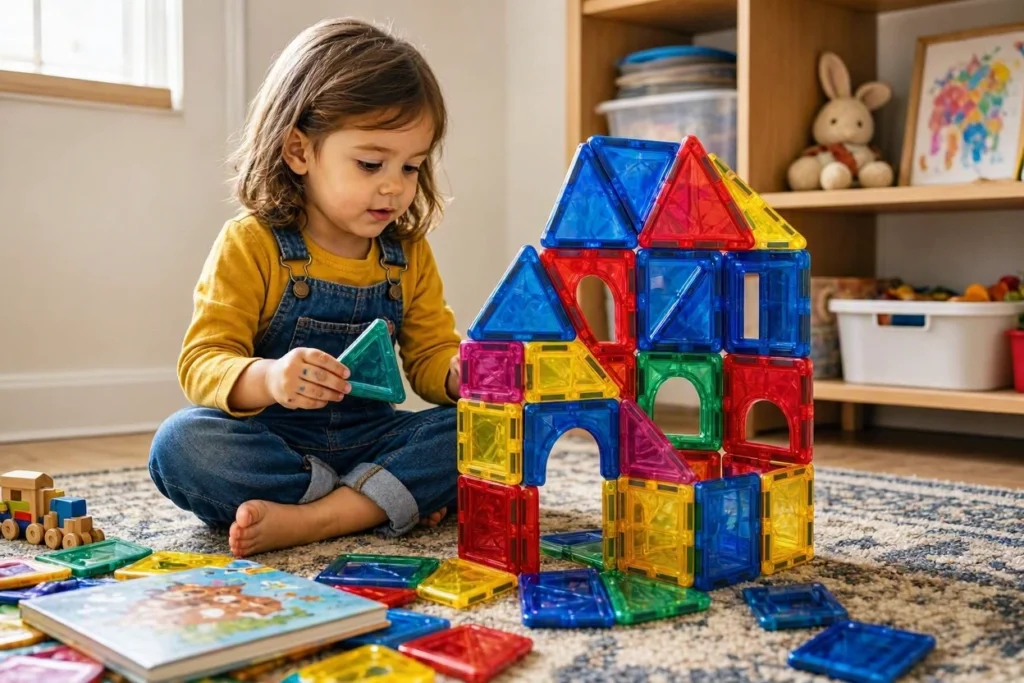
MAGNA-TILES use flat geometric pieces with magnets enclosed around their edges. Children can connect squares, triangles and other shapes to make flat patterns or build three-dimensional structures such as houses, towers and tunnels.
The manufacturer recommends its standard sets for ages 3 and up. This is important: magnetic tiles are not a suitable substitute for large toddler blocks when a child is younger than the stated age or still puts toys in their mouth.
One attraction is how quickly a design can change. A square can become a wall, a roof can be added, and the whole structure can be rearranged into something else. Children who enjoy experimenting with shapes may find this style especially engaging.
MAGNA-TILES says its tiles use ceramic ferrite magnets and advises adult supervision, regular checks for damage and immediate medical attention if a magnet is swallowed or inhaled. Any tile with a crack, opening or loose component should be taken out of play. Do not assume that a damaged magnetic toy remains safe just because it was originally sold as a children’s product.
May suit: Preschoolers and older children who meet the product’s age recommendation and enjoy making their own patterns and structures.
To compare available sizes and designs, browse MAGNA-TILES building sets on Amazon. Check the product description and packaging for the recommended age and included shapes.
LEGO: DUPLO and Standard Bricks
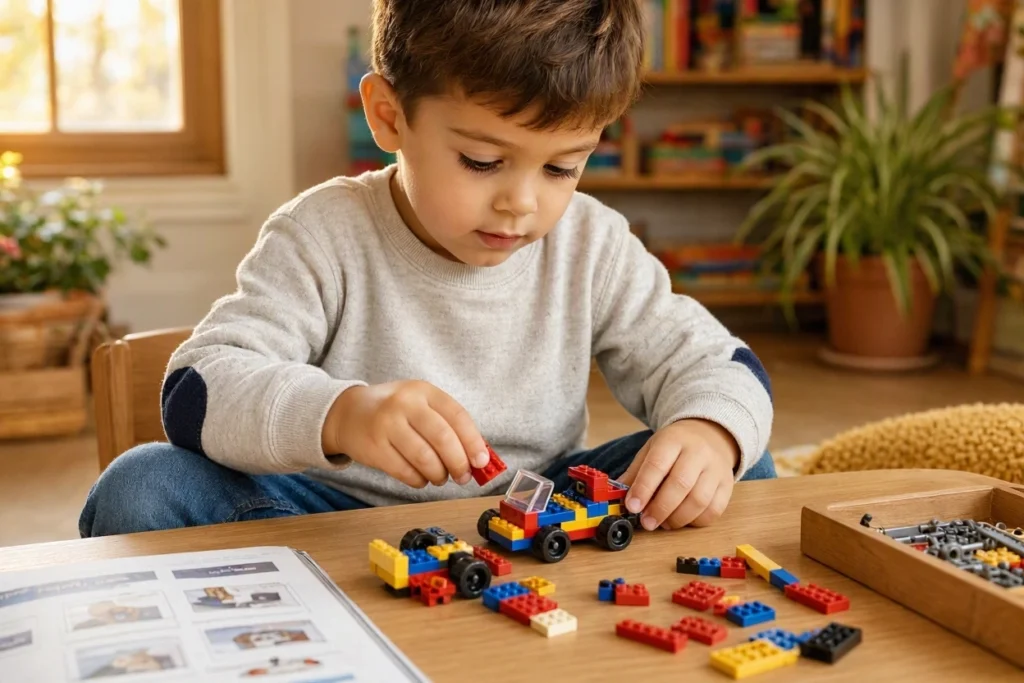
LEGO includes more than one type of building system, and the difference matters when choosing for a child. LEGO DUPLO uses larger bricks and the official LEGO guidance says its sets start at 18 months, depending on the particular product. Standard LEGO bricks are smaller; LEGO’s age guidance points to smaller-brick sets for children aged 4 and up, with the exact recommendation shown on each box or product page.
DUPLO can be used for simple towers, trains, animals and pretend houses. As children get older, standard LEGO sets offer smaller pieces and more detailed models. Some children enjoy following the numbered steps in an instruction booklet, while others use the same pieces to invent their own designs.
Before buying, check whether the set is DUPLO or standard LEGO. The brand name alone does not tell you whether the pieces are appropriate for your child’s age.
May suit: Children whose age matches the set’s label, from toddlers using DUPLO to older children ready for smaller bricks and more detailed construction.
If you are shopping for a younger builder, browse LEGO DUPLO sets on Amazon and confirm that the listing is for DUPLO rather than standard LEGO bricks.
LEGO vs. MAGNA-TILES vs. MEGA BLOKS
| Feature | MEGA BLOKS First Builders | MAGNA-TILES | LEGO |
|---|---|---|---|
| Typical starting age | Many sets labelled 1+ | Standard sets labelled 3+ | DUPLO starts at 18 months; standard LEGO varies, with many sets 4+ |
| Piece design | Large interlocking blocks | Magnetic geometric tiles | Large DUPLO bricks or smaller standard bricks |
| Building approach | Stack, connect and separate | Join shapes into flat and 3D designs | Build models or create freely |
| What to check | Exact age label and piece size | Age label and tile condition | Whether the set is DUPLO or standard LEGO |
| Possible appeal | Simple, repeatable building | Changing shapes and structures | Detailed projects and varied themes |
This is a broad comparison of product families, not a ranking of every set. Age recommendations, piece counts and features vary by individual product. Always use the current manufacturer’s information for the exact set you plan to buy.
Which Building Set May Suit Your Child?
Start with the age label, then think about what your child enjoys doing. A child who likes stacking and knocking down towers may prefer large blocks. Someone who likes making houses and geometric patterns may enjoy magnetic tiles once they are old enough for that set. A child who likes vehicles, characters or following a sequence of steps may prefer a LEGO model.
It is also fine to begin with a small, basic set. A large piece count or a complicated box design does not necessarily make a toy a better match for your family.
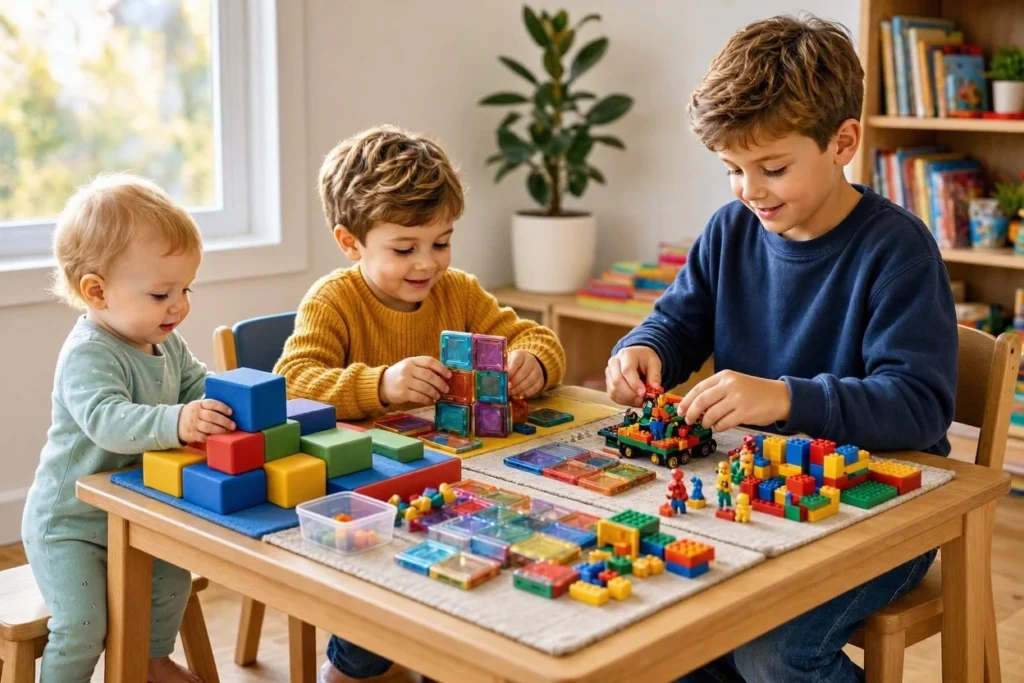
Open-Ended Building and Following Instructions
Open-ended building has no single correct result. A child can make a tower, turn it into a bridge and then decide it should become a garage. The pieces are used as the child chooses.
Instruction-led building has a different appeal. The child follows a sequence and works towards a model shown in the booklet or on the box. Completing the steps may be satisfying for children who enjoy a clear goal.
Neither approach is automatically better. Some sets allow both: children can first build the suggested model and later take it apart to make something of their own.
Simple Building Activities to Try at Home
You do not need a complicated activity plan. Try one small invitation and let your child decide how to approach it:
- Make a tower: Take turns adding one piece at a time. Notice what happens when the base is narrow or wide.
- Build a home: Make a simple shelter for a toy animal or figure.
- Create a bridge: Build a path for a toy car to travel underneath or across.
- Sort the pieces: Group pieces by colour, shape or size before building.
- Copy and change: Make a small pattern together, then invite your child to add a new idea.
For toddlers, keep activities simple and use only pieces from a set that is labelled for their age. An adult should stay close, especially when younger children are still learning not to mouth toys.
What to Check Before Buying
1. Read the age recommendation on the exact set
Do not rely on the brand name or a general age range from another set. A company may sell large toddler blocks as well as small collector or advanced building sets. Check the packaging and product page for the precise item.
2. Consider piece size and your child’s habits
If your child still puts objects in their mouth, avoid sets with small pieces and follow the age warning carefully. Consider younger siblings too: a set intended for an older child can become a hazard if its loose pieces are left where a baby can reach them.
3. Check the contents and compatibility
Product photos sometimes show accessories or extra pieces that are not included. Read the listing to confirm the number and type of pieces. Do not assume that blocks from different brands or product lines will connect or work together.
4. Think about storage and play space
A large set can spread across the floor and may need a dedicated storage box. Magnetic tiles and small bricks should be counted and put away after play, particularly in homes where younger children share the space.
Building Toy Safety: Small Parts and Magnets
Building toys should be selected and used according to their age labels. The U.S. Consumer Product Safety Commission advises parents to keep toys with small parts away from children under three because those pieces can create choking hazards. Check pieces regularly and remove anything cracked, broken or loose.
Magnetic building tiles need an additional check. The magnets are designed to be enclosed inside the tiles. If a tile cracks or opens and a magnet becomes loose, stop using it and keep it away from children. Never let children play with loose magnets or damaged magnetic pieces.
This does not mean that every magnetic tile uses the same type of magnet as high-powered magnetic ball sets. However, swallowed magnets can cause serious internal injuries, particularly if more than one is swallowed. The CPSC and the American Academy of Pediatrics advise keeping loose or high-powered magnets away from children and seeking urgent medical care if magnet ingestion is suspected. Read the CPSC magnet safety guidance and AAP advice about magnetic toys.
For any building set, follow the maker’s cleaning instructions, supervise children as appropriate for their age and store small pieces out of reach of younger siblings.
Frequently Asked Questions
Are MEGA BLOKS First Builders suitable for toddlers?
Many First Builders sets are labelled for ages 1 and up and use larger pieces. Check the age label on the exact set and supervise young children during play.
What age are MAGNA-TILES suitable for?
The manufacturer recommends its standard MAGNA-TILES sets for ages 3 and up. Check the current packaging for the set you are considering and inspect tiles regularly for cracks or damage.
Is LEGO suitable for toddlers?
LEGO DUPLO sets start at 18 months, depending on the set. Standard LEGO bricks are smaller and have different age recommendations. Check the exact product rather than assuming all LEGO sets are suitable for toddlers.
Are magnetic building tiles safe?
Use them only for children who meet the manufacturer’s age recommendation. Inspect tiles for cracks or openings and stop using any damaged piece that could expose a magnet. Keep loose magnets away from children.
Should I choose open-ended blocks or a set with instructions?
It depends on your child’s interests. Open-ended sets allow children to invent their own designs, while instruction-based sets provide a step-by-step project. Some building systems offer both options.
Can I mix LEGO, MEGA BLOKS and MAGNA-TILES?
They use different connection systems and are not generally designed to connect directly to one another. Children can use separate sets in the same play session, but check compatibility rather than assuming pieces will fit together.
There is no one building set that suits every child. Large blocks, magnetic tiles and LEGO each offer a different play experience. Start with the exact age recommendation, consider what your child enjoys and choose a set that fits your available space and supervision routine.
Sources
- U.S. Consumer Product Safety Commission – Toy Safety
- U.S. Consumer Product Safety Commission – Magnet Safety
- American Academy of Pediatrics – Magnetic Toy Safety
- LEGO – DUPLO Age Guidance
- MAGNA-TILES – Age Recommendations
- Mattel – MEGA BLOKS for Ages 1+
You may also find our guides to open-ended building blocks for toddlers and Montessori-inspired toys for 1-year-olds helpful.