
Children use their shoes hard. School days can include walking, running, climbing, playground games and sudden changes in weather. A pair that looks sturdy on the shelf may still wear out quickly if it does not fit well or suit the way a child moves. The best choice is not automatically the most expensive or the most heavily padded: it is a comfortable, well-fitting shoe with suitable materials, secure fastenings and a sole designed for the surfaces your child uses.
This guide looks at eight durable kids’ shoe options and the features worth comparing before you buy. Product names and availability can change, so check the current model, size chart, care instructions and return policy before ordering.
Table of Contents
Disclaimer: This post contains affiliate links. As an Amazon Associate, I earn from qualifying purchases at no extra cost to you.
What Makes a Kids’ Shoe Durable?
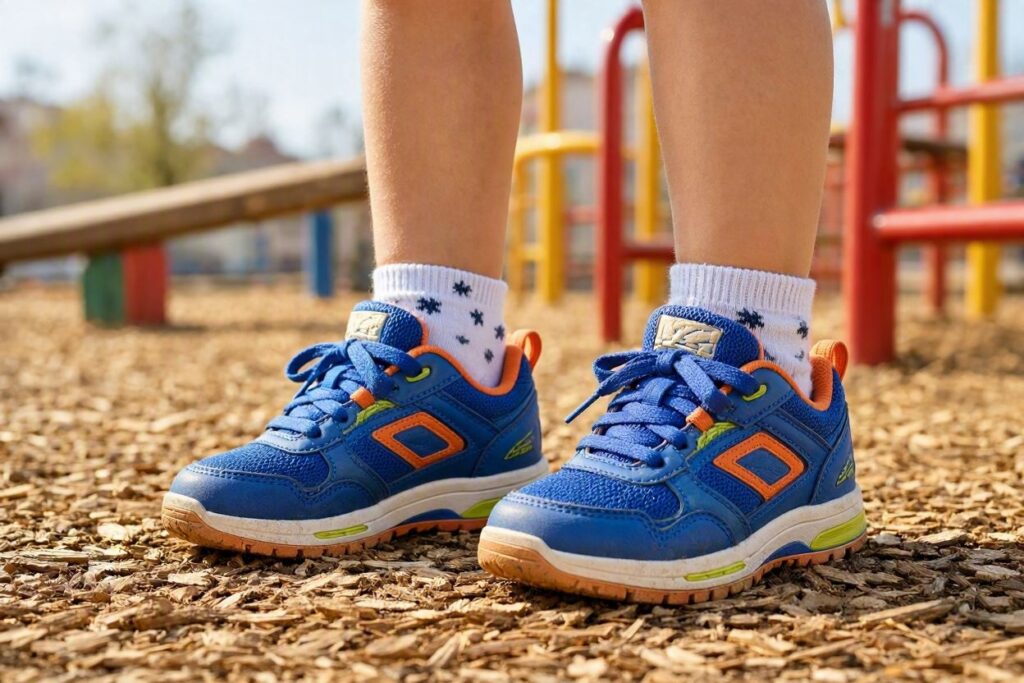
Durability comes from the whole construction, not just a thick sole or a famous logo. Check whether the outsole is firmly attached, the toe area is protected against scuffing, the upper material can handle regular use and the stitching or seams look neat. A shoe should also be comfortable from the first wear; children should not have to “break in” footwear that rubs or causes pain.
Think about where the shoes will be worn. A breathable everyday sneaker may work well for classrooms and playgrounds, while a trail-style shoe can be more suitable for uneven paths. For wet or humid conditions, quick-drying materials and clear care instructions can be useful. No single design is ideal for every child or activity.
The American Podiatric Medical Association’s children’s footwear guidance emphasizes fit, toe room, breathable materials and secure closures. These practical checks matter more than choosing a shoe simply because it is marketed as supportive or durable.
8 Kids’ Shoe Options to Compare
The examples below are starting points for comparison, not laboratory-tested rankings. Model names, construction and availability vary by season and country. Always assess the exact version available in your child’s size.
1. New Balance Kids Everyday Sneakers
New Balance offers several children’s sneaker lines in different widths and closure styles. This can make the brand worth comparing when your child needs a choice of fit. Do not assume every model is wide or has the same cushioning: check the product’s width options and size guide, then have your child try both shoes on.
Compare the current children’s range and look for a secure heel, a toe box that follows your child’s foot shape and a sole that bends at the forefoot. The older 888 V2 name in some listings may not represent the newest option.
See the New Balance kids shoe option on Amazon
2. Saucony Kids Running Sneakers
A running-style sneaker can suit children who spend much of the day walking and playing outdoors. Saucony’s children’s range includes different designs and fastening systems. Compare the outsole tread, upper material and closure on the exact model rather than assuming all shoes in the range share the same features.
For school use, check that the sole grips the surfaces your child actually walks on and that the shoe does not slide at the heel. A secure hook-and-loop or lace closure can help keep the foot in place.
3. Merrell Kids Outdoor and Trail Shoes
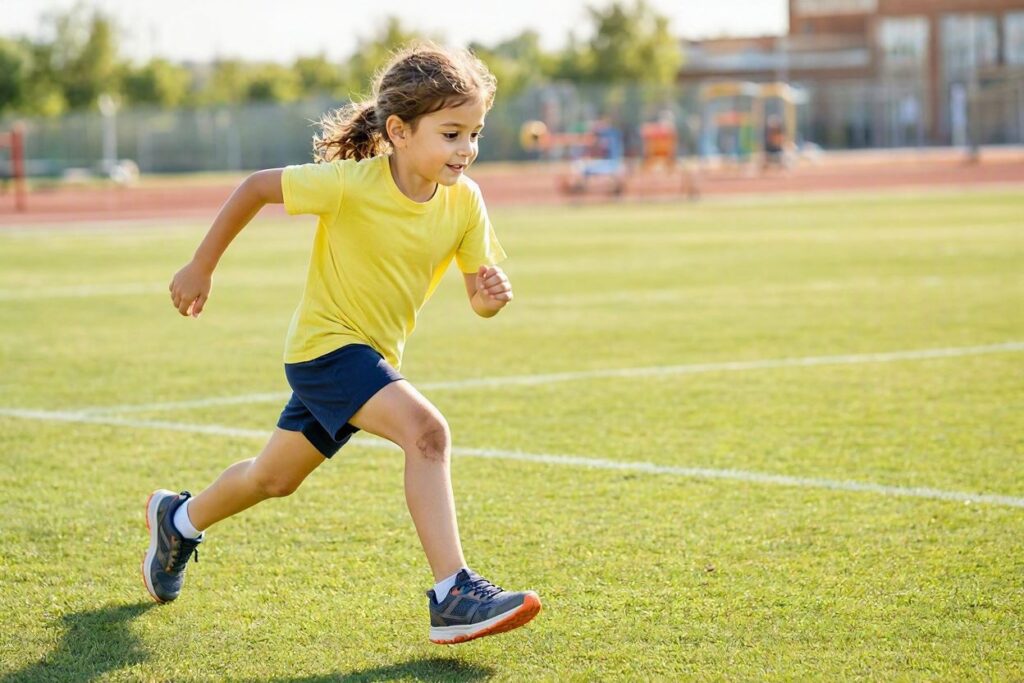
Outdoor-focused shoes from Merrell may be useful for children who regularly walk on paths, grass or uneven ground. Look at the tread pattern and the way the upper protects the toes. A more rugged shoe is not necessarily the best choice for indoor school floors, so consider whether your child needs a separate everyday pair.
4. See Kai Run Everyday Sneakers
See Kai Run makes children’s footwear in toddler and little-kid sizes, with styles that differ in shape and fastening. The Stevie II is one model families may encounter in retailers, but check current availability and sizing before relying on an older product description.
Compare the width around the toes, the heel fit and how easily the shoe fastens. A shoe that is easy for a child to put on independently is helpful only if it still holds the foot securely.
View the See Kai Run shoe listing on Amazon

5. Stride Rite Washable Sneakers
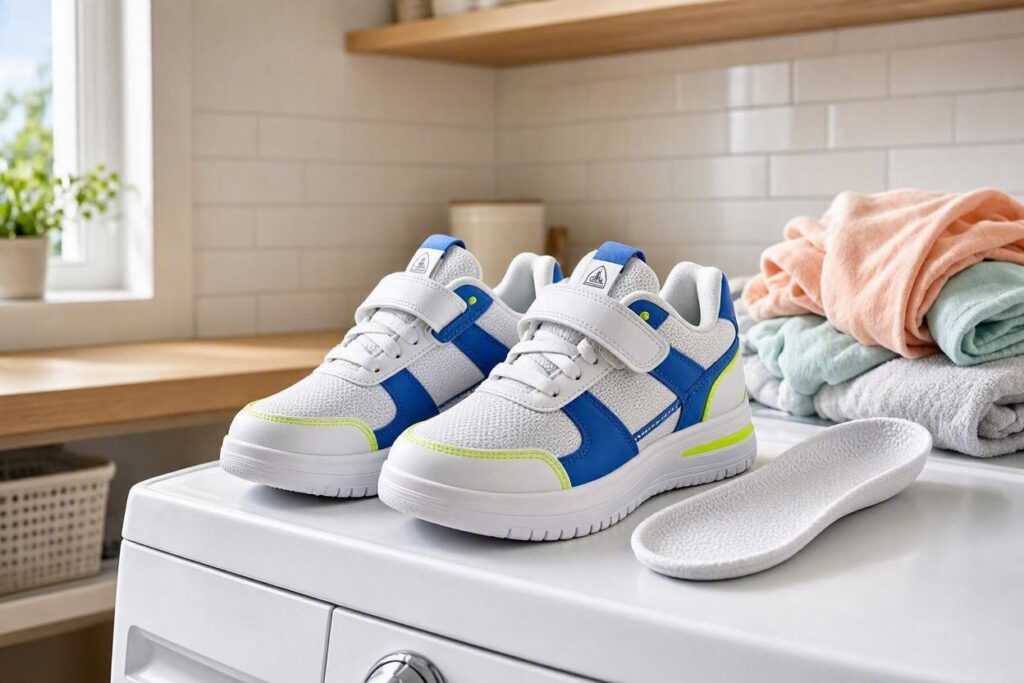
Some Stride Rite styles are marketed as washable or easy to clean. That feature can be convenient for children who come home with dusty or muddy shoes, but washing instructions differ by model. Read the label or manufacturer’s care guide before putting footwear in a washing machine; not every sneaker is machine washable.
Look for a practical closure, a comfortable lining and an upper that can be cleaned without losing its shape. If your child wears the shoes daily, having enough time for them to dry fully between wears can also help.
6. KEEN Kids Closed-Toe Outdoor Shoes
KEEN’s children’s outdoor footwear includes closed-toe designs that may suit walks, nature trips and active outdoor play. Some styles have protective toe details, but features differ between models. Check the product page for the exact upper, outsole and drying instructions.
These shoes may be more substantial than a simple school sneaker. Consider whether the fit feels comfortable and whether the design is appropriate for your child’s everyday school rules and activities.
7. Skechers Kids Athletic Sneakers
Skechers offers many children’s athletic styles, including lightweight designs and models with different fastening systems. The exact outsole and upper construction vary, so inspect the shoe rather than relying on the brand name alone. If your child is drawn to a bright or character-themed design, make sure comfort and fit still come first.
Compare the grip, flexibility at the front of the foot and how securely the heel stays in place. Avoid buying a larger size simply to make the shoes last longer; an oversized pair can slip and make walking less comfortable.
Browse the kids’ athletic shoe listing on Amazon
8. adidas Kids Court-Style Sneakers
Court-inspired sneakers such as the adidas Grand Court range have a simple, casual look that may suit some school dress codes. Synthetic uppers can often be wiped clean, but check the care label and note that a smooth-looking upper does not guarantee the shoe will withstand every type of playground use.
Before choosing a court-style shoe for active play, check its weight, flexibility and outsole grip. A style designed mainly for casual wear may not be the best match for running, sports or rough outdoor terrain.
How to Check the Fit
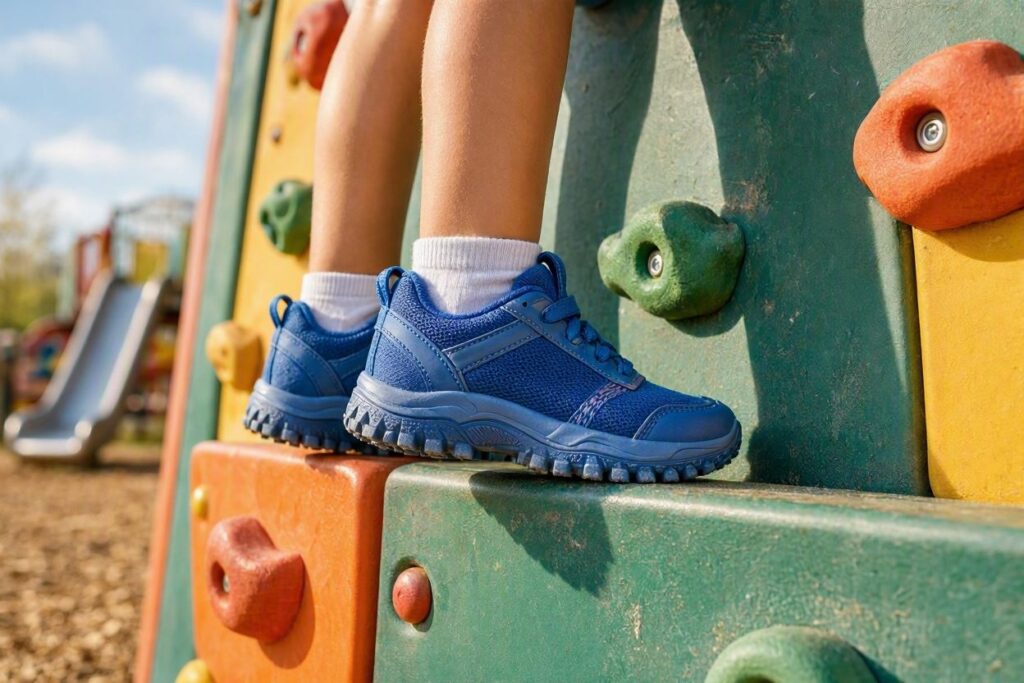
Fit is more important than the brand name. Try shoes on later in the day if possible, when feet may be slightly larger, and use the socks your child normally wears. Have your child stand up while you check both shoes. The toes should have room to move, the widest part of the foot should not feel squeezed, and the heel should stay comfortably in place.
- Check length and width: Leave suitable growing room at the front without allowing the foot to slide forward. The APMA suggests about 10–15 mm in front of the longest toe as a guide.
- Check the toe shape: Choose a toe box that follows the natural shape of the foot rather than narrowing sharply.
- Check the sole: It should bend around the ball of the foot, where the toes bend, rather than folding or twisting freely through the middle.
- Check the heel and fastening: The heel should not slip repeatedly, and laces or straps should hold the shoe comfortably.
- Watch your child walk: Ask whether anything pinches, rubs or feels uncomfortable. Shoes should feel comfortable straight away.
The Health Service Executive’s guide to choosing children’s shoes also recommends a flexible front, a wider toe area and secure fastenings. If your child has recurring foot pain, blisters, an unusual walking pattern or difficulty finding a comfortable fit, ask a qualified healthcare professional for advice.
Care Tips That Can Help Shoes Last Longer
- Brush off loose dirt after outdoor play before it becomes ground into the material.
- Use a damp cloth and mild cleaning method recommended by the manufacturer.
- Do not machine-wash or tumble-dry shoes unless the care instructions specifically allow it.
- Let damp shoes air-dry fully away from direct high heat.
- Check the outsole, seams, fastenings and inner lining regularly for damage or rough areas.
- Rotate between pairs if practical, allowing each pair time to dry between wears.
- Replace shoes that have become too small, damaged or slippery rather than continuing to use them because they still look acceptable.
For active outdoor play, you may also find our guide to choosing a balance bike for a 2-year-old useful. As with shoes, fit and suitability matter more than buying the most expensive option.
Frequently Asked Questions
How often should I check my child’s shoe size?
Check the fit regularly, especially during growth spurts. The APMA suggests checking sizing every four to six months, but some children may need checks sooner. Replace shoes when the toes feel cramped or the footwear becomes damaged.
Are expensive shoes more durable?
Not necessarily. Price and brand do not guarantee a better fit or longer life. Compare the construction, materials, closure, outsole and care instructions, then choose the pair that fits your child comfortably.
Should children wear shoes with strong arch support?
There is no single shoe design that every child needs. For most everyday choices, start with a comfortable fit and a shoe suited to the activity. If a healthcare professional has recommended a particular feature or orthotic, follow that individual advice.
Are machine-washable shoes a good choice?
They can be convenient, particularly for muddy play, but only wash a pair if its manufacturer says it is machine washable. Incorrect washing or high heat can damage adhesives, materials and shape.
What should I do if my child complains that shoes hurt?
Stop using the uncomfortable pair and check for tightness, rubbing, damaged seams or an unsuitable shape. If pain continues, or you notice limping, repeated blisters or changes in walking, consult a healthcare professional.
Final Thoughts
A durable pair of children’s shoes should do more than look tough. It should fit comfortably, allow the toes to move, stay secure during play and suit the surfaces your child uses. Compare the exact model and its care instructions, and check the fit as your child grows. A well-chosen, reasonably priced pair can be a better purchase than an expensive shoe that does not fit properly.
For a wider selection, you can browse children’s shoes on Amazon and compare current sizes, styles and product details.