
A balance bike and a baby push car may both have wheels and handlebars, but they are designed for different kinds of play. A balance bike is a small two-wheeled cycle without pedals; a child sits on the saddle and pushes along with their feet. A foot-to-floor push car is usually a low, four-wheeled ride-on that the child moves by pushing against the ground. Neither should be confused with a stand-behind push walker.
Disclaimer: This post contains affiliate links. As an Amazon Associate, I earn from qualifying purchases at no extra cost to you.
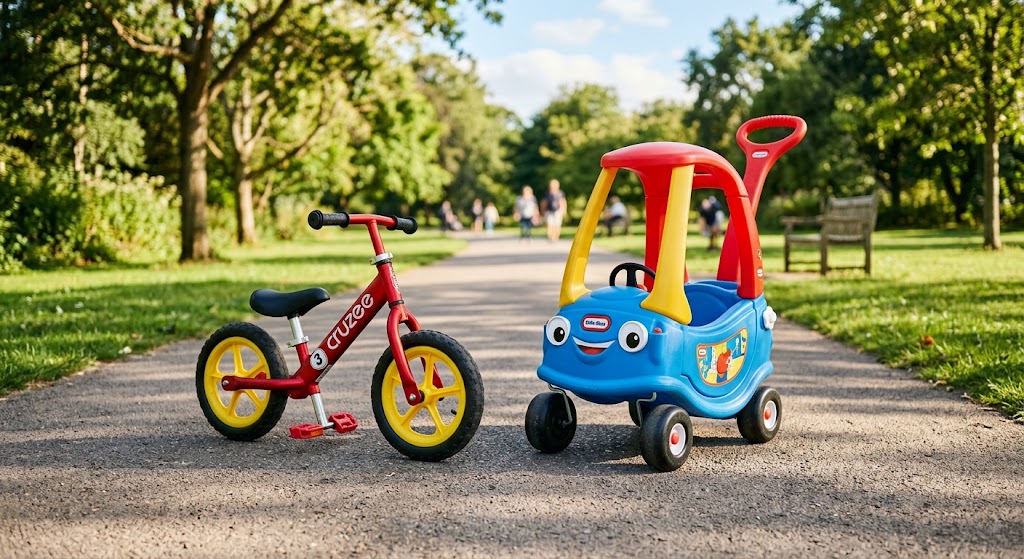
How the two toys are used
Balance bikes
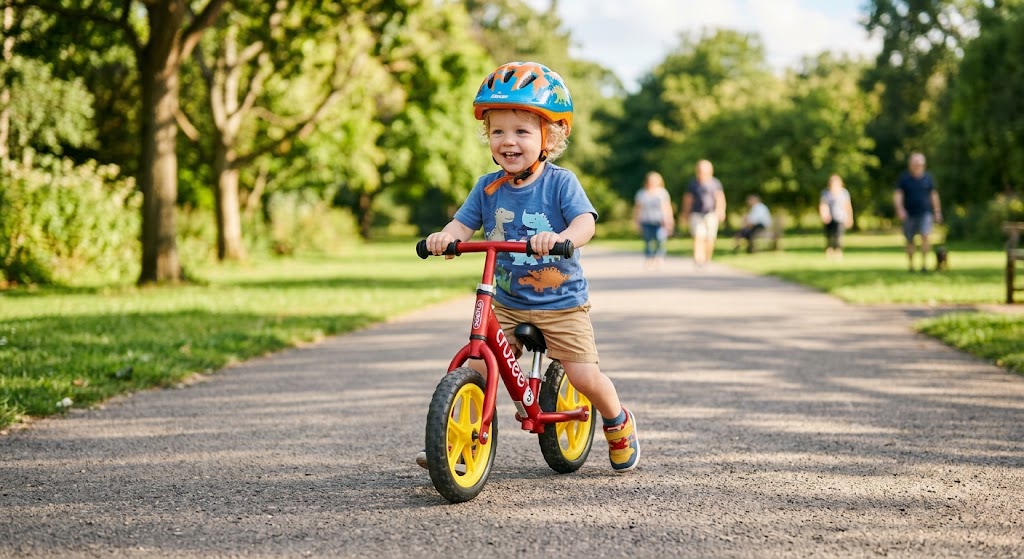
On a balance bike, the child sits on a saddle, holds the handlebar and uses their feet to move forward. As confidence grows, some children begin to lift their feet briefly and glide. This requires the child to be comfortable sitting astride, steering and controlling their speed with their feet. Follow the manufacturer’s minimum age, height and inseam guidance.
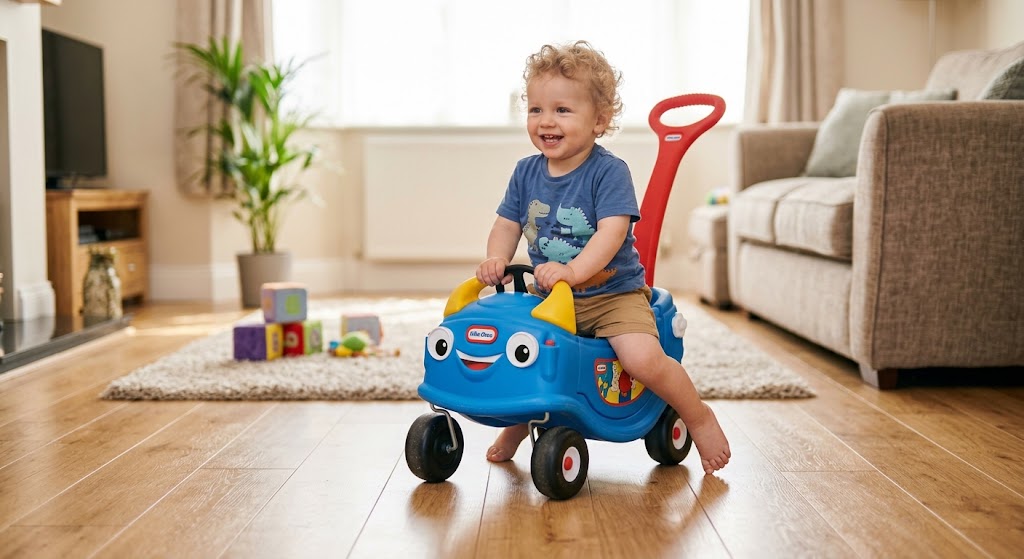
Foot-to-floor push cars
A push car has a seat and a broad wheelbase. The child sits and moves by pushing with one or both feet. It may be a more familiar shape for a young toddler, but the seat height, foot reach, steering and stability still need to suit the child. Some products are intended for children who can already sit steadily and move their feet confidently.
What skills do they offer practice with?
A balance bike gives a child opportunities to practise steering, moving forward and gradually managing balance on two wheels. A foot-to-floor car offers practice with pushing, turning and judging space while seated. These activities can be enjoyable, but no toy guarantees that a child will learn to walk, cycle or develop a particular skill by a certain age.
| Feature | Balance bike | Foot-to-floor car |
|---|---|---|
| Wheels | Usually two | Usually four |
| Position | Sitting astride a saddle | Sitting on a low seat |
| Movement | Pushes with feet, may glide | Pushes along the floor with feet |
| Main fit check | Inseam, saddle height and reach | Seat height and ability to reach floor |
| Typical use | Open, smooth riding area | Clear indoor or outdoor flat area as approved |
How to decide which is appropriate
- Can the child sit securely and follow simple directions?
- Can they reach the floor or pedals comfortably while seated?
- Does the child have enough space to turn and stop?
- Does the product’s age, height and weight guidance match the child?
- Can an adult supervise closely in a suitable area?
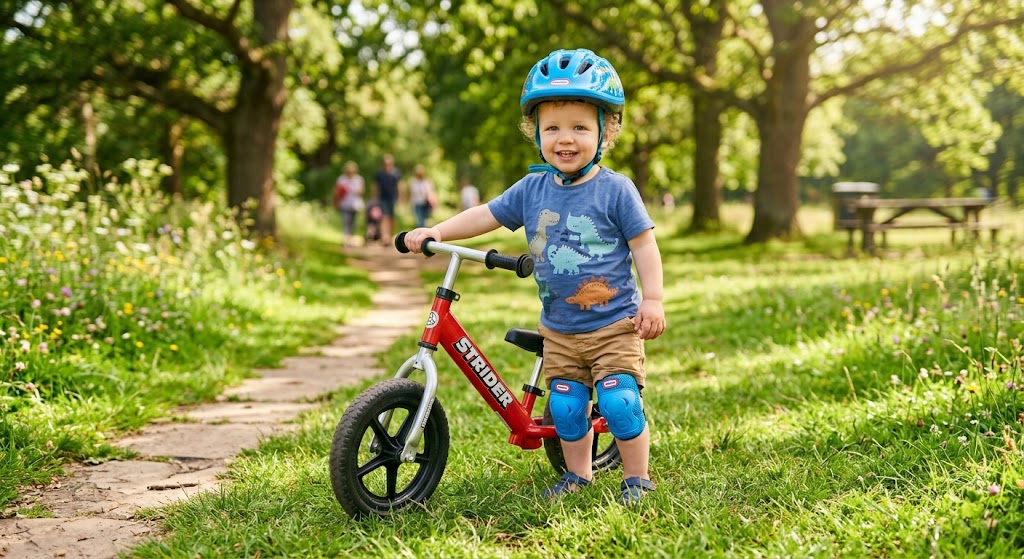
Safety for both types
Use either toy on a flat, clear area away from roads, stairs, pools and steep slopes. For a balance bike, follow the manufacturer’s advice on a correctly fitted helmet and other protective equipment. Check brakes, steering, wheels and fasteners. For a push car, make sure the child can place their feet on the ground and that the seat and base remain stable during use. Supervise continuously.
There is no need to rush the transition
A child does not have to use a push car before a balance bike, or a balance bike by a particular birthday. Some children enjoy one and ignore the other. Let the child’s comfort, physical readiness and the product’s instructions guide the choice. Plenty of ordinary movement and outdoor play remain important.

Which one should you choose?
Choose a balance bike when the child is ready to sit astride, reach the ground and practise steering a two-wheeled cycle. Choose a foot-to-floor car when a seated four-wheeled ride-on better matches the child’s current abilities and play space. If the fit is not right yet, wait rather than trying to make the child use it.
For a closer look at ride-on cars for younger toddlers, see our guide to push toys and foot-to-floor ride-ons.
Balance Bike and Push-Car Examples
The examples below illustrate two different product types. Compare each model’s age and size guidance, frame or seat fit, wheel design and helmet requirements with the manufacturer’s instructions before deciding.
- SEREED Baby Balance Bike — a four-wheel first-riding model listed for ages 12–24 months.
- SEREED Toddler Balance Bike — a no-pedal bike listed for ages 2–5; check size and readiness.
- Radio Flyer Push Around Buggy — a foot-powered push car option; check the current age and weight limits.
Frequently Asked Questions
What is the main difference between a balance bike and a push car?
A balance bike is a two-wheeled cycle that a child moves with their feet while learning to balance and steer. A foot-to-floor push car is a seated four-wheeled ride-on moved by pushing against the floor.
When is a child ready for a balance bike?
Look for a model that allows the child to sit comfortably with both feet reaching the ground and to steer safely. Follow the maker’s age and size guidance; readiness varies.
Does a push car prepare every child for a balance bike?
No fixed progression is required. Some children enjoy both, while others prefer one or neither. A push car is not a necessary step before learning to use a balance bike.
Does a balance bike replace a helmet?
No. Use a correctly fitted helmet and follow the bike manufacturer’s safety instructions. Choose a safe, traffic-free practice area and supervise the child.
Sources
Health Canada – Play Time: Ride-On Toys and Battery-Operated Toys