
As parents, caregivers, and educators, we invest in educational toys with the best intentions—to spark imagination, foster cognitive development, and encourage problem-solving. However, while we focus on the developmental benefits of playthings, an equally critical factor often gets overlooked: the chemical safety and structural purity of the materials themselves.
Young children, especially infants and toddlers, explore their environment through mouthing, touching, and close physical contact. If toys contain hidden toxins like phthalates, heavy metals, or toxic finishes, daily play can unwittingly expose developing bodies to harmful chemicals. Choosing genuinely safe educational toys requires looking beyond attractive packaging and understanding what materials are actually going into your home.
In this comprehensive guide, we present an essential non-toxic checklist to help you evaluate toy safety, identify hidden hazardous chemicals, and select materials that promote healthy, worry-free learning.
In This Article
“Why Chemical Safety Matters in Safe Educational Toys”
Children are far more vulnerable to toxic chemical exposure than adults. Their organ systems are still developing, their metabolism is faster, and their hand-to-mouth behaviors are a natural part of sensory exploration.
When toxic substances are present in play materials, long-term health risks can emerge, including hormonal disruption, developmental delays, and respiratory sensitivities. Ensuring that your child’s play environment is free from chemical hazards creates a safe foundation for physical and cognitive growth.
According to safety guidelines published by the World Health Organization (WHO), reducing environmental toxin exposure during early childhood is crucial for long-term neurological and physical development.
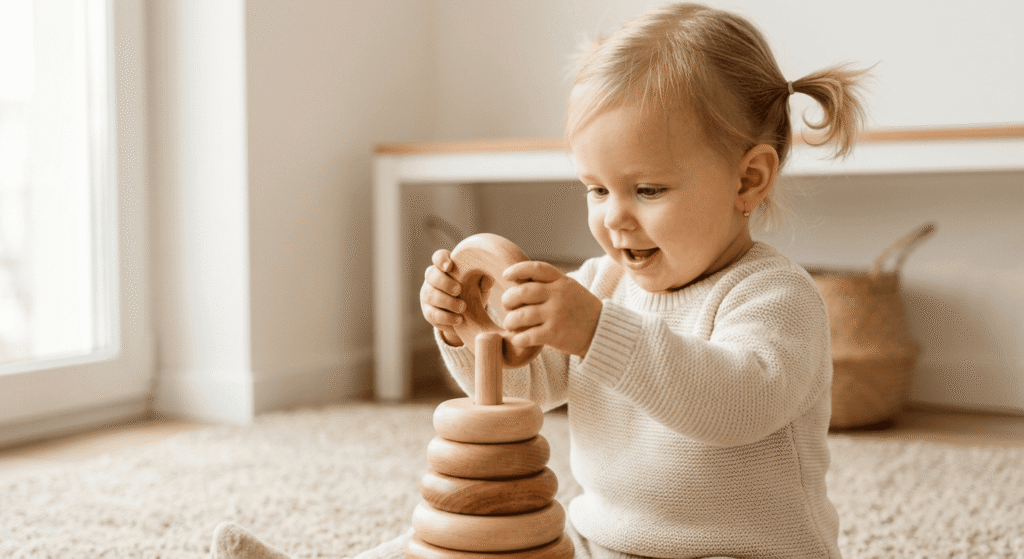
Common Hidden Toxins in Toys to Avoid
Before jumping into our non-toxic checklist, it is essential to recognize the most common hazardous materials historically found in mass-produced plastic and painted toys:
- Phthalates & PVC (Polyvinyl Chloride): Chemical softeners used to make plastic soft and flexible. They are known endocrine disruptors linked to hormonal imbalances.
- BPA (Bisphenol A) & BPS: Chemicals found in hard polycarbonate plastics that can mimic estrogen in the body.
- Heavy Metals (Lead, Cadmium, Arsenic): Often present in cheap paints, lacquers, or low-grade metal fasteners. Lead ingestion poses severe risks to brain development.
- Flame Retardants (PBDEs): Added to stuffed animals or foam play mats, these bioaccumulative chemicals are linked to neurodevelopmental issues.
- Formaldehyde & VOCs: Common in cheap composite wood toys (like MDF or particleboard) held together by synthetic glues.
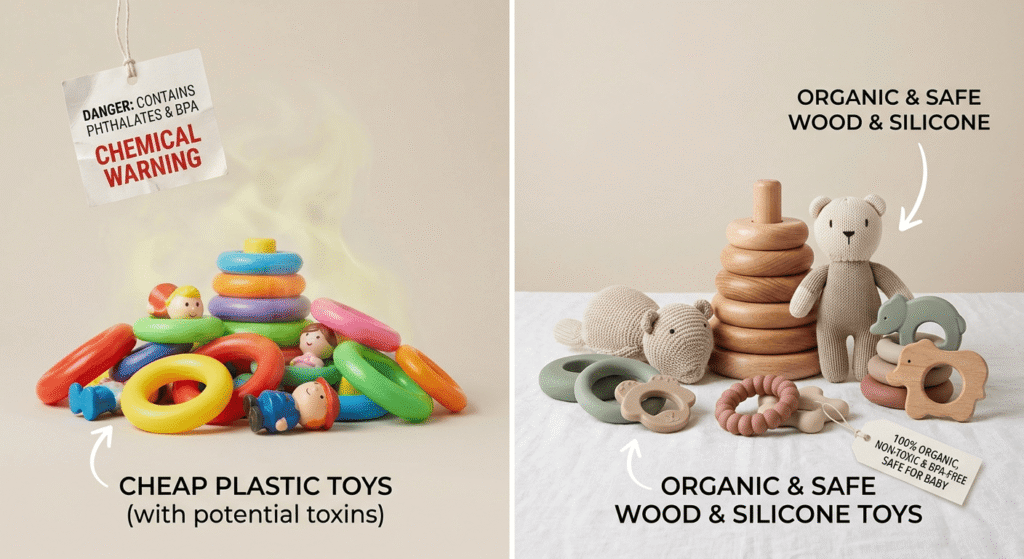
The Ultimate Non-Toxic Checklist for Safe Educational Toys
Use this practical checklist every time you shop for new learning tools or audit your child’s existing toy collection:
1. Opt for Unfinished or Natural Water-Based Finished Wood
Solid natural woods—such as beech, maple, rubberwood, or birch—are naturally non-toxic, durable, and antimicrobial. Ensure the wood is sealed with natural beeswax, organic vegetable oils, or certified non-toxic water-based paints.
2. Check Plastic Safety Codes (#2, #4, and #5 Are Safest)
If purchasing plastic educational toys or building blocks, look for food-grade, BPA-free, and phthalate-free plastics. Check the recycling symbol on the bottom:
- Safe Plastics: #2 (HDPE), #4 (LDPE), and #5 (PP).
- Plastics to Avoid: #3 (PVC), #6 (Polystyrene/Styrofoam), and #7 (Other, often containing BPA).
3. Choose Food-Grade Silicone
100% food-grade silicone is an excellent, non-toxic alternative to plastic for stacking cups, teethers, and sensory tools. It is hypoallergenic, free from BPA and phthalates, and resistant to bacteria growth.
4. Look for Organic, Unbleached Textiles
For plush toys, soft books, or fabric play sets, select organic cotton, wool, or linen. Ensure dyes are GOTS-certified (Global Organic Textile Standard) or OEKO-TEX Standard 100 certified to guarantee freedom from harmful azo dyes and heavy metals.
5. Inspect Structural Quality and Edge Smoothness
Safety is physical as well as chemical. Inspect toys for sharp edges, loose small parts (choking hazards), weak seams on plush toys, or exposed magnets and batteries.
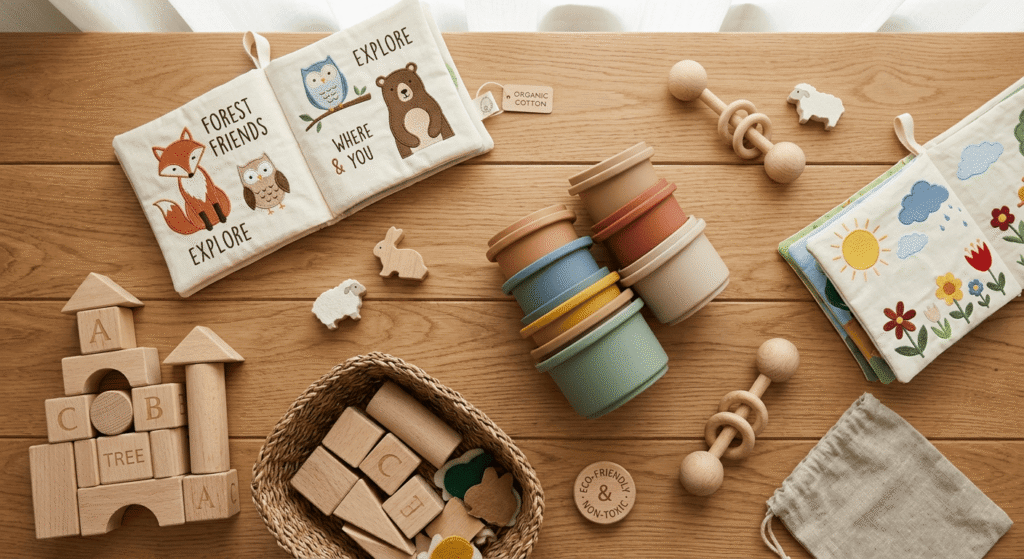
Recognized Non-Toxic Safety Certifications to Look For
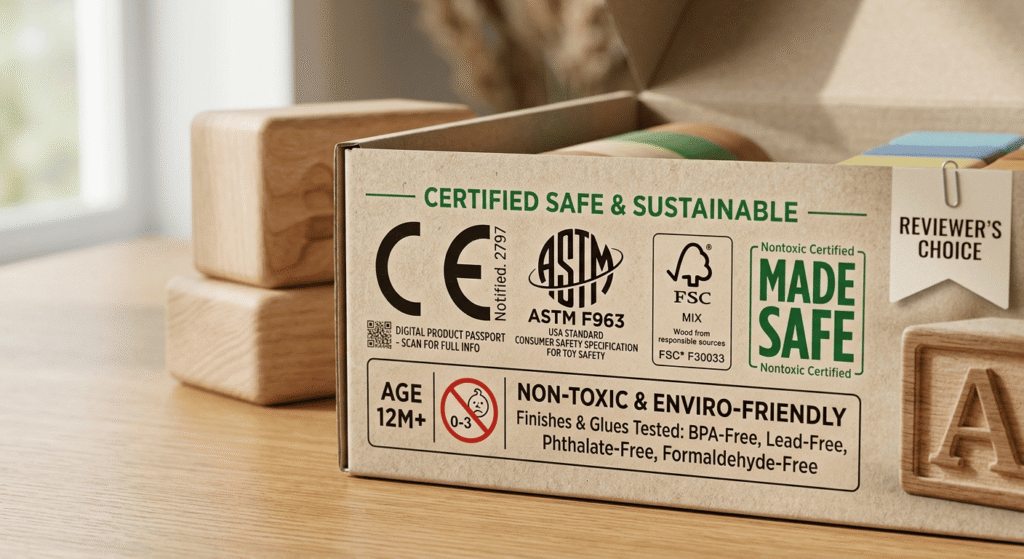
Navigating toy packaging can be confusing with terms like “eco-friendly” or “all-natural.” Look for these official, independently verified safety certifications to ensure true non-toxic standards:
- ASTM F963 (US Standard): Mandatory testing standard ensuring toys are free from hazardous heavy metals and physical choking hazards.
- EN71 (European Standard): Strict European toy safety specification regulating chemical content and structural safety.
- CE Mark: Indicates compliance with European health, safety, and environmental protection standards.
- GOTS (Global Organic Textile Standard): Verifies organic status from raw material harvesting through environmentally responsible manufacturing.
- GREENGUARD Gold Certification: Guarantees that play furniture and mats meet strict chemical emissions standards for indoor air quality.
For additional resources on national safety standards and recent product recalls, visit the United States Consumer Product Safety Commission (CPSC).
How to Clean and Maintain Non-Toxic Toys Safely
Even non-toxic toys can collect dirt, bacteria, and allergens over time. Cleaning them with harsh chemical sprays defeats the purpose of choosing non-toxic materials! Follow these gentle cleaning methods instead:
- Wooden Toys: Wipe down with a cloth dampened in warm water and mild Castile soap. Never submerge wooden toys in water, as moisture can cause warping. Periodically coat with organic beeswax polish.
- Fabric Toys: Machine wash on a gentle cycle using fragrance-free, eco-friendly detergent, and air dry in the sun.
- Silicone and Plastic Toys: Wash in warm, soapy water or sanitize in a 1:1 mixture of water and distilled white vinegar.

Final Thoughts: Prioritizing Safety in Play
Investing in safe educational toys made from clean, non-toxic materials protects your child’s immediate physical health while supporting their long-term growth and cognitive focus. By following our non-toxic checklist and favoring open-ended natural materials, you can create a wholesome, inspiring learning space where your child can explore freely.
Keep this checklist handy for your next shopping trip and enjoy peace of mind knowing your child is learning safely!
“To boost your child’s creativity and imagination through open-ended play, check out the [Best Building Blocks for Toddler Imagination].”
“If you want to support your child’s language skills, explore these [Top Language Development Toys for 18-Month-Olds to Encourage Early Speech].”