
Toddlers learn by doing. They pick things up, fit pieces together, open and close lids, copy everyday actions and repeat activities that interest them. The right interactive toy gives a child a safe, enjoyable way to explore these actions, while leaving plenty of room for conversation and play with a caregiver.
There is no single toy that every toddler needs, and a toy cannot guarantee a particular developmental outcome. Instead of focusing on flashing lights or complicated features, look for sturdy, age-appropriate toys that invite your child to try something, make a choice and explore at their own pace. Here are eight types of hands-on activity toys to compare.

Disclaimer: This post contains affiliate links. As an Amazon Associate, I earn from qualifying purchases at no extra cost to you.
Table of Contents
Why Hands-On Play Matters
When a toddler stacks a block, turns a page or places a shape into an opening, the child is exploring how objects work. Repeating an action can help a child notice what changes and what stays the same. These everyday play moments also give adults natural chances to name objects, describe actions and respond to a child’s interests.
The CDC’s guidance on child-led play encourages parents to follow a child’s lead, describe what the child is doing and use safe, age-appropriate play materials. A simple set of blocks or a few household play objects can be just as engaging as a toy with many electronic features.
8 Interactive Educational Toy Types to Consider
These are broad toy categories rather than a tested ranking of individual products. Check the age label, dimensions, materials and included parts on the exact product before buying. Children of the same age can also have different interests and abilities.
1. Large-Peg Fine Motor Activity Toys
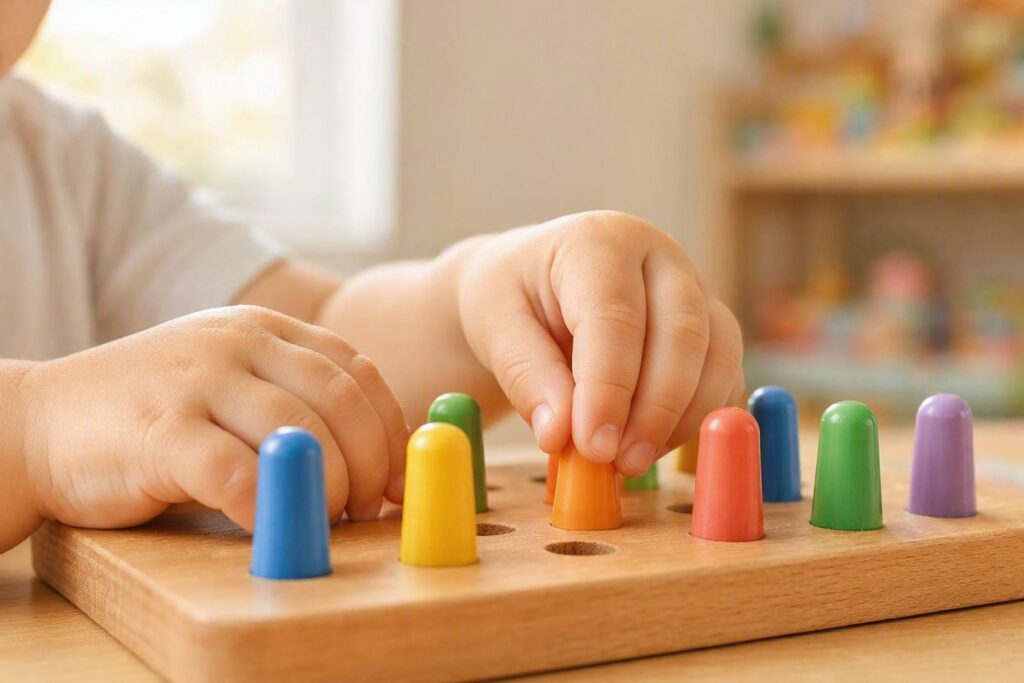
Peg toys invite children to pick up large pieces and place them into matching holes. A hedgehog-shaped peg toy is one familiar example: the child adds and removes chunky pegs from the toy’s back. An adult can make the activity more conversational by naming colours, counting a few pieces or simply describing what the child is doing.
Check that the pegs are large enough for the intended age group and cannot easily break into smaller pieces. Avoid sets with small detachable parts for children who still mouth toys.
Browse large-peg fine motor activity toys on Amazon
2. Simple Latch and Activity Boards
Activity boards may include large doors, sliders, turning pieces and simple latches. Toddlers can explore how a part moves and what is revealed when they open or close it. Choose a board made for your child’s age, with securely attached parts, smooth edges and no small keys or detachable hardware.
Some busy boards are designed for older children and contain small fasteners, cords or components that are unsuitable for toddlers. Inspect the board carefully rather than assuming every product labelled Montessori or sensory is safe for every age.
3. Shape Sorters and Matching Toys
Shape sorters let children try different pieces in matching openings. Some sets use familiar shapes, while others use themed pieces such as pretend cupcakes or animals. At first, a toddler may try several openings before finding the right one. That trial and error is part of the play.
Look for pieces that are easy for small hands to hold and too large to present a choking risk. Avoid describing one specific shape sorter as a must-have: a basic, well-made sorter can provide the same kind of matching experience.
See shape-sorting activity toys on Amazon

4. Child-Friendly Music and Rhythm Toys
A small drum, shaker or simple toy keyboard can give a toddler a chance to experiment with sound. Try tapping a slow rhythm and letting your child respond, or take turns making quiet and loud sounds. You do not need a large electronic activity centre to enjoy music together.
If you choose a battery-operated toy, check that the battery compartment is secured with a screw or child-resistant closure. Avoid toys that are excessively loud, and make sure any removable pieces are suitable for your child’s age.
5. Large Interlocking Building Blocks
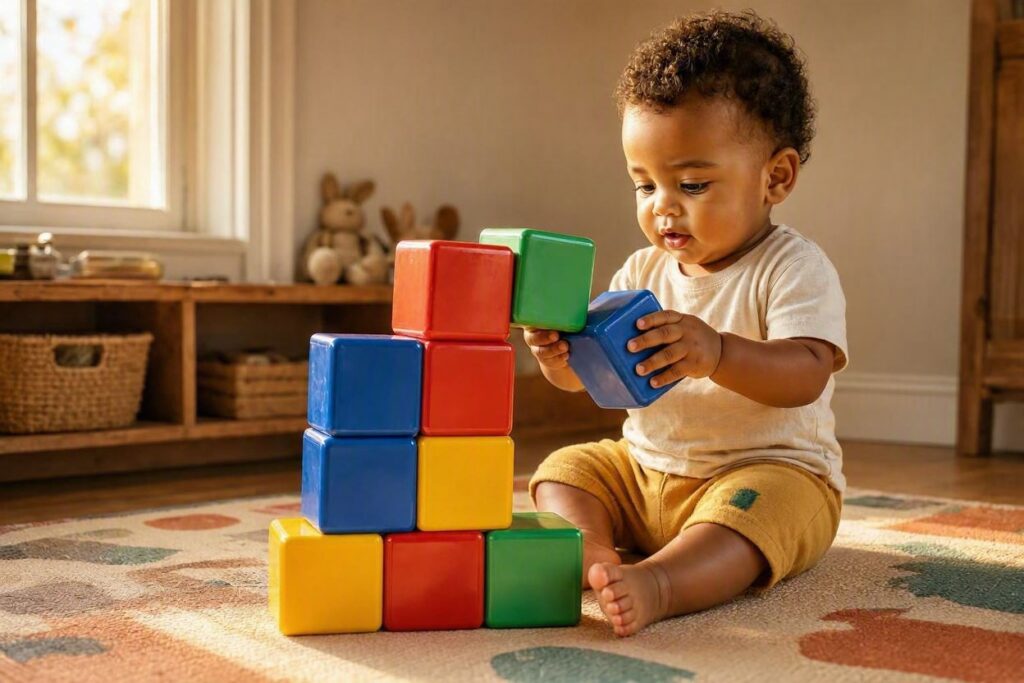
Large, non-magnetic interlocking blocks can be used to build short towers, simple walls and pretend structures. Children can connect and separate pieces, then start again in a different way. Choose a set with pieces sized for toddlers and follow the manufacturer’s age recommendation.
Important: Do not treat small magnetic building tiles or high-powered magnetic blocks as a safe substitute for ordinary toddler blocks. Magnets can cause severe internal injuries if swallowed. For toddlers, choose large non-magnetic blocks and keep magnetic construction toys designed for older children out of reach.
The U.S. Consumer Product Safety Commission’s magnet safety information explains the serious risks associated with swallowed high-powered magnets.
6. Chunky Wooden Peg Puzzles
Simple peg puzzles feature a small number of large pieces with knobs or handles. Choose familiar pictures such as animals, vehicles or everyday objects, and let your child decide whether to try fitting the pieces or simply naming the pictures first.
Sound-enabled puzzles are available, but electronic sounds are not essential to the activity. If you choose one, check the battery compartment, volume and durability of the pieces. A plain wooden puzzle can be easier to clean and use in different ways.
7. Pretend-Play Doctor Kits
A pretend doctor kit can include a toy stethoscope, a large toy thermometer and other role-play pieces. Children may enjoy copying familiar routines, taking turns being the patient and pretending to care for a doll or teddy bear. Follow your child’s lead; there is no need to turn pretend play into a lesson or expect it to remove anxiety about real appointments.
For toddlers, choose a simple kit with large, sturdy pieces. Avoid tiny accessories, sharp tools, removable batteries and pieces that could be mistaken for real medical equipment. Keep the play items separate from actual medicines and medical supplies.
8. Sorting and Pretend Grocery Sets
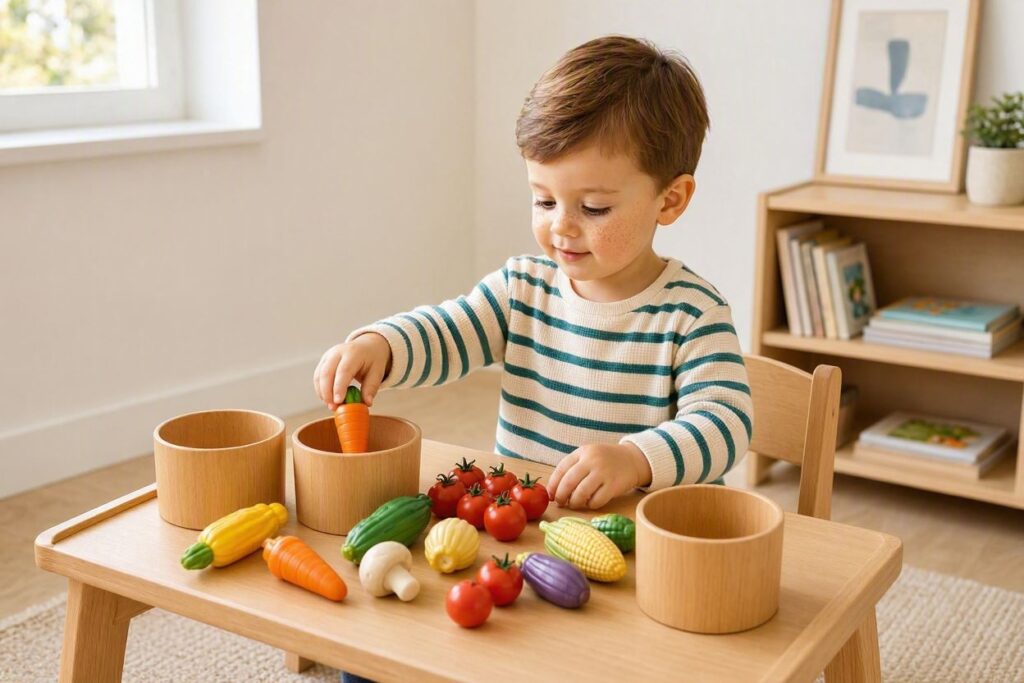
Pretend grocery sets may include large toy fruits, vegetables, baskets and containers. Children can sort the pieces, place them in a basket or copy the steps of shopping and preparing food. You can join in by naming the objects or asking your child which item they want to put away next.
Check the size and attachment of every piece. Toy food can look realistic, so keep it separate from real food and do not leave small accessories where a younger sibling can reach them.
Browse pretend grocery and sorting play sets on Amazon
How to Choose Toys for Your Toddler
A useful toy does not have to be expensive or complicated. Before buying, think about your child’s interests, the space available at home and how easily the toy can be cleaned and stored.
- Follow your child’s interests: Choose an activity that matches what your toddler already enjoys, such as sorting, building, music or pretend play.
- Check the age label: Use the manufacturer’s age guidance as a starting point, then consider your child’s individual abilities and mouthing habits.
- Prefer flexible play: Toys that can be used in more than one simple way may remain interesting for longer.
- Look at construction: Check seams, joints, edges, detachable parts and whether the toy can be cleaned as directed.
- Keep the collection manageable: A few varied toys are often easier to use and store than many similar sets. Rotate them when your child loses interest.
- Make time to play together: Talking, taking turns and following your toddler’s lead can make ordinary play more engaging.
For more ideas, see our guide to interactive storybooks for toddlers, which explores shared reading and simple ways to enjoy books together.
Important Toy Safety Checks
Toddlers often explore objects with their mouths, and age labels matter. Before each play session, check for loose parts, cracks, sharp edges or damaged components. Keep small parts, loose magnets and button batteries away from young children. Toys with batteries should have secure compartments that a child cannot open.
The American Academy of Pediatrics’ toy-buying guidance advises parents to consider age recommendations, small parts, button batteries and high-powered magnets. Supervise play in a way that matches the toy and your child’s abilities. If a toy breaks, stop using it until it has been safely repaired or replaced.
Store toys after play so pieces do not become trip hazards. If several children of different ages share a room, keep toys with small components or magnets used by older children in a separate, secure place.
Frequently Asked Questions
What makes an educational toy interactive?
An interactive toy invites a child to take an action, such as fitting a shape, turning a part, building a tower, making music or pretending. The child actively explores rather than only watching the toy operate.
Do toddlers need electronic educational toys?
No. Simple blocks, puzzles, books, pretend-play objects and everyday safe household items can provide plenty of opportunities for play. Electronic features are optional, not a requirement for learning.
How many activity toys should I buy?
There is no required number. Start with a small variety that suits your child’s interests and available play space. You can rotate toys rather than continually adding new ones.
Are magnetic building toys suitable for toddlers?
Small or high-powered magnets can cause severe injuries if swallowed. For toddlers, choose large non-magnetic blocks and keep magnetic building toys intended for older children securely out of reach.
Should I play with my toddler every time they use a toy?
Not every moment needs adult direction. Stay close enough to supervise, and join in when your child invites you. Following their lead, describing what they are doing and taking turns can make shared play enjoyable.
Final Thoughts
Interactive educational toys are most useful when they suit a child’s age, interests and abilities. Peg toys, shape sorters, simple puzzles, building blocks and pretend-play sets all offer different ways to explore through play. Choose carefully, check for hazards and remember that your time, attention and conversation are just as valuable as the toy itself.
You can also browse toddler learning activity toys on Amazon and compare current product details, age guidance and customer feedback before deciding.