
Pokémon collecting can be much more than opening a pack and putting cards in a pile. Children may enjoy choosing a favourite character, arranging a small collection, building a scene for pretend play, or learning a simple card game with an adult. The best items depend on the child’s age, interests and how they like to play—not on how many products they own.
Disclaimer: This post contains affiliate links. As an Amazon Associate, I earn from qualifying purchases at no extra cost to you.
Some children prefer figures and pretend adventures, while others enjoy sorting trading cards or learning the rules of the Pokémon Trading Card Game. You do not need to buy every type of accessory. Start with one item that suits your child’s current interest, check the manufacturer’s age guidance, and see whether it gets regular use.
What to Look for in Pokémon Toys and Accessories
Think about the kind of play your child enjoys. Figures and plush toys suit imaginative play; building kits offer a hands-on project; and card binders or deck boxes help collectors keep their cards together. If your child wants to learn the trading card game, a ready-to-play deck is a more useful starting point than buying random booster packs alone.
Pokémon’s official support information explains that preconstructed decks have a fixed set of 60 cards and are designed to be playable straight out of the box. Booster packs contain randomly selected cards and are mainly for people who want to expand or vary a collection. Check the current product details and local availability before buying: Pokémon Trading Card Game product types.
9 Pokémon Toys and Trading Card Accessories to Consider
1. Pokémon Figure and Poké Ball Sets
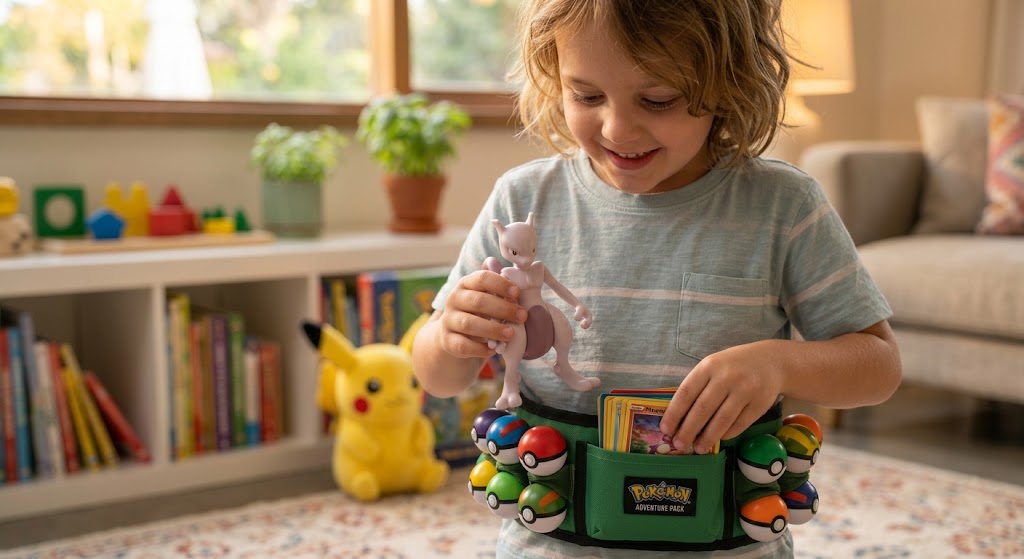
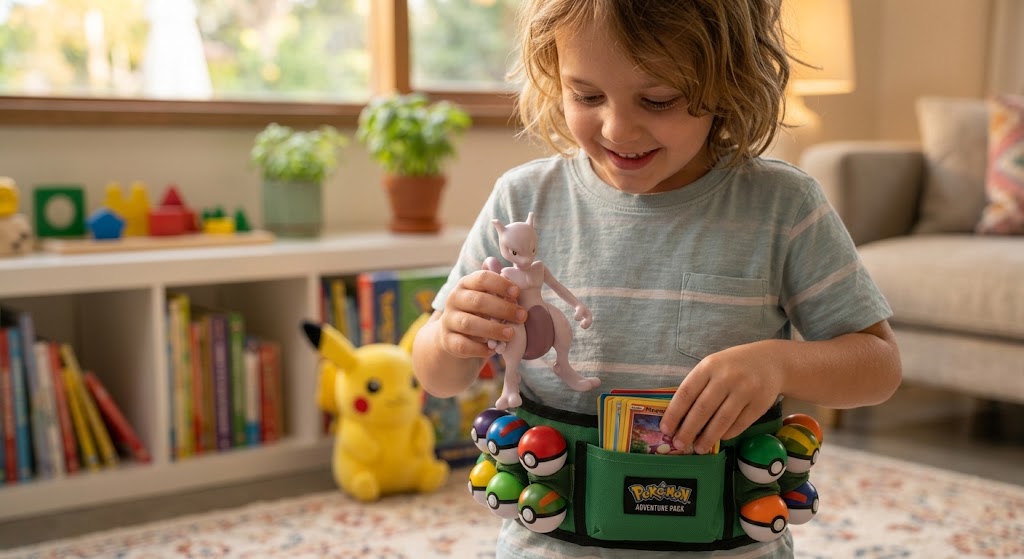
Small character figures and compatible Poké Ball playsets can help children act out their own trainer stories. They are a good fit for children who enjoy moving characters between imaginary places or recreating scenes from the games and shows. Look closely at the age label and the size of the pieces: some sets contain small figures that are unsuitable for children who still put objects in their mouths.
For a child who enjoys carrying figures around, a belt-style set may be appealing. Compare the number of figures included, how securely each piece attaches, and whether the belt can be adjusted comfortably. You can browse Poké Ball belt sets on Amazon.
2. Pokémon Plush Toys
A plush character is a softer, quieter option for children who like cuddly toys or make-believe conversations. Before choosing one, inspect the stitching, seams, eyes and any attached decorations. For younger children, choose a product specifically labelled as suitable for their age and avoid plush toys with detachable small parts.

3. Pokémon-Themed Building Sets
Building sets let children assemble a character or scene by following illustrated steps. They may suit children who enjoy construction more than collecting cards. Check the recommended age, the number and size of pieces, and whether the instructions match your child’s patience and experience. Keep sets with small bricks away from children who may swallow them.
For more general construction ideas, see our guide to building block sets for kids.
4. Figure Playsets and Battle-Style Arenas
A playset or arena gives figures a defined place for pretend battles and storytelling. The term “battle arena” can describe different products, so check what is actually included: some are simple play surfaces, while others have moving parts or launch mechanisms. Look for stable construction, smooth edges and clear instructions. Avoid launching pieces towards faces or using a product in a way the manufacturer does not describe.
Compare the dimensions and storage requirements before ordering. Some sets need a table or floor space and may not fold away neatly. You can browse Pokémon-themed playsets on Amazon.
5. Trading Card Binders
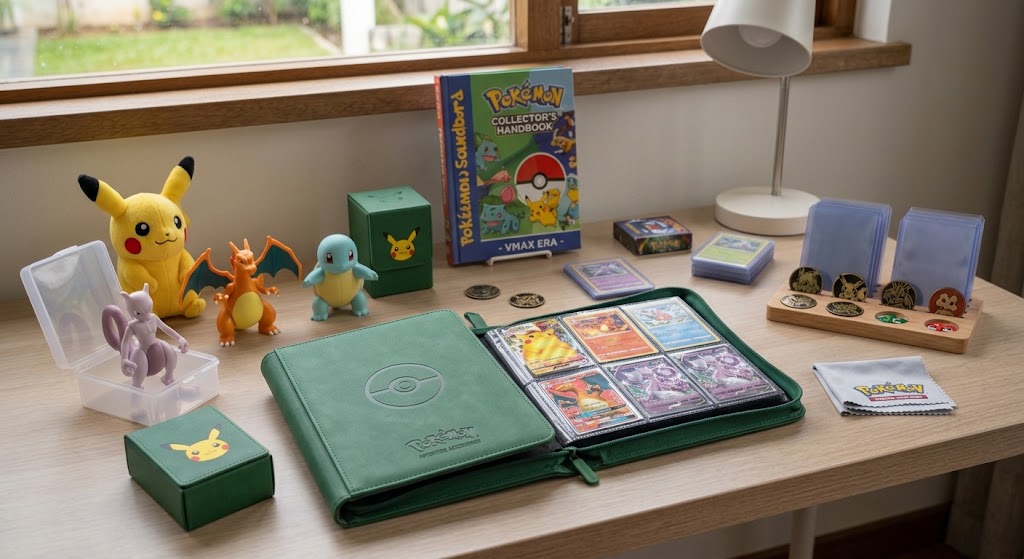
A binder with card-sized pockets helps collectors arrange cards by set, character or personal preference. Choose pages that fit the card dimensions and a cover that closes securely. If the binder has a zipper, check that it moves smoothly and does not catch the pages. A binder is useful for organisation, but it does not make valuable cards immune to bending, moisture or heat.
For younger collectors, an adult may need to help load the pockets and decide which cards should be handled during play. Avoid assuming that every child is ready to manage a large collection independently.
| Accessory | What it is useful for | What to check |
|---|---|---|
| Card binder | Displaying and organising a collection | Pocket fit, secure closure and page quality |
| Soft card sleeves | Reducing surface scratches during handling | Correct size and smooth, clean edges |
| Rigid card holder | Extra support for selected cards | Fit, material and edges |
| Deck box | Keeping a playable deck together | Capacity for sleeved cards and secure lid |
6. Soft Sleeves and Rigid Card Holders
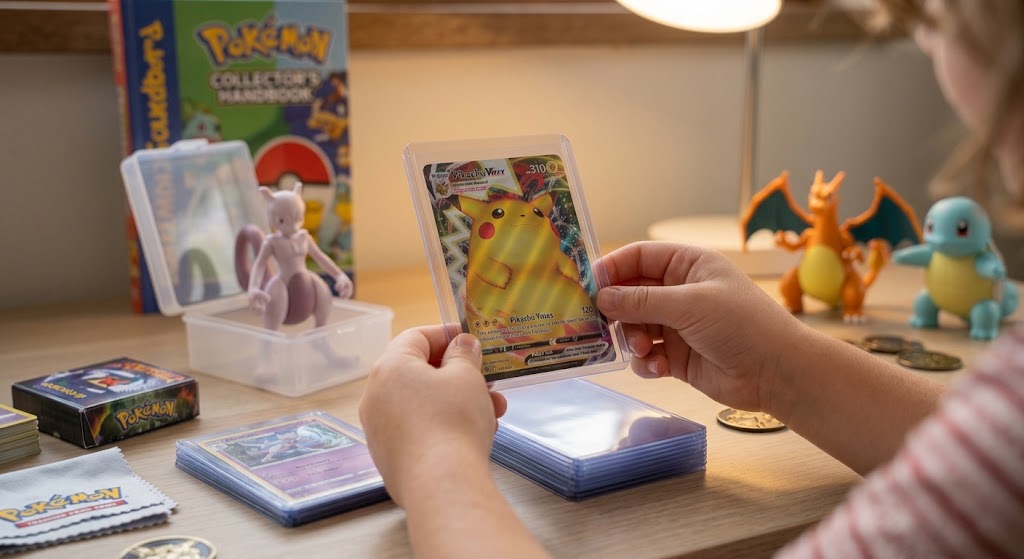
Soft sleeves can help reduce scratches caused by repeated handling. Rigid holders provide more support for individual cards, but they should be the right size and should not force a card into a tight opening. Keep spare sleeves and holders in a clean, dry place, and let an adult help younger children handle stiff plastic edges.
7. Trading Card Deck Boxes
A deck box is a compact way to carry one deck to a friend’s home or a game session. Check its stated capacity, especially if the cards will be sleeved, and make sure the lid stays closed when the box is placed in a bag. A box that is too small can bend cards; one that is much too large may let them slide around.
Some deck boxes use magnets in their closures. Keep any loose or damaged magnetic components away from young children, and stop using a product if it breaks open or exposes internal parts. See the manufacturer’s safety information before purchase. Browse trading card deck storage boxes on Amazon.
8. A Ready-to-Play Pokémon Trading Card Game Deck
If your child wants to play rather than simply collect, a preconstructed deck is often the clearest place to begin. It contains a fixed group of cards designed to be played together, unlike a booster pack, whose contents are random. Read the product description to confirm that it is a complete deck and check whether it includes any extra items needed to learn the game.
Learning the rules together can make the first few games less frustrating. Start slowly, keep the first matches short, and treat mistakes as part of learning rather than a competition to win.
9. Storage Tins and Collection Boxes
A small tin or collection box can hold cards, tokens and other compact accessories in one place. It may be easier for a child to manage than a large binder, especially when the collection is still small. Check the inside dimensions, the quality of the hinge and whether the lid has any sharp edges. Do not overfill the container, as cards can become bent when the lid is forced shut.
How to Choose the Right Items
- Start with your child’s interest: choose figures, plush toys, building kits or card accessories based on what they already enjoy.
- Read the age label: age recommendations reflect product design and possible hazards, not a promise that every child of that age is ready for it.
- Check small parts: cards, miniature figures, bricks and accessories can present choking risks for young children. Keep them out of reach of children under three and supervise older children when needed.
- Look for clear product information: check the manufacturer, included pieces, dimensions, care instructions and return policy.
- Buy gradually: one useful binder or starter deck may be better than several accessories that are rarely used.
The U.S. Consumer Product Safety Commission advises buyers to follow toy age guidance and keep toys with small parts away from children under three. Its guidance is useful when checking products sold in the United States, but parents should also follow the applicable safety requirements and product labels in their own country: CPSC toy safety guidance and CPSC small-parts guidance.
Simple Ways to Care for a Card Collection
Choose a dry shelf or drawer away from drinks, direct sunlight and sources of heat. Encourage children to return cards to their binder or deck box after playing, rather than leaving them on the floor or near food. If cards are being traded, agree on simple family rules first: ask before taking a card, handle other people’s collections carefully, and do not trade anything a child is unsure about.
Collecting should remain enjoyable and affordable. Set a spending limit, explain that booster packs contain random cards, and avoid promising that a particular pack will contain a rare or valuable card. For more character-based play ideas, you can also read our guide to superhero action figures for kids.
Questions and Answers
Are Pokémon trading cards suitable for young children?
It depends on the child’s age, ability to handle small items and the product’s age guidance. Keep cards and small accessories away from children under three because they can pose a choking risk.
What is the difference between a preconstructed deck and a booster pack?
A preconstructed deck has a fixed set of cards intended to be playable as a deck. A booster pack contains randomly selected cards and is mainly used to add variety to a collection.
Do children need a binder to collect Pokémon cards?
No. A small box can be enough for a beginner. A binder becomes useful when a child wants to display, sort or browse a larger collection.
How can I protect valuable cards?
Use correctly sized sleeves and a suitable binder or rigid holder. Store cards in a cool, dry place and handle them with clean, dry hands.
What should I check before buying a Pokémon figure or playset?
Check the manufacturer’s age recommendation, small parts, construction, moving components, included accessories and the product’s safety instructions.
There is no need to build a large collection all at once. A carefully chosen figure, a simple plush toy or a practical card-storage item can be enough to support the kind of play your child enjoys. Focus on age suitability, clear product information and a tidy place to keep everything.