Turning one is a massive milestone in a child’s life. Around this age, babies transition into toddlers, and their curiosity reaches an all-time high. You will notice your 1-year-old constantly trying to pick up tiny objects, drop things into containers, open drawers, and poke their fingers into every little corner.
In the world of child development, these actions are part of developing fine motor skills—the coordination of small muscles in movements involving the hands and fingers.
The Montessori philosophy emphasizes providing children with simple, purposeful, and self-correcting tools that encourage independent exploration. If you want to support your 1-year-old’s hand-eye coordination and brain development without overwhelming them with flashing lights and loud plastic noises, Montessori toys are the perfect answer.
Here are the top 7 Montessori-aligned toys and tools that every parent should consider for their 1-year-old.
1. The Object Permanence Box with Tray
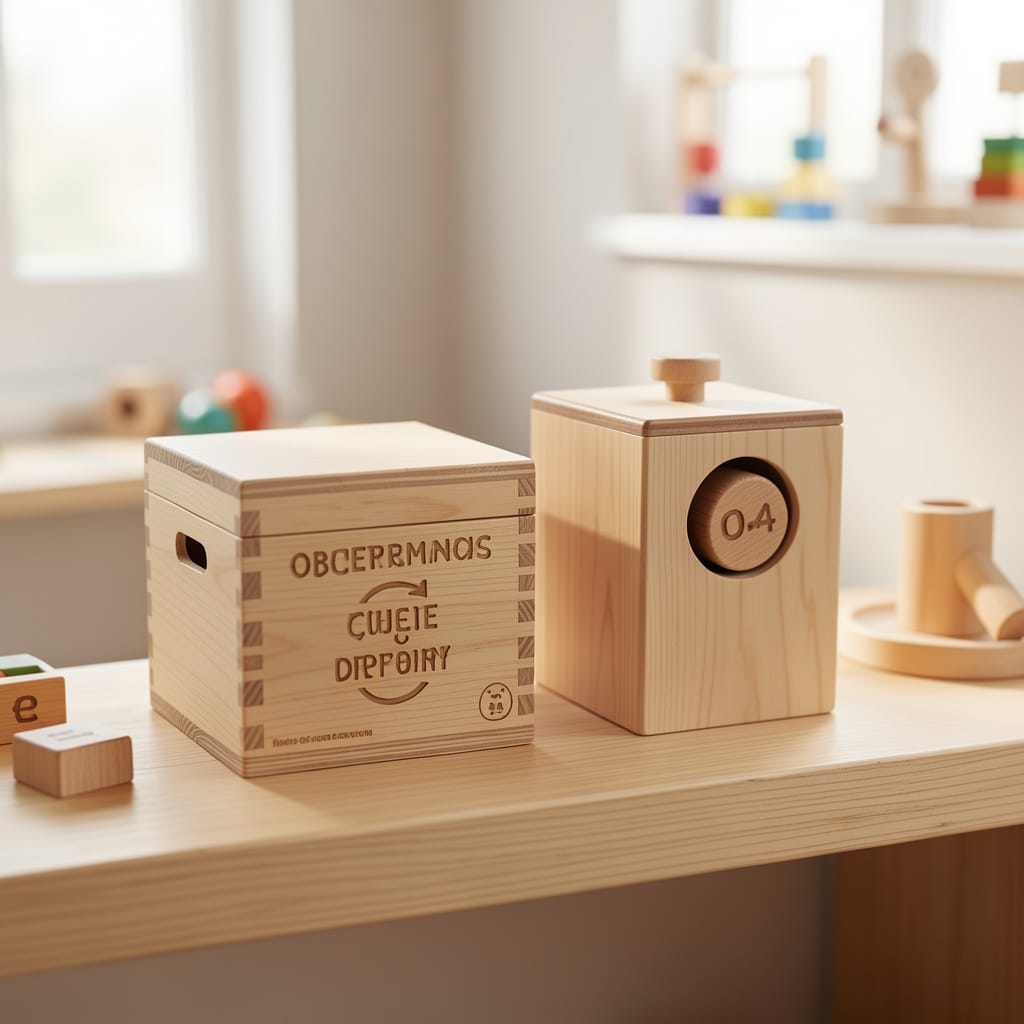
This is perhaps the most classic Montessori material for older babies and young toddlers. It consists of a wooden box with a hole on top and a small tray attached to the front. The child drops a large wooden ball into the hole, and it briefly disappears before rolling out into the tray.
- How it builds skills: Dropping the ball requires a precise “palmar grasp” or early “pincer grasp.”
- Cognitive benefit: Apart from refining hand movements, it teaches the concept of object permanence—the understanding that things still exist even when we cannot see them.
[Affiliate Link Opportunity] Looking for a high-quality, durable version? The [Insert Amazon Product Name, e.g., Monti Kids Object Permanence Box] is made from premium, baby-safe wood and is perfectly sized for tiny hands.
2. Geometric Single-Shape Wooden Puzzles
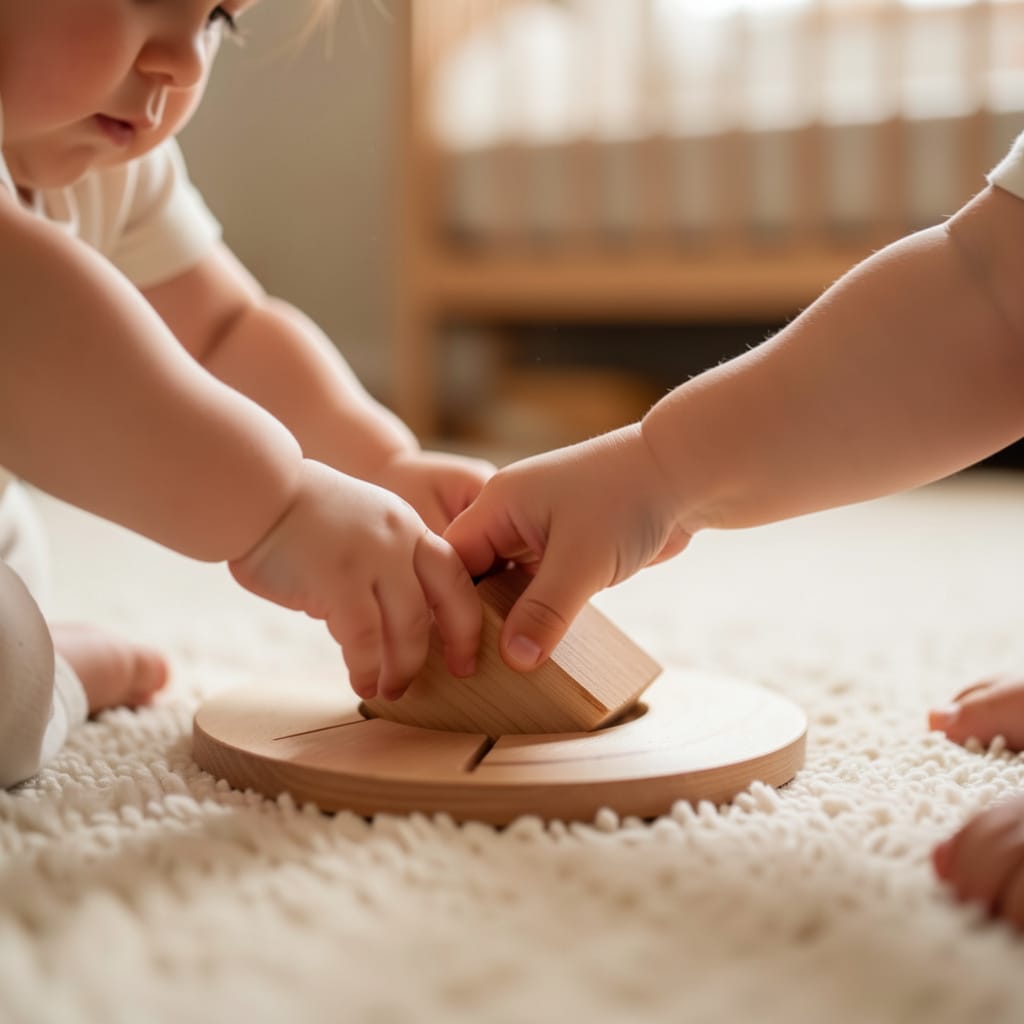
Unlike commercial puzzles with dozens of interlocking pieces, a true Montessori toddler puzzle starts with just one single shape—usually a large circle. The puzzle piece features a large wooden knob that the toddler must grab to lift and insert back into the slot.
- How it builds skills: The large knob forces the toddler to use a three-finger grasp (the thumb, index, and middle finger), which is the exact foundational grasp they will later use to hold a pencil or spoon.
- Why the circle first? A circle is the easiest shape for a 1-year-old to align and insert because it fits from any angle, preventing frustration and building self-confidence.
3. Wooden Stacking Rings or Pegs
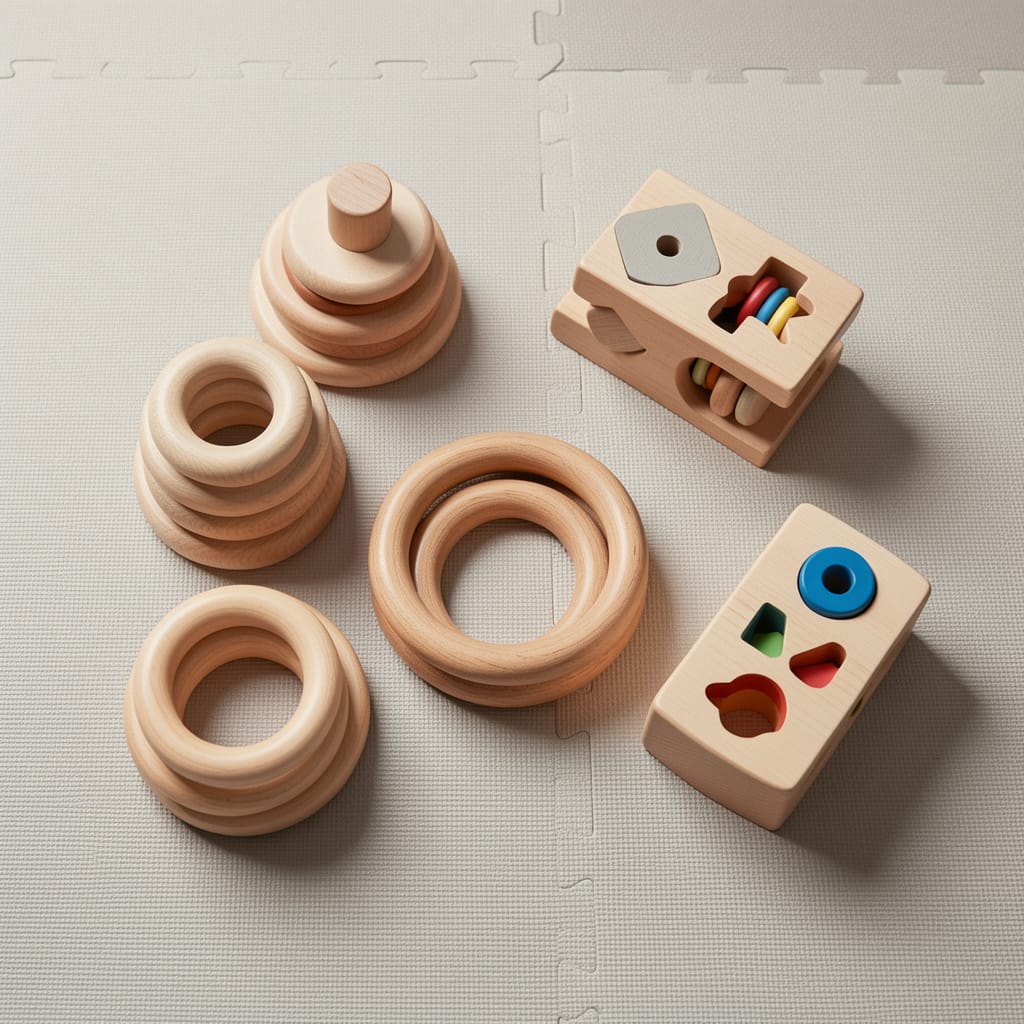
Conventional stacking toys are often bright, plastic, and include confusing lights. A Montessori stacking toy is traditionally made of wood and focuses purely on the physical task. It consists of a vertical peg and a set of rings that slide over it.
- How it builds skills: It requires intense visual concentration and hand-eye coordination to line up the hole of the ring with the tip of the wooden peg.
- Progression: Start by giving your child just two or three large rings, and gradually introduce smaller rings as their dexterity improves.
4. The Coin Box (Coin Drop Toy)
Once your toddler masters dropping a large ball into an object permanence box, they are ready for a greater challenge: The Coin Box. This toy features a thin, narrow slot on top where the toddler must insert flat, wooden coins.
- How it builds skills: This is the ultimate workout for the pincer grasp (using the index finger and thumb together). The toddler must rotate their wrist and align the flat coin perfectly with the narrow slot, which requires advanced spatial awareness.
5. Shape Sorters (Cube with Basic Shapes)
A Montessori-friendly shape sorter limits the choices to avoid overwhelming the child. Instead of a bucket with 10 different complex shapes, a good toddler shape sorter focuses on the three basics: a circle, a square, and a triangle.
- How it builds skills: It teaches tactile discrimination. The toddler learns through trial and error that a square block cannot fit into a round hole, refining their hand movements based on visual data.
6. Threading and Spool Beading (Oversized)
For a 1-year-old, “threading” doesn’t mean using a needle and thread. Instead, it involves a thick wooden stick attached to a string, and large wooden spools or beads with wide holes.
- How it builds skills: This activity promotes bilateral coordination—the ability to use both hands together at the same time. One hand must hold the peg steady while the other hand pushes the bead over it.
7. The Montessori Busy Board or Latches Board
A busy board is a wooden plank outfitted with real-world mechanical hardware, such as slide bolts, switches, wheels, zippers, and latches.
- How it builds skills: Toddlers love mimicking everyday adult actions. Manipulating a door latch or flipping a light switch utilizes completely different muscle groups in the hand, promoting finger isolation and strength.
- Safety Tip: Ensure any busy board you buy is certified non-toxic and contains no small parts that can easily detach and become a choking hazard.
What to Look for When Buying Montessori Toys
When selecting toys for your child or writing a shopping list, always remember the core Montessori principles:
- Natural Materials: Opt for wood, cotton, and metal over plastic. Natural materials provide richer sensory information (weight, texture, and temperature) to a developing child.
- One Skill at a Time: A toy should either teach shapes, or colors, or sounds—but not all three at once. Isolation of difficulty helps the toddler focus and learn efficiently.
- Realism: Choose items that reflect the real world (e.g., puzzles featuring realistic animals rather than cartoon characters).
Conclusion: Nurturing Independence Through Play
Developing fine motor skills isn’t just about hand strength; it is closely linked to cognitive growth and independence. When a 1-year-old learns to control their hands, they unlock the ability to feed themselves, turn the pages of a book, and explore their environment confidently.
By introducing these 7 simple, purposeful Montessori tools, you are giving your toddler the perfect canvas to practice, fail, self-correct, and ultimately master their physical world.
Has your toddler tried any of these Montessori activities yet? Which one kept them engaged the longest? Share your experiences with our community in the comments below!